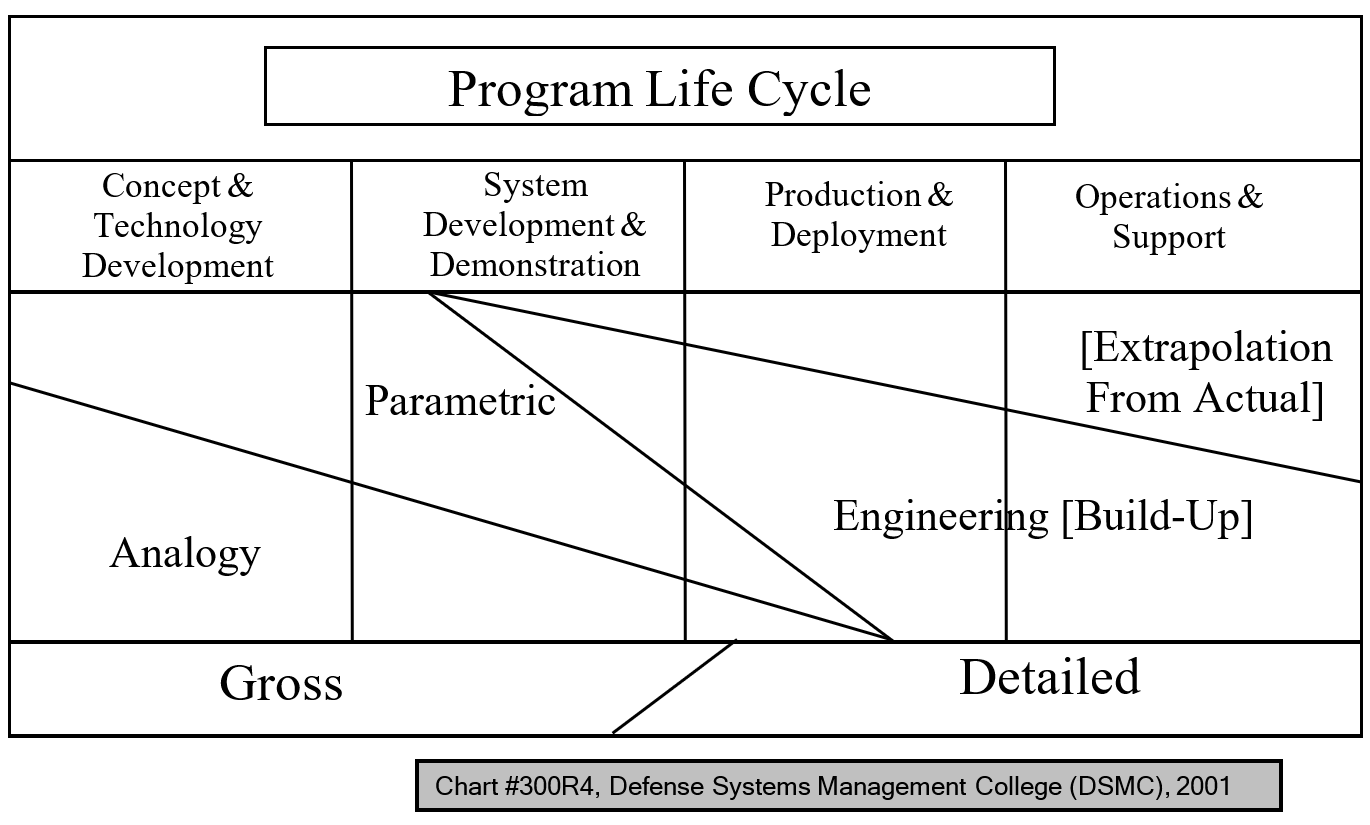
図3:DoD プログラムフェーズのライフサイクルモデルに対する方法論の適用(Public Domain, Defense Acquisition University. Used with permission.)
Cost Estimating and Analysis in Systems Engineering
Cost estimating is a multidisciplinary practice that combines analytical rigor, quantitative analysis, experience, and expert judgment to develop realistic forecasts of future costs. As highlighted in ISO/IEC/IEEE-15288:2023, cost estimating serves diverse purposes across the system life cycle, and is an essential tool for providing stakeholders with insights into resource requirements for system development, acquisition, operations and sustainment. Cost estimating is thus integral to all technical and management processes in systems engineering and project management, and is central to project planning, budgeting, and control, where it is frequently utilized in evaluating trade-offs for analyzing alternative products or services. Cost estimating also plays a pivotal role in the decision-making process for investments and contracting, especially when governmental and/or commercial organizations are involved.
コスト見積りとは、分析的な厳密さ、定量分析、経験、専門家の判断を組み合わせて、将来のコストについて現実的な予測を立てる、多分野にわたる実践である。ISO/IEC/IEEE-15288:2023 で強調されているように、コスト見積りはシステムライフサイクル全体を通じて多様な目的を果たし、システムの開発、取得、運用、維持に必要な資源要求についての洞察をステークホルダーに提供する不可欠なツールである。したがってコスト見積りは、システムズエンジニアリングとプロジェクトマネジメントにおけるすべての技術プロセスとマネジメントプロセスに不可欠であり、プロジェクトの計画、予算編成、管理の中核を担い、代替となる製品やサービスを分析する際のトレードオフ評価に頻繁に用いられる。コスト見積りは、特に政府組織や商業組織が関与する場合に、投資と契約の意思決定プロセスにおいても極めて重要な役割を果たす。
The practice of cost estimating is often considered as a blend of art and science and requires a diverse set of skills and domain expertise, particularly in mathematics, to create a realistic cost forecast for proposed products or services. Historically, cost estimating has been the responsibility of a specialized group of professionals known as cost analysts. However, in recent times, it has increasingly required the involvements and participation of systems engineers to meet the growing demands for deeper product knowledge and system design expertise.
コスト見積りの実践は、しばしば技芸と科学の融合と見なされ、提案された製品やサービスについて現実的なコスト予測を行うには、特に数学における、多様なスキルと領域の専門知識が求められる。従来、コスト見積りはコストアナリストと呼ばれる専門家集団が担ってきた。しかし近年では、より深い製品知識とシステム設計の専門知識に対する要求の高まりに応えるため、システムエンジニアの関与と参加がますます必要になっている。
There are established industry best practices and de facto standards. Leading professional associations, including the International Cost Estimating and Analysis Association (ICEAA), with its predecessor, the Society of Cost Estimating and Analysis (SCEA), along with the International Society of Parametric Analysts (ISPA), offer a rich set of references (ICEAA 2024; ISPA 2008; PMI 2021), as well as training courses (ICEAA n.d.; DAU n.d.). Furthermore, different government agencies provide policies and guidelines to communicate requirements and promote best practices (GAO 2020; DoD 2020, 2022; NASA 2015).
業界には、確立された優れた実践と事実上の標準が存在する。International Cost Estimating and Analysis Association(ICEAA)とその前身である Society of Cost Estimating and Analysis(SCEA)、および International Society of Parametric Analysts(ISPA)をはじめとする主要な専門家団体は、豊富な参考文献(ICEAA 2024; ISPA 2008; PMI 2021)と研修コース(ICEAA n.d.; DAU n.d.)を提供している。さらに、さまざまな政府機関が、要求事項を伝え優れた実践を促進するための方針とガイドラインを提供している(GAO 2020; DoD 2020, 2022; NASA 2015)。
This article covers fundamental concepts and key methodologies and processes used in cost estimating and analysis. The goal is to provide a foundational understanding of best practices and to support the seamless integration of these methodologies into systems engineering processes.
本記事では、コスト見積りと分析で用いられる基本概念、ならびに主要な方法論とプロセスを取り上げる。その目的は、優れた実践について基礎的な理解を提供し、これらの方法論をシステムズエンジニアリングプロセスへ円滑に統合できるよう支援することである。
Systems engineering is defined as "a transdisciplinary and integrative approach to enable the successful realization, use, and retirement of engineered systems using systems principles and concepts, and scientific, technological, and management methods," according to INCOSE (2021). Integration is the core to systems engineering. It materializes at two different levels.
INCOSE(2021)によれば、システムズエンジニアリングは「システムの原則と概念、および科学的、技術的、マネジメントの方法を用いて、エンジニアード・システムの成功裡の実現、使用、廃止を可能にするための、超学際的かつ統合的なアプローチ」と定義される。統合はシステムズエンジニアリングの中核である。統合は2つの異なるレベルで具体化される。
Firstly, systems engineering integrates the system of interest (SoI) or the prime mission product (PMP) throughout its life cycle, serving as the system design authority from concept definition and design, through development, production, operations, and support. Secondly, systems engineering integrates the project that builds the product, serving as the engineering authority for the project from planning to execution, monitoring, assessment, and control.
第1に、システムズエンジニアリングは、対象システム(SoI)または主ミッション製品(PMP)をそのライフサイクル全体を通じて統合し、コンセプト定義と設計から開発、生産、運用、支援に至るまで、システム設計の責任主体として機能する。第2に、システムズエンジニアリングは、製品を構築するプロジェクトを統合し、計画から実行、監視、評価、管理に至るまで、プロジェクトのエンジニアリングを所管する責任主体として機能する。
Project management involves planning, executing, monitoring and controlling, and closing projects. It encompasses scheduling, resource allocation, risk management, and performance tracking to ensure that the project is completed on time, within budget, and to the specified quality standards.
プロジェクトマネジメントには、プロジェクトの計画、実行、監視・管理、終結が含まれる。プロジェクトを期限内に、予算内で、指定された品質標準を満たして完了させるための、スケジューリング、資源配分、リスクマネジメント、性能追跡がこれに包含される。
Cost estimating and analysis is generally considered a practice within the scope of project management, which is a distinctive discipline from systems engineering. However, project management and systems engineering share considerable overlap in scope, especially in the areas of project scope and cost management (INCOSE 2023). The two practices are interdependent and synergistic, particularly in large-scale, complex engineering projects such as those in infrastructure, transportation and mobility, and aerospace and defense systems. In this context, cost estimating plays a crucial role within the project cost management process, underpinning the successful execution and delivery of complex projects.
コスト見積りと分析は一般に、システムズエンジニアリングとは別個の分野であるプロジェクトマネジメントの範囲に属する実践と見なされている。しかし、プロジェクトマネジメントとシステムズエンジニアリングの範囲は、特にプロジェクトのスコープとコストのマネジメントの領域でかなり重なり合っている(INCOSE 2023)。2つの実践は相互に依存し、相乗的に作用する。これは特に、インフラストラクチャ、輸送とモビリティ、航空宇宙・防衛システムのような大規模で複雑なエンジニアリングプロジェクトに当てはまる。こうした文脈において、コスト見積りはプロジェクトコストマネジメントプロセスの中で重要な役割を果たし、複雑なプロジェクトの成功裡の実行と提供を支えている。
Furthermore, in practice, engineering cost estimates are generally developed based on the technical scope defined by systems engineers. Cost estimates are heavily influenced by the technical requirements, design complexity, and tasks specified by systems engineering. In other words, systems engineering defines it, cost estimating quantifies it, and project management manages it.
さらに実務においては、エンジニアリングコスト見積りは一般に、システムエンジニアが定義した技術的スコープに基づいて策定される。コスト見積りは、技術要求事項、設計の複雑さ、そしてシステムズエンジニアリングが指定するタスクに大きく左右される。言い換えれば、システムズエンジニアリングがそれを定義し、コスト見積りがそれを定量化し、プロジェクトマネジメントがそれをマネジメントするのである。
In this context, systems engineers collaborate closely with program or project managers, drawing upon multidisciplinary skills from various fields such as configuration management, information management, risk management, and decision support. Cost estimating and analysis provides a quantitative basis for scope definition, risk management, resource allocation, change management, performance monitoring, trade-off analysis, and informed decision making. As an integral part of both systems engineering and project management, it ultimately ensures the on-time and on-budget completion of complex projects, ultimately leading to the successful delivery of projects and services.
こうした文脈において、システムエンジニアは、構成管理、情報マネジメント、リスクマネジメント、意思決定支援などのさまざまな分野にまたがる多分野のスキルを活用しながら、プログラムマネージャやプロジェクトマネージャと緊密に協働する。コスト見積りと分析は、スコープ定義、リスクマネジメント、資源配分、変更管理、性能監視、トレードオフ分析、情報に基づく意思決定のための定量的な基礎を提供する。コスト見積りと分析は、システムズエンジニアリングとプロジェクトマネジメントの双方に不可欠な一部として、最終的に複雑なプロジェクトを期限内かつ予算内で確実に完了させ、ひいてはプロジェクトとサービスの成功裡の提供につながる。
• Cost estimating: an exercise to predict the future cost of an item, product, program or task, through collecting and analyzing historical data and applying quantitative models, techniques, tools, and databases. The purpose of cost estimating is to translate system and functional requirements associated with programs, projects, proposals or processes into reliable budget requirements. The term cost estimation is also used, sometime interchangeably with cost estimating. It typically refers to the act or action of developing a cost estimate, while cost estimating refers to the practice applied to estimation.
• コスト見積り(cost estimating):過去のデータを収集・分析し、定量的なモデル、技法、ツール、データベースを適用することによって、品目、製品、プログラム、タスクの将来のコストを予測する取り組み。コスト見積りの目的は、プログラム、プロジェクト、提案、プロセスに関連するシステム要求事項と機能要求事項を、信頼できる予算要求へと変換することである。コスト見積り(cost estimation)という用語も使われ、コスト見積り(cost estimating)と同じ意味で使われることもある。この用語は通常、コスト見積り(cost estimate)を策定する行為や動作を指し、一方のコスト見積り(cost estimating)は見積りに適用される実践を指す。
• Cost estimate: is the product of a cost estimating process, which specifies the expected labor effort or dollar cost required to perform a stipulated task, or to acquire a specific item. A cost estimate may constitute a single value or a range of values. A cost estimate can normally be broken down to cost elements.
• コスト見積り(cost estimate):コスト見積りプロセスの成果物であり、規定されたタスクの実施や特定の品目の取得に必要な、見込まれる労力または金額コストを指定する。コスト見積りは、単一の値で構成されることもあれば、値の範囲で構成されることもある。コスト見積りは通常、コスト要素に分解できる。
• Cost element: an identifiable function, or a common group of functions, which have been established as a separate entity for the purpose of estimating, collecting, controlling, and reporting costs.
• コスト要素(cost element):コストの見積り、収集、管理、報告を目的として、別個の実体として設定された、識別可能な機能、または機能の共通のグループ。
• Cost driver: typically a physical or performance attribute of a system, or programmatic parameter of a project or contract, that has the most influence on total estimated cost. A cost driver can be another cost quantity.
• コストドライバ(cost driver):通常は、システムの物理的属性や性能属性、あるいはプロジェクトや契約のプログラム上のパラメータであって、見積り総コストに最も大きな影響を与えるもの。コストドライバが別のコスト量であることもある。
• Cost model: an analytical tool or framework used to systematically to characterize the behavior of the system or program and produce a credible cost estimate. It implements cost estimating methods (see below).
• コストモデル(cost model):システムやプログラムの振る舞いを体系的に特徴付け、信頼できるコスト見積りを生み出すために用いられる分析ツールまたはフレームワーク。コスト見積りの方法を実装したものである(下記を参照)。
• Basis of estimate (BOE): a document outlining the assumptions, methods, and data used to develop a cost estimate. The BOE explains how the cost estimate is generated and typically includes a detailed description of the work to be performed, the planned approach, the required resources, and the expected schedule or timeline. It is a mandatory component in competitive proposals and formal quotes from potential suppliers to clients.
• 見積りの根拠(basis of estimate、BOE):コスト見積りの策定に用いた前提、方法、データを概説する文書。BOE は、コスト見積りがどのように生成されるかを説明するもので、通常、実施すべき作業の詳細な記述、計画されたアプローチ、必要な資源、予定されるスケジュールまたはタイムラインを含む。BOE は、競争提案や、潜在的な供給者から顧客への正式な見積りにおいて必須の構成要素である。
• Cost analysis: a range of activities to review and analyze the estimated or actual costs of a system, a program or a project. It is a comprehensive review of proposed cost estimates or pricing data and includes activities such as sensitivity and what-if analysis that assesses uncertainty or risks associated with the estimates. Relying on the same estimating practice and methodologies, cost analysis can be either retrospective or predictive. Retrospective analysis evaluates the actual costs that have been incurred, while predictive analysis assesses the accuracy and validity of cost estimates before they are finalized. In the United States Department of Defense (DoD) procurement organizations, cost analysis is the evaluation of a contractor’s cost and pricing data in order to form an opinion on the degree to which the contractor’s proposed costs represent what the performance of the contract should cost, assuming reasonable economy and efficiency.
• コスト分析(cost analysis):システム、プログラム、プロジェクトの見積りコストまたは実際コストをレビューし分析する一連のアクティビティ。提案されたコスト見積りや価格データを包括的にレビューするものであり、見積りに伴う不確実性やリスクを評価する感度分析や what-if 分析のようなアクティビティを含む。同じ見積りの実践と方法論に依拠しながら、コスト分析は回顧的にも予測的にもなり得る。回顧的分析は、すでに発生した実際コストを評価する。一方、予測的分析は、コスト見積りが確定する前にその正確さと妥当性を評価する。米国国防総省(DoD)の調達組織においては、コスト分析とは、合理的な経済性と効率性を前提として、請負業者の提案コストが契約の履行に本来かかるべきコストをどの程度表しているかについて見解を形成するために、請負業者のコストおよび価格データを評価することである。
• Life Cycle Cost (LCC): sometimes called Total Cost of Ownership (TCO) or Total Ownership Cost (TOC), LCC is the total cost of acquisition and ownership of a system or capability over its entire life cycle. LCC generally includes the cost of research, development, testing and evaluation (RDT&E), manufacturing and production, operation and support (O&S), and where applicable, dismantle and disposal.
• ライフサイクルコスト(life cycle cost、LCC):所有総コスト(Total Cost of Ownership、TCO)または Total Ownership Cost(TOC)と呼ばれることもある。LCC は、システムや能力のライフサイクル全体にわたる取得と所有の総コストである。LCC には一般に、研究、開発、試験、評価(RDT&E)のコスト、製造と生産のコスト、運用と支援(O&S)のコスト、そして該当する場合は解体と廃棄のコストが含まれる。
Cost estimates are generally categorized based on the purposes they serve. The following are the most common types of cost estimates.
コスト見積りは一般に、それが果たす目的に基づいて分類される。最も一般的なコスト見積りの種類は次のとおりである。
• Budget estimate: an estimate developed for the budgeting and funding purposes associated with a program, project, activity, initiative, or operations of an organization, in order to support its objectives consistent with the defined scope, schedule, and resource requirements.
• 予算見積り(budget estimate):定義されたスコープ、スケジュール、資源要求と整合した形で組織の目標を支援するために、プログラム、プロジェクト、アクティビティ、イニシアチブ、または組織の運営に関連する予算編成と資金調達の目的で策定される見積り。
• Rough order of magnitude (ROM) estimate: an estimate intended to grossly approximate the expected costs or effort involved in a project, task, or activity. It is often developed in the very early stage of something and with very little specific available information. It is also known as “quick look,” initial, or “ballpark” estimate.
• 概算見積り(rough order of magnitude、ROM):プロジェクト、タスク、アクティビティに要すると見込まれるコストや労力を大まかに近似することを意図した見積り。物事のごく初期の段階で、利用可能な具体的情報がほとんどない状態で策定されることが多い。「クイックルック」見積り、初期見積り、「ボールパーク」見積りとも呼ばれる。
• Firm cost estimate: an estimate commonly used in cost proposals and intended to be a binding obligation from an offering organization. It relies on well-defined plans and data, usually in response to a customer’s firm request for proposal. Firm estimates demand the highest level of substantiating detail, requiring the preparation of an extensive backup package to facilitate contractual fact-finding and negotiations.
• 確定コスト見積り(firm cost estimate):コスト提案で一般に用いられ、提供組織が負う拘束力のある義務となることを意図した見積り。通常は顧客からの確定した提案依頼への応答として、明確に定義された計画とデータに依拠する。確定見積りには最高レベルの裏付け詳細が求められ、契約上の事実確認と交渉を円滑にするための広範なバックアップパッケージを準備する必要がある。
• Life cycle cost (LCC) estimate: a comprehensive, “cradle to grave” estimate to cover all anticipated expenses from inception to disposal that includes research, development, testing and evaluation (RDT&E), production, operations and support (O&S) and disposal costs. It is typically created to aid the planning and analysis of alternatives for capability acquisition. It is created regardless of funding source and should be done as early in the life cycle as possible. As described above, it may also be referred to as Total Cost of Ownership (TCO) or Total Ownership Cost (TOC) estimate.
• ライフサイクルコスト(LCC)見積り:研究、開発、試験、評価(RDT&E)、生産、運用と支援(O&S)、廃棄のコストを含め、開始から廃棄までに予想されるすべての費用をカバーする包括的な「ゆりかごから墓場まで」の見積り。通常、能力取得のための代替案の計画と分析を支援するために作成される。資金源にかかわらず作成され、ライフサイクルのできるだけ早い段階で行われるべきである。前述のとおり、所有総コスト(TCO)見積りや Total Ownership Cost(TOC)見積りと呼ばれることもある。
• Should cost (SC) estimate: an assessment of what it should reasonably cost to produce a product, deliver a service, or execute a project under ideal conditions, assuming efficiency in execution, optimal resource utilization, continuous improvement and cost optimization. It is a management tool typically associated with the acquirer to actively seek cost reduction, drive efficiency, and promote collaboration between buyers and suppliers to achieve mutual benefits.
• 適正コスト(should cost、SC)見積り:実行の効率性、資源の最適な利用、継続的改善とコスト最適化を前提に、理想的な条件の下で製品を生産し、サービスを提供し、またはプロジェクトを実行するのに合理的に見て本来かかるべきコストの評価。通常は取得者側に関連付けられるマネジメントツールであり、コスト削減を積極的に追求し、効率化を推進し、相互の利益を達成するための買い手と供給者の協働を促進するために用いられる。
• Estimate at completion (EAC): an assessment of the cost to complete the authorized scope of a project based on the historical performance and progress up to a certain point of that project. Often developed at the onset or during the course of the project, it provides an estimate of the total cost expected by the time the project is completed. It is an important earned value management (EVM) metric, central to project management.
• 完了時見積り(estimate at completion、EAC):プロジェクトのある時点までの過去の実績と進捗に基づく、その時点までの実績と進捗に基づいて、承認済みの作業範囲を完了するまでにかかる総コストを評価したもの。プロジェクトの開始時や進行中に策定されることが多く、プロジェクト完了までに見込まれる総コストの見積りを提供する。重要なアーンドバリューマネジメント(EVM)の指標であり、プロジェクトマネジメントの中心をなす。
• Independent cost evaluation (ICE): a cost analysis performed by an independent group of experts to assess the reasonableness, accuracy, and completeness of a cost estimate submitted by an offeror. ICE uses the same data provided by the original estimate and involves analyzing and verifying supporting information, such as cost drivers, assumptions, and uncertainties. It typically develops an independent estimate or view, in comparison to the original estimate, and identifies risks and opportunities associated with the program or project.
• 独立コスト評価(independent cost evaluation、ICE):提案者が提出したコスト見積りの合理性、正確さ、完全性を評価するために、独立した専門家グループが実施するコスト分析。ICE は、元の見積りで提供されたものと同じデータを使用し、コストドライバ、前提、不確実性のような裏付け情報を分析し検証することを含む。ICE は通常、元の見積りと比較した独立した見積りまたは見解を策定し、プログラムやプロジェクトに関連するリスクと機会を特定する。
• Not-to-exceed (NTE) and not-less-than (NLT) estimates: estimates commonly used in contracting and project management to define the maximum allowable and minimum acceptable costs for the project or contract. These estimates provide basic parameters for managing stakeholder expectations, preparing budgets or proposals, and making informed decisions.
• 超過禁止(not-to-exceed、NTE)見積りと下限(not-less-than、NLT)見積り:プロジェクトや契約について許容される最大コストと許容可能な最小コストを定義するために、契約業務やプロジェクトマネジメントで一般に用いられる見積り。これらの見積りは、ステークホルダーの期待のマネジメント、予算や提案の準備、情報に基づく意思決定のための基本的なパラメータを提供する。
A cost estimating process generally consists of a seven-step process, as depicted in Figure 1. In practice, however, the process may be customized based on factors such as the type of estimate being developed, data availability, and the maturity of developmental stage.
コスト見積りプロセスは一般に、図1に示すような7ステップのプロセスで構成される。ただし実践においては、策定する見積りの種類、データの利用可能性、開発段階の成熟度のような要因に基づいて、プロセスをカスタマイズすることがある。
Cost estimating is an iterative process characterized by multiple feedback loops. For instance, data analysis may lead to further questions, necessitating additional data collection. Similarly, validating estimates might involve applying different estimating methods, which could require gathering new data.
コスト見積りは、複数のフィードバックループを特徴とする反復的なプロセスである。例えば、データ分析によってさらなる疑問が生じ、追加のデータ収集が必要になることがある。同様に、見積りの妥当性確認には異なる見積り方法の適用が含まれる場合があり、そのために新しいデータの収集が必要になることもある。
Estimates evolve continuously as design matures, development progresses, and more data becomes available. Existing estimate must be refreshed based on updated technical and program management baselines to support major program and project milestones.
見積りは、設計が成熟し、開発が進み、より多くのデータが利用可能になるにつれて、継続的に進化する。既存の見積りは、主要なプログラムおよびプロジェクトのマイルストーンを支援するために、更新された技術ベースラインとプログラムマネジメントベースラインに基づいてリフレッシュされなければならない。
Step 1: Develop the Work Breakdown Structure (WBS). The WBS establishes a common frame of reference for relating job tasks to each other and aggregating cost elements at the summary level of detail. It is used to capture the scope of work intended for the estimate. A WBS consists of two parts: a tree-like hierarchical structure defining work elements, and a WBS dictionary, which defines the terms used in the structure. The U.S. DoD developed MIL-STD-881 (DoD 2022) to provide the standard framework and instructions for developing a WBS.
ステップ1: 作業分解構造(WBS)を策定する。WBS は、ジョブタスクを相互に関連付け、概要レベルの詳細度でコスト要素を集約するための共通の参照枠を確立する。WBS は、見積りの対象とする作業範囲を捕捉するために用いられる。WBS は2つの部分で構成される。すなわち、作業要素を定義するツリー状の階層構造と、その構造で用いられる用語を定義する WBS 辞書である。米国 DoD は、WBS を策定するための標準的なフレームワークと指示を提供するために MIL-STD-881(DoD 2022)を策定した。
Step 2: Establish a technical baseline. A technical baseline includes all the information required for an estimate, captured at a specific point in time. It includes the technical scope approved for the system under development such as the configuration items, the programmatic scope for the project such as schedule and milestones, as well as the ground rules and assumptions made as the basis for the estimate. While the development continues, the baseline must be frozen for the purpose of estimation.
ステップ2: 技術ベースラインを確立する。技術ベースラインには、特定の時点で捕捉された、見積りに必要なすべての情報が含まれる。具体的には、構成品目のような開発中のシステムについて承認された技術的スコープ、スケジュールやマイルストーンのようなプロジェクトのプログラム上のスコープ、そして見積りの基礎として置かれた基本ルールと前提が含まれる。開発が続く間、ベースラインは見積りの目的のために凍結しなければならない。
Step 3: Collect data. Data collection involves two kinds of data: the data for the system and program under estimation, and the historical data or database from the like systems and historical projects. They may be collected at the same or different times. The data for estimation is collected from the ongoing system design, necessary in identifying required cost drivers. Collecting historical data is required to apply methodologies and develop or update CERs. As emphasized previously in the methodology section, it is critical to interview key stakeholders, including those from the current and historical programs, which is necessary for understanding of the data collected.
ステップ3: データを収集する。データ収集には2種類のデータが含まれる。すなわち、見積り対象のシステムとプログラムのデータと、類似システムや過去のプロジェクトから得られる過去データまたはデータベースである。両者は同時期に収集されることもあれば、異なる時期に収集されることもある。見積りのためのデータは進行中のシステム設計から収集され、必要なコストドライバの特定に欠かせない。過去データの収集は、方法論を適用し、CER を策定または更新するために必要である。方法論の節で前に強調したように、収集したデータを理解するためには、現在および過去のプログラムの関係者を含む主要なステークホルダーへのインタビューが不可欠である。
Step 4: Analyze data. Collected data must be analyzed to derive useful metrics and enable the application of a cost estimating methodology. Data analysis involves examining collected data to identify useful patterns and gain insights into the appropriate estimating methods to apply to different parts of the estimate. There are commonly deployed tools for data analysis, including scatter plotting, deriving descriptive statistics (e.g., mean, variance, standard deviation), identifying outliers, updating historical database, and calibrating parametric models.
ステップ4: データを分析する。収集したデータは、有用な指標を導出し、コスト見積りの方法論を適用できるようにするために分析しなければならない。データ分析では、収集したデータを調べて有用なパターンを特定し、見積りの各部分に適用すべき適切な見積り方法について洞察を得る。データ分析に一般に用いられるツールには、散布図の作成、記述統計(例えば平均、分散、標準偏差)の導出、外れ値の特定、過去データベースの更新、パラメトリックモデルの較正がある。
Step 5: Apply estimating methodology and develop cost estimating relationships. Select the best estimating method (see Cost Estimating Methodologies section below) based on available data. Establish the ground rules and assumptions for estimating, as they will dictate how data is used and influence the final outcome of the estimate. Once patterns are identified from data analysis, CERs can be established for different cost elements. This may involve recalibrating or fine-tuning existing CERs to align with the newly collected data or specific project requirements or characteristics. Commercial off-the-shelf estimating models must be calibrated with collected data before being used to generate estimates.
ステップ5: 見積り方法論を適用し、コスト見積り関係式を策定する。利用可能なデータに基づいて最良の見積り方法を選択する(後述のコスト見積り方法論の節を参照)。見積りのための基本ルールと前提を確立する。これらは、データの使い方を規定し、見積りの最終結果に影響を与えるからである。データ分析からパターンが特定されれば、コスト要素ごとに CER を確立できる。これには、新たに収集されたデータや、当該プロジェクト固有の要求事項や特性に合わせて、既存の CER を再較正したり微調整したりすることが含まれる場合がある。市販の既成の見積りモデルは、見積りの生成に使用する前に、収集したデータで較正しなければならない。
Step 6: Roll up and validate estimates. Once the CERs are created, estimated cost or effort can be generated based on the cost driver inputs. When appropriate calibrations, commercial off-the-shelf estimating models may be used produce and summarize the estimate. After the estimates are generated, they must be validated to ensure reasonableness and completeness. Sensitivity analysis and cross-technique validation can be applied to key cost elements. Risk assessment should also be conducted.
ステップ6: 見積りを積み上げ、妥当性確認する。CER が作成されれば、コストドライバの入力に基づいて見積りコストや労力を生成できる。適切な較正を行えば、市販の既成の見積りモデルを用いて見積りを作成し、取りまとめることができる。見積りを生成した後は、その合理性と完全性を確保するために妥当性確認を行わなければならない。主要なコスト要素には、感度分析と手法間の妥当性確認を適用できる。リスク評価も実施すべきである。
Step 7: Generate cost reports. Cost report provides a written justification for the cost estimate. This is a formal documentation that captures all aspects of the estimating process and provides sufficient information for a third-party analyst to fully understand how the estimate is developed and to replicate the estimate at a later time, if necessary. In the contracting process, this document is called the Basis of Estimate (BOE), which is required to support the bidder’s cost proposal.
ステップ7: コストレポートを生成する。コストレポートは、コスト見積りの正当性を書面で示すものである。これは、見積りプロセスのあらゆる側面を捕捉し、第三者のアナリストが見積りの策定方法を完全に理解し、必要に応じて後日見積りを再現できるだけの十分な情報を提供する正式な文書である。契約プロセスにおいては、この文書は見積りの根拠(BOE)と呼ばれ、入札者のコスト提案を裏付けるために必要とされる。
As indicated previously, cost estimating is always an iterative process. It should be revisited and updated for each major milestone of the development project. There are intermediate feedback loops that may be necessary to complete the process, as shown in Figure 1. For example, analysis of data may need additional interviews to fully understand the historical behavior; applying methods and developing CERs may uncover gaps in data, which triggers additional collection efforts.
前述のとおり、コスト見積りは常に反復的なプロセスである。開発プロジェクトの主要なマイルストーンごとに再検討し、更新すべきである。図1に示すように、プロセスを完了するために必要となり得る中間のフィードバックループが存在する。例えば、データの分析では、過去の振る舞いを十分に理解するために追加のインタビューが必要になることがある。また、方法の適用と CER の策定によってデータのギャップが明らかになり、追加の収集の取り組みにつながることがある。
Figure 1. The general cost estimating process. (SEBoK Original)
図1:一般的なコスト見積りプロセス(SEBoK Original)
この図は原典のページに掲載されています。権利の都合により本サイトでは省略しています。原典で見る
Cost estimating methods, also referred to as costing techniques, are the building blocks in developing of a cost estimate. They establish the basic approach to use the historical data and provide the basic structure for statistical relationships. These methods are the basic “algorithms” that relates the historical data to future cost.
コスト見積りの方法は、コスト手法とも呼ばれ、コスト見積りを策定する際の構成要素である。それらは、過去データを利用するための基本的なアプローチを確立し、統計的関係の基本構造を提供する。これらの方法は、過去データを将来のコストに結び付ける基本的な「アルゴリズム」である。
Three primary methods are commonly applied when developing a cost estimate (you may hear some other names; but they are mostly synonymous with one of the three methods). These three techniques are analogy, parametric and build-up.
コスト見積りを策定する際には、一般に3つの主要な方法が適用される(他の名称を耳にすることもあるが、それらはたいてい3つの方法のいずれかと同義である)。これら3つの技法とは、類推、パラメトリック、積上げである。
The analogy, also known as comparative, method is just what it sounds like – an attempt to estimate costs by comparing the new system with a similar (or analogous) system or by drawing parallels between the current project and a similar past project to estimate costs. It is based on the idea “it’s like one of these.” An analogy can be done at the system, subsystem, component, project, or task level.
類推(analogy)法は、比較(comparative)法としても知られ、その名のとおり、新しいシステムを類似の(または類推可能な)システムと比較することによって、あるいは現在のプロジェクトと類似の過去のプロジェクトの間に類似を引くことによって、コストを見積もろうとする試みである。「これらのうちの1つに似ている」という考え方に基づいている。類推は、システム、サブシステム、構成要素、プロジェクト、タスクのいずれのレベルでも行うことができる。
The analogy method is not simply a matter of asserting that an item cost an amount, X, and therefore will cost X in the future. Generally, some adjustments must be made to one or more attributes of the old item to estimate the new item. These quantities for adjustment, known as cost or size drivers, are typically physical (such as size and weight) and performance (like speed and power) characteristics of a system or service that are the primary drivers for cost or effort. They may also include programmatic metrics such as quantity or schedule, as well as supplier performance or economic adjustments for inflation. For example, suppose the current version of an engine generates 10,000 lbs of thrust and costs $20M dollars to build and that the next-generation version of the same engine is designed to generate 15,000 lbs of thrust. Applying the analogy method, the estimated cost of building the new engine, assuming the use of the same manufacturing technology, would amount to $30M dollars (= 15,000 / 10,000 * $20M). As a second example, if assembly of the current-generation engine initially took 320 person-hours to assemble and unit test 10 equipment racks. Assuming the same process, it is estimated to require 1,600 person-hours (= 50 / 10 * 320 hours) to assemble and unit test 50 racks.
類推法は、ある品目に金額 X がかかったのだから将来も X かかるだろう、と単に主張するだけのものではない。一般に、新しい品目を見積もるには、古い品目の1つ以上の属性に何らかの調整を加えなければならない。調整に用いるこれらの量は、コストドライバまたはサイズドライバと呼ばれ、通常は、コストや労力の主要なドライバとなる、システムやサービスの物理的特性(サイズや重量など)と性能特性(速度や出力など)である。これには、数量やスケジュールのようなプログラム上の指標や、供給者の実績、インフレーションに対する経済的調整が含まれることもある。例えば、現行バージョンのエンジンが推力 10,000 lbs を発生し、製造に $20M かかるとし、同じエンジンの次世代バージョンが推力 15,000 lbs を発生するよう設計されているとする。類推法を適用すると、同じ製造技術を使用すると仮定した場合、新しいエンジンを製造する見積りコストは $30M(= 15,000 / 10,000 $20M)となる。第2の例として、現世代のエンジンの組立てにおいて、当初、機器ラック10台の組立てと単体テストに 320 person-hours かかったとする。同じプロセスを仮定すれば、ラック50台の組立てと単体テストには 1,600 person-hours(= 50 / 10 320 hours)が必要と見積もられる。
Analogies are generally used in the early stages of the program life cycle, especially when detailed data is lacking but estimates are necessary for decision-making. Many development programs have heritage or legacy systems that can serve as a basis for comparison when estimating costs or efforts for new systems. Additionally, the analogy method can also be used as a validation or crosscheck for estimates created through other methods.
類推は一般に、プログラムライフサイクルの初期段階で、特に詳細なデータは不足しているが意思決定のために見積りが必要な場合に用いられる。多くの開発プログラムには、新しいシステムのコストや労力を見積もる際に比較の基礎となる先行システムやレガシーシステムがある。加えて、類推法は、他の方法で作成された見積りの妥当性確認や交差チェックにも使用できる。
The parametric, also known as algorithmic, costing technique is based on mathematical relationships between specific system attributes or parameters (such as weight, thrust, power, lines of code) as one or more independent variables, and the estimated cost or effort of the system as a dependent or derived variable. “This pattern holds” is the fundamental concept underlying this methodology. These parametric relationships are typically expressed as mathematical equations, commonly known as cost estimating relationships (CERs), in a general form
パラメトリック(parametric)法は、アルゴリズム(algorithmic)法としても知られ、1つ以上の独立変数としての具体的なシステム属性やパラメータ(重量、推力、出力、コード行数など)と、従属変数または派生変数としてのシステムの見積りコストや労力との間の数学的関係に基づくコスト手法である。「このパターンが成り立つ」というのが、この方法論の根底にある基本概念である。こうしたパラメトリックな関係は通常、一般形の数学的方程式として表され、これは一般にコスト見積り関係式(cost estimating relationships、CER)として知られる。
The CERs are developed with a statistical framework using historical data collected on similar programs or systems. The independent variables (x, y, …) are known as cost drivers. They can be physical characteristics, performance or operational parameters, programmatic variables, or even other costs.
CER は、類似のプログラムやシステムについて収集された過去データを用いて、統計的な枠組みの中で策定される。独立変数(x、y、…)はコストドライバとして知られる。コストドライバは、物理的特性、性能や運用のパラメータ、プログラム上の変数、さらには他のコストであることもある。
As a hypothetical example, the estimated cost of site activation (C) in $K is a function of the number of workstations (N<sub>WS</sub>) installed. One identifies a group of similar site activation projects and collects the historical project data. Analysis of the data results in a scatter plot, as shown in Figure 2. A CER is derived using linear regression of the scatter data, expressed as a simple equation.
仮説的な例として、サイトアクティベーションの見積りコスト(C)(単位 $K)が、設置されるワークステーションの数(N_WS)の関数であるとする。類似のサイトアクティベーションプロジェクトのグループを特定し、過去のプロジェクトデータを収集する。データを分析すると、図2に示すような散布図が得られる。CER は散布データの線形回帰によって導出され、単純な方程式として表される。
Figure 2. Historical site activation data, in tabulated form and scatter plot, and a linear regression of the scatter data points. (SEBoK Original)
図2:表形式と散布図で表した過去のサイトアクティベーションデータと、散布データ点の線形回帰(SEBoK Original)
この図は原典のページに掲載されています。権利の都合により本サイトでは省略しています。原典で見る
The parametric technique is applicable across a wide range of estimates and throughout all phases of the system life cycle. It is often the preferred method for cost proposals, and is frequently favored by source selection authorities. In addition, it is particularly effective in sensitivity analyses, what-if scenarios, and cost-based trade studies, as it allows for the adjustment of system attribute values acting as cost drivers to directly influence the estimated cost or effort.
パラメトリック技法は、幅広い見積りに、またシステムライフサイクルのすべてのフェーズを通じて適用できる。コスト提案においてしばしば好まれる方法であり、調達先の選定権限を持つ者にも頻繁に好まれる。また、コストドライバとして作用するシステム属性の値を調整することで見積りコストや労力に直接影響を与えられるため、感度分析、what-if シナリオ、コストベースのトレードスタディにおいて特に効果的である。
Most commercial off-the-shelf (COTS) cost estimating tools rely on parametric-based cost models at their core. These algorithms constitute a significant portion of the commercial market value of these tools and are often considered the "secret sauce" provided by the tool vendors.
市販の既成(COTS)のコスト見積りツールのほとんどは、その中核においてパラメトリックベースのコストモデルに依拠している。こうしたアルゴリズムはツールの商業的市場価値の重要な部分を占め、ツールベンダーが提供する「秘伝のタレ」と見なされることが多い。
The build-up method, also known as detailed or bottom-up estimating, constructs estimates for higher level cost elements by aggregating or “rolling up” detailed estimates from lower level cost elements. It involves estimating costs at the lowest definable level where data exists and summing it up along a hierarchical structure. A work breakdown structure (WBS) is generally used to define this hierarchical structure. It provides a standard framework for organizing cost estimates and, therefore, is the cornerstone of this technique.
積上げ(build-up)法は、詳細(detailed)法またはボトムアップ(bottom-up)見積りとしても知られ、下位レベルのコスト要素の詳細な見積りを集約する、すなわち「積み上げる」ことによって、上位レベルのコスト要素の見積りを構築する。データが存在する最も低い定義可能なレベルでコストを見積もり、それを階層構造に沿って合計していく。作業分解構造(WBS)は一般に、この階層構造を定義するために用いられる。WBS はコスト見積りを編成するための標準的なフレームワークを提供するものであり、したがってこの技法の礎石である。
Based on the idea “it’s made up of these,” the build-up method requires breaking down the project into smaller components or work packages and estimating the costs of each individual element. These individual cost estimates are then aggregated to produce the total project cost involves estimating at the lowest definable level where data exists and summing it up along the hierarchical structure. The build-up method works best when low-level detailed cost actuals or estimates are available. It is most effective in operational settings where processes are well-established, and standards and performance factors are clearly defined, enabling effective management of work and measurement of performance.
「これらで構成されている」という考え方に基づき、積上げ法では、プロジェクトをより小さな構成要素や作業パッケージに分解し、個々の要素それぞれのコストを見積もる必要がある。次に、これらの個々のコスト見積りを集約してプロジェクト総コストを算出するが、これには、データが存在する最も低い定義可能なレベルで見積りを行い、階層構造に沿って合計することが含まれる。積上げ法は、低レベルの詳細なコスト実績や見積りが利用できる場合に最もよく機能する。プロセスが十分に確立され、標準と性能要因が明確に定義されており、作業の効果的なマネジメントと性能の測定が可能な運用環境において最も効果的である。
Two other methods are less rigorous and prevalent, but can be very useful sometimes.
他の2つの方法は、それほど厳密ではなく普及もしていないが、時に非常に役立つことがある。
The expert opinion method, also known as the engineering judgment method, uses an expert or group of experts to estimate the cost of a system. It is often done through one-on-one interviews, round-table discussions with multiple experts, and the Delphi technique, where a group of experts anonymously provides their responses and the results are aggregated.
専門家の意見(expert opinion)法は、エンジニアリング判断(engineering judgment)法としても知られ、専門家または専門家グループを用いてシステムのコストを見積もる。1対1のインタビュー、複数の専門家との円卓討論、および専門家グループが匿名で回答を提供し結果が集約されるデルファイ法を通じて行われることが多い。
While expert opinion can offer valuable insights, it is generally considered to be too subjective and prone to biases. Therefore, it should only be utilized as a last resort when other methods are unavailable or to obtain high-level, low-fidelity estimates for “quick looks.” Additionally, it may serve as a cross-check, corroborate objective data, or adjust estimation based on expert insights.
専門家の意見は貴重な洞察をもたらし得るが、一般に主観的すぎ、偏りの影響を受けやすいと考えられている。したがって、それは他の方法が利用できない場合の最後の手段としてのみ、あるいは迅速な概観を得るための、詳細を詰めていない大まかな見積りを得るためにのみ用いられるべきである。加えて、交差チェックとして、客観的データの裏付けとして、あるいは専門家の洞察に基づく見積りの調整のために役立つことがある。
Extrapolation from actual involves using actual costs from past or current items and historic trends to predict future costs for the same item. It is best applied in production settings to estimate the follow-on production units or lots based on the cost of completed units. There are several variants of this method, including averages, learning curves, and estimate-at-completion (EAC). “Extrapolation from actual” is generally not considered a separate method itself, but a subset of other methods, such as earned value management (EVM).
実績からの外挿(extrapolation from actual)は、過去または現在の品目の実際コストと過去の傾向を用いて、同じ品目の将来コストを予測するものである。完了したユニットのコストに基づいて後続の生産ユニットやロットを見積もるために、生産環境で用いるのが最も適している。この方法には、平均、学習曲線、完了時見積り(EAC)を含むいくつかの派生形がある。「実績からの外挿」は一般に、それ自体で独立した方法とは考えられておらず、アーンドバリューマネジメント(EVM)のような他の方法の部分集合とされる。
When developing a cost estimate, it is essential to select the most suitable methods for the given task. While it is possible to use multiple techniques within a single estimate, it is crucial to determine how and when each technique should be applied. Just like any other aspect of project management, each technique comes with its own set of strengths and weaknesses and varying degree of applicability for different stages of a program's life cycle. A comparison of the three techniques is provided in Table 1.
コスト見積りを策定する際には、当該タスクに最も適した方法を選択することが不可欠である。単一の見積りの中で複数の技法を用いることもできるが、各技法をどのように、いつ適用すべきかを判断することが重要である。プロジェクトマネジメントの他のあらゆる側面と同様に、各技法には固有の長所と短所があり、プログラムのライフサイクルの各段階への適用可能性の程度もそれぞれ異なる。3つの技法の比較を表1に示す。
Figure 3 presents a guideline provided by the Department of Defense (DoD 2022) regarding the typical application of various costing techniques relative to the DoD program lifecycle model. It outlines the approximate distribution of the different techniques across different phases of the DoD acquisition cycle.
図3は、DoD のプログラムライフサイクルモデルに対するさまざまなコスト手法の典型的な適用について、国防総省が示したガイドライン(DoD 2022)を表している。この図は、DoD の取得サイクルの各フェーズにわたって、各技法がおおよそどのように分布するかを概説している。
Table 1. Comparison of estimating methodologies.
表1:見積り方法論の比較
| Methodology |
| Advantage |
| Disadvantage |
| Analogy |
| Parametric |
| Build-Up |
| 方法論 | 利点 | 欠点 |
|---|---|---|
| 類推 | 比較的単純、迅速、低コスト、詳細な要求事項が定まる前のプログラム初期に、または「健全性チェック」として用いるのが最適、歴史的な類似性が強ければ反論が困難 | 調整を行う際の主観性、比較のための旧システムと新システムの共通コストドライバの特定が困難、客観的な妥当性テストの欠如、安定した技術とプロセスに限定 |
| パラメトリック | 比較的単純、迅速、低コスト、入力パラメータを変更することで変更に容易に対応可能、感度分析と影響分析に最適、コストベースのトレードスタディに効果的、妥当性を評価する客観的な測定量、コストアナリストに好まれる | 過去データベースの量と質に大きく依存、過去データベースの収集と維持にコストがかかる、関連するプログラム、プロセス、適用技術の更新に合わせて関係式を更新し続けなければならない、既存の CER や商用モデルにおける「ブラックボックス症候群」 |
| 積上げ | 最も詳細な技法とデータで、本質的に最良の正確さ、見積りに何が含まれ、各コスト要素がどれだけ寄与しているかが正確に分かる、特定のプログラムまたは製造業者の過去データに基づく、コストのばらつきの要因、組織のコストおよび価格提案を裏付けるために通常必要 | 策定にコストと時間がかかる、大量のデータの収集、維持、分析が必要、詳細な仕様と定義が必要、システム統合など、個別項目の積上げに現れにくいシステムレベルのコストを過小評価することがある、小さな誤差が容易に拡大し得る、欠落と重複が生じやすい |
図中の英語
Data, particularly historical data, is the very foundation for cost estimating. Without it, there is no basis for applying methodologies, and the estimates lack both credibility and defensibility. In essence, without data, there can be no cost estimation, and any estimates made without sufficient data would be nothing more than mere guesses.
データ、特に過去データは、コスト見積りのまさに基盤である。データがなければ方法論を適用する根拠がなく、見積りの信頼性が失われ、その根拠を示して正当化することもできない。要するに、データなしにコスト見積りはあり得ず、十分なデータなしに行われた見積りは単なる推測にすぎない。
Collecting historical data is akin to forensic analysis of the development history, and it is typically done as a separate effort before estimation is required or as part of continuous enterprise knowledge management and process improvement efforts. It can be considered a project in its own right, requiring dedicated resources and tools, as well as access to both technical and financial data. An important aspect of historical data collection is stakeholder interviews, or the ability to speak to the system design and project management authorities of the historical programs, in order to enable understanding of the data collected.
過去データの収集は開発の歴史のフォレンジック分析に似ており、通常、見積りが必要になる前の別個の取り組みとして、あるいは継続的なエンタープライズの知識マネジメントとプロセス改善の取り組みの一環として行われる。それ自体を1つのプロジェクトと見なすこともでき、専用の資源とツールに加え、技術データと財務データの双方へのアクセスを必要とする。過去データ収集の重要な側面はステークホルダーインタビュー、すなわち収集したデータを理解できるようにするために、過去のプログラムのシステム設計とプロジェクトマネジメントの責任者に話を聞くことができる能力である。
Cost estimating is a multidisciplinary practice that develops future costs for products and services by analyzing historical data and using quantitative methods. It falls in the intersecting areas of systems engineering and project management and demands a wide range of skills and expertise, particularly in mathematics. Effective cost estimating relies on collaboration between systems engineers and cost analysts. This practice is crucial for decision-making, especially in areas involving resource allocation and investment planning.
コスト見積りは、過去データを分析し定量的な方法を用いて、製品やサービスの将来コストを策定する、多分野にわたる実践である。システムズエンジニアリングとプロジェクトマネジメントが交差する領域に位置し、特に数学における、幅広いスキルと専門知識を必要とする。効果的なコスト見積りは、システムエンジニアとコストアナリストの協働に依拠する。この実践は、特に資源配分と投資計画に関わる領域における意思決定に不可欠である。
Defense Acquisition University (DAU). "Business - Cost Estimating". https://www.dau.edu.
International Cost Estimating and Analysis Association (ICEAA), Cost Estimating Body of Knowledge (CEBoK®). https://www.iceaaonline.com/cebok/
ICEAA. Journal of Cost Analysis & Parametrics. 2024. https://www.iceaaonline.com/publications/#journal.
International Council on Systems Engineering (INCOSE). Systems Engineering Handbook: A Guide for System Life Cycle Processes and Activities. Version 5.0. Hoboken, NJ: John Wiley and Sons, Inc, ISBN 978-1-119-81429-0.
International Society of Parametric Analysts (ISPA). Parametric Estimating Handbook. 4th ed. ISBN: 0-9720204-7-0. 2008.
ISO/IEC/IEEE. Systems and Software Engineering -- System Life Cycle Processes. Geneva, Switzerland: International Organization for Standardization; International Electrotechnical Commissions; Institute of Electrical and Electronics Engineers. ISO/IEC/IEEE 15288:2015. 2023.
NASA. NASA Cost Estimating Handbook. 4th ed. Washington, DC: National Aeronautics and Space Administration. NASA/SP-2007-6105.
Project Management Institute (PMI). PMBOK® Guide, 7th ed. 2021.
U.S. Department of Defense (DoD). DoD Cost Estimating Guide. Washington D.C: Office of the Secretary of Defense (OSD) Cost Assessment and Program Evaluation. 2022.
U.S. DoD. Operating and Support Cost-Estimating Guide. Washington, D.C.: Office of the Secretary of Defense (OSD) Director of Cost Assessment and Program Evaluation (DCAPE). 2020.
U.S. DoD. Work Breakdown Structures for Defense Materiel Items, MIL-STD-881F, AMSC 10316. Washington, D.C.: DoD. 2022
U.S. Government Accountability Office (GAO). Cost Estimating and Assessment Guide: Best Practices for Developing and Managing Program Costs, GAO-20-195G. Washington, D.C.: GAO. 2020.
International Cost Estimating and Analysis Association (ICEAA), Cost Estimating Body of Knowledge (CEBoK®). ICEAA. https://www.iceaaonline.com/
U.S. GAO. Cost Estimating and Assessment Guide: Best Practices for Developing and Managing Program Costs, GAO-20-195G. Washington, D.C.: GAO, 2020.
U.S. DoD. DoD Cost Estimating Guide. Washington D.C: Office of the Secretary of Defense (OSD) Cost Assessment and Program Evaluation. 2022.
None.