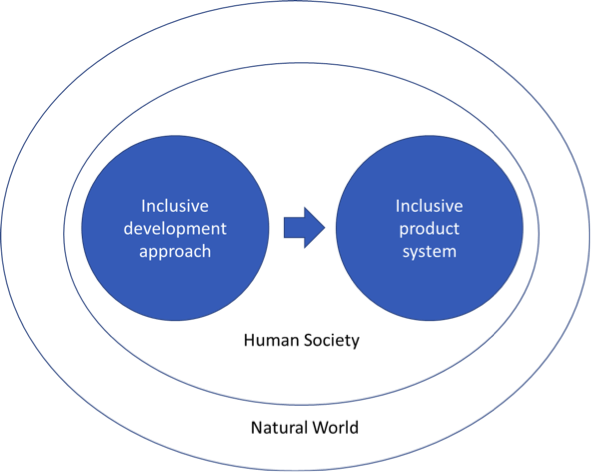
図1:包摂的アプローチと包摂的製品の関係(SEBoK Original)
Diversity, Equity, and Inclusion
Diversity, Equity, and Inclusion (DEI) foster increased engagement, productivity, and innovation in an organization.
多様性、公平性、包摂性(Diversity, Equity, and Inclusion、DEI)は、組織における参画を深め、生産性を高め、イノベーションを増やすことにつながる。
Systems engineers play a pivotal role in integrating concepts of diversity, equity, and inclusion within the teams they work on and in system design and development. In particular, systems engineers should: #Ensure that the systems engineering team and its leadership is inclusive and welcomes a diverse range of talent, and where necessary taking deliberate action to provide equity. #Ensures that the systems we realise are as accommodating as possible of the differences within the entire stakeholder community. This is known as “inclusive engineering”.
Failure to address either aspect can result in sub-optimal outcomes whether in terms of missed solutions, lower productivity, or delivering a system that does not fully meet the needs of the whole stakeholder community, i.e. failing to meet the ultimate goal of delivering a total optimal system solution.
Systems engineers are responsible for effectively communicating the importance and value of diversity, equity, and inclusion in enabling, promoting, and advancing systems engineering and systems approaches to address complex societal and technical global challenges.
Figure 1 shows how an inclusive development approach contributes to realizing inclusive solutions, within the context of the human system (whether within an organization, country, or the world), itself set within the context of the natural world. The natural world is shown because of the strong linkage between the full lifecycle of engineered products (from concept to disposal) and sustainable development. For instance: *Water pollution from industrial plants affecting those who live nearby *Air pollution from cars affecting pedestrians and those who live near major roads *Product end of life/disposal effects e.g. hazardous substances, contribution to land-fill
システムエンジニアは、自らが属するチームの中でも、システムの設計・開発においても、多様性、公平性、包摂性の概念を取り入れる上で極めて重要な役割を果たす。特に、システムエンジニアは次のことを行うべきである。
いずれか一方でも対処を怠ると、見逃される解決策、より低い生産性、あるいはステークホルダーコミュニティ全体のニーズを完全には満たさないシステムを提供してしまうという観点で、結果が最適にならないことがある。すなわち、全体として最適なシステムソリューションを提供するという最終目標を達成できないことがある。
システムエンジニアには、複雑な社会的・技術的な地球規模の課題に対処するためのシステムズエンジニアリングとシステムズアプローチを可能にし、促進し、前進させる上で、多様性、公平性、包摂性がもつ重要性と価値を効果的に伝える責任がある。
図1は、包摂的な開発アプローチが、人間システム(組織内、国内、世界のいずれであるかを問わない)のコンテキストの中で、包摂的なソリューションの実現にどのように寄与するかを示している。この人間システム自体は、自然界のコンテキストの中に置かれている。自然界を示しているのは、工学的に作られた製品の全ライフサイクル(概念段階から廃棄まで)と持続可能な開発とが強く結び付いているためである。例えば:
図中の英語
The following definitions are taken from the Accreditation Board for Engineering and Technology (ABET 2020), where they provide a reference point for conversations and materials about diversity, equity and inclusion. *Diversity is the range of human differences, encompassing the characteristics that make one individual or group different from another. Diversity includes, but is not limited to, the following characteristics: race, ethnicity, culture, gender identity and expression, age, national origin, religious beliefs, work sector, physical ability, sexual orientation, socioeconomic status, education, marital status, language, physical appearance, and cognitive differences. *Equity is the fair treatment, access, opportunity and advancement for all people, achieved by intentional focus on their disparate needs, conditions and abilities. Achieving equity requires understanding of historical and systemic patterns of disparity to address and eliminate barriers, and remove participation gaps as part of a comprehensive strategy to achieve equitable outcomes and social justice. *Inclusion is the intentional, proactive, and continuing efforts and practices in which all members respect, support, and value others. An inclusive environment provides equitable access to opportunities and resources, empowers everyone to participate equally, and offers respect in words and actions for all.
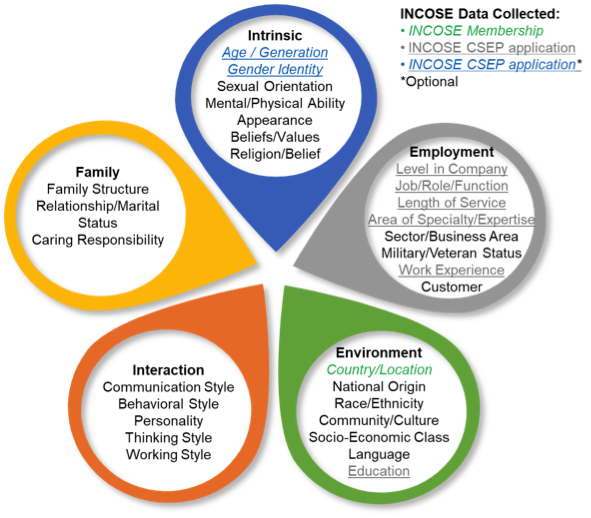
Commonly, the compound term "Diversity, Equity and Inclusion" (abbreviated to DEI) is used to refer to the broad subject area. The definition of diversity given encompasses a wide range of characteristics. As an example, Figure 2 shows 28 of these characteristics recognised by the International Council on Systems Engineering (INCOSE) (Harding and Pickard 2019) grouped into five areas: intrinsic, employment, environment, interaction, and family. The figure shows the relevance of these characteristics to the INCOSE Systems Engineering Certification Program.
以下の定義は Accreditation Board for Engineering and Technology(ABET 2020)から引用したものであり、ABET ではこれらの定義が、多様性、公平性、包摂性に関する対話や資料のための参照点となっている。
一般に、「Diversity, Equity and Inclusion」(DEI と略される)という複合語は、この広い主題領域を指すのに用いられる。上記の多様性の定義は、幅広い特性を包含している。例として図2は、国際システムズエンジニアリング協議会(INCOSE)が認識している(Harding and Pickard 2019)これらの特性のうち28項目を、本質的、雇用、環境、相互作用、家族の5つの領域に分類して示している。この図は、これらの特性と INCOSE Systems Engineering Certification Program との関連性を示している。
図中の英語
Engineers apply ingenuity, innovation, and systematic approaches to solve challenging problems. Life experience and academic research shows us that bringing a wide range of skills, knowledge, and thinking styles to bear on a problem is the most effective way to accelerate and improve the intended outcomes. These outcomes include improved “…financial performance, greater innovation and creativity, increased employee productivity and retention, improved customer or client orientation, and increased customer or client satisfaction.” (Royal Academy of Engineering 2015). Hunt et al. (2018) have found that companies at the forefront of gender and ethnic/cultural diversity in their leadership perform better financially.
エンジニアは、困難な問題を解決するために、創意工夫、イノベーション、体系的なアプローチを用いる。人生経験と学術研究は、幅広いスキル、知識、思考スタイルを問題に投入することが、意図した結果を早め、改善する最も効果的な方法であることを示している。こうした結果には、「…財務業績の向上、より大きなイノベーションと創造性、従業員の生産性と定着率の向上、顧客またはクライアント志向の改善、顧客またはクライアント満足度の向上」が含まれる(Royal Academy of Engineering 2015)。Hunt et al.(2018)は、リーダー層における性別および民族的/文化的多様性で先頭に立つ企業が、他の企業に比べて財務業績が良いことを見出している。
By contrast, a team of people with the same cultural background, life experiences, education, and thinking style could be expected to be relatively less effective and more prone to identifying predictable solutions. The US National Academy of Engineering (2002) notes the opportunity cost of a lack of diversity in terms of “designs not thought of, in solutions not produced.”
対照的に、文化的背景、人生経験、教育、思考スタイルが同じ人々から成るチームは、相対的に効果が低く、予測可能な解決策を見いだしがちであると予想され得る。US National Academy of Engineering(2002)は、多様性の欠如がもたらす機会費用を、「思い付かなかった設計、作られなかったソリューション」という観点から指摘している。
Inclusion, or ensuring a sense of inclusion in everyone, is necessary to ensure that all team members genuinely feel and believe that they belong and hence are able to use their talents and unique outlook to the maximum degree. By contrast, a lack of inclusion might make someone feel present but not involved or valued with the effect that the team as a whole does not deliver its best possible results.
包摂性、すなわちすべての人に包摂されているという感覚をもたらすことは、すべてのチームメンバーが、自分はここに属していると心から感じ、信じられるようにし、その結果として自らの才能と独自の見方を最大限に活かせるようにするために必要である。対照的に、包摂性が欠けていると、その場にいても関与していない、あるいは価値を認められていないと感じる人が生じ、その結果、チーム全体として可能な限り最良の結果を出せなくなることがある。
Equity is not the same as equality, nor is it the same as inequality. It is simply giving more to those who need it, which is proportionate to their own circumstances, in order to ensure that everyone has the same opportunities. In an engineering context this might mean providing more support to a disadvantaged student so they can reach their full potential, or providing additional support or time to a team member with a condition such as dyslexia.
公平性は平等と同じではなく、不平等と同じでもない。それは単に、すべての人が同じ機会を得られるよう、必要とする人に、その人自身の事情に比例して、より多くを与えることである。工学の文脈では、これは、不利な立場にある学生が潜在能力を最大限に発揮できるようにより多くの支援を提供すること、あるいはディスレクシアのような状態を抱えるチームメンバーに追加の支援や時間を提供することを意味し得る。
DEI is vital to successful systems engineering because of the range of contexts in which it is applied and the consideration of multiple stakeholder viewpoints at the heart of the approach. Systems engineering is applied to a wide range of system types in a broad variety of contexts–engineered systems range from microelectronics to aircraft, from abstract systems to smart cities. Systems engineers may be working with a customer, a prime contractor or integrator, a supplier or product manufacturer, a research/technology organization, or a government body. And these activities take place all over the globe, often as part of consortiums or complex partnered programmes involving multiple organizations, countries, and cultures.
システムズエンジニアリングは適用される文脈が幅広く、また複数のステークホルダーの観点を考慮することがそのアプローチの中核にあるため、DEI はシステムズエンジニアリングの成功に不可欠である。システムズエンジニアリングは、多種多様な文脈において幅広い種類のシステムに適用される。エンジニアード・システムは、マイクロエレクトロニクスから航空機まで、抽象的なシステムからスマートシティまで多岐にわたる。システムエンジニアは、顧客、元請業者またはインテグレータ、供給者または製品製造者、研究/技術組織、あるいは政府機関とともに働くことがある。そして、これらのアクティビティは世界中で行われ、多くの場合、複数の組織、国、文化が関わるコンソーシアムや複雑な提携プログラムの一部として行われる。
Applying systems engineering requires consideration of multiple viewpoints (such as the user, maintenance, safety, security) to achieve the proper holistic view of problem and solution. This means that the systems engineering team must be able to understand and work with a wide range of stakeholders. The transdisciplinary and integrative nature of systems engineering across other disciplines and activities, again, means that the systems engineering team needs to understand and work well with all the disciplines and specialities involved in realising a system (INCOSE 2020).
システムズエンジニアリングを適用するには、問題とソリューションを適切に全体的に捉えるために、複数の観点(ユーザー、保守、安全性、セキュリティなど)を考慮する必要がある。つまり、システムズエンジニアリングチームは、幅広いステークホルダーを理解し、彼らと協働できなければならない。システムズエンジニアリングが他の分野やアクティビティにまたがる超学際的・統合的な性質をもつことも、システムズエンジニアリングチームが、システムの実現に関わるすべての分野と専門領域を理解し、それらとうまく協働する必要があることを意味する(INCOSE 2020)。
Given this diversity of context and of types of systems engineered, and the wide range of stakeholders with whom they need to work, systems engineering workforce and culture should be at the forefront of DEI. In this way, we can represent as many aspects of the diverse community and their needs as possible within the team, and the diverse nature of the team also creates the innovation from which we can realise the best solutions.
こうした文脈の多様性、システムズエンジニアリングが適用されたシステムの種類の多様性、そして協働すべきステークホルダーの幅広さを考えると、システムズエンジニアリングの人材と文化は DEI の最前線にあるべきである。そうすることで、我々は多様なコミュニティとそのニーズのできるだけ多くの側面をチーム内に反映させることができ、さらにチームの多様性そのものが、我々が最良のソリューションを実現する源となるイノベーションを生み出す。
Like most of engineering, systems engineering was historically not practiced by a diverse group of people. Therefore, it is necessary to apply the notions of equity (as defined) in order to ensure that the widest range of people are enabled and empowered to become and develop as systems engineers.
工学の大部分と同様に、システムズエンジニアリングも歴史的に、多様な人々のグループによって実践されてこなかった。そのため、できるだけ幅広い人々に、システムエンジニアになる機会と、その職で自ら力を発揮し成長していける支援を提供するには、(定義したとおりの)公平性の概念を適用する必要がある。
Inclusion (as defined) is about ensuring that the whole (diverse) team is engaged, supported and feels safe and able to give of their best to the team’s activity. An inclusive team will produce increased productivity and better-quality outcomes than the alternative. It also provides increased potential for inclusive products because of the greater range of stakeholder views within the team.
(定義したとおりの)包摂性とは、(多様な)チーム全体が関与し、支援され、安心感をもち、チームのアクティビティに最善を尽くせるようにすることである。包摂的なチームは、そうでないチームよりも高い生産性とより良い品質の結果を生み出す。また、チーム内にいっそう幅広いステークホルダーの見方があるため、包摂的な製品が生まれる可能性も高まる。
Inclusive Engineering (Inclusive Engineering, n.d.) is the discipline of ensuring that engineering products and services are accessible to and inclusive of all users and are as free as possible from discrimination and bias. This should consider as far as possible all human differences (characteristics of diversity). It is a way of ensuring that engineering is appropriate, ethical, accessible, and as risk free as possible. The extent to which an engineered system is inclusive reduces the degree to which adaptation has to be applied to address the needs of people with differences e.g., differing vision, differing strength or motor functions.
包摂的エンジニアリング(Inclusive Engineering, n.d.)とは、工学製品やサービスがすべてのユーザーにとってアクセス可能かつ包摂的であり、差別や偏見から可能な限り解放されていることを確保する学問分野である。これは、すべての人間の相違(多様性の特性)を可能な限り考慮すべきものである。それは、工学が適切で、倫理的で、アクセス可能であり、かつ可能な限りリスクのないものとなることを確保する方法である。エンジニアード・システムが包摂的であるほど、相違のある人々(例えば、視覚の違い、体力や運動機能の違い)のニーズに対処するために施さなければならない適応の度合いは小さくなる。
In their enthusiasm for solutions engineers often do not stop to think about whether they have considered all of the things that impact on their design – and in particular all of the non-technical requirements that are not specified by the client or potential beneficiary. As a result, proposed solutions often lack the perspectives of people who have not been involved in their development – and in an industry which is notoriously lacking in diversity – this often means that they fail to include the perspectives of women, people with disabilities, the ageing population, and those with other under-represented characteristics.
解決策への熱意のあまり、エンジニアは、自らの設計に影響を与えるすべての事柄、特にクライアントや潜在的な受益者が仕様に定めていない非技術的な要求のすべてを考慮したかどうか、立ち止まって考えないことが多い。その結果、提案されたソリューションには、その開発に関与していない人々の視点が欠けていることが多く、多様性の欠如で悪名高い業界では、これは、女性、障害のある人々、高齢化する人口層、その他の過小代表の特性をもつ人々の視点を取り込めていないことを意味する場合が多い。
Figure 3 shows an inclusive engineering framework (ref. 8) which has eight elements, all of which are important factors for systems engineers to address even if the stated requirements do not cover them.
図3は、包摂的エンジニアリングの枠組み(ref. 8)を示す。この枠組みには8つの要素があり、そのいずれも、明示された要求事項でカバーされていない場合であっても、システムエンジニアが対処すべき重要な要因である。
Figure 3. Inclusive Engineering Framework (Used with Permission, (Bonfield 2021), https://www.inceng.org/inclusive-engineering-framework.html)
図3:包摂的エンジニアリングの枠組み(Used with Permission, (Bonfield 2021), https://www.inceng.org/inclusive-engineering-framework.html)
この図は原典のページに掲載されています。権利の都合により本サイトでは省略しています。原典で見る
One way that systems engineers can maximise the potential for inclusive and sustainable solutions is to ensure that DEI considerations are through application of the ISO/IEC/IEEE 15288:2015 Technical Processes. Table 1 illustrates the application of Inclusive Engineering these processes.
システムエンジニアが包摂的で持続可能なソリューションの可能性を最大化する1つの方法は、ISO/IEC/IEEE 15288:2015 技術プロセスの適用を通じて DEI の考慮事項が確保されるようにすることである。表1は、これらのプロセスへの包摂的エンジニアリングの適用を示す。
<center>Table 1. Mapping of the application of ISO/IEC/IEEE 15288:2015 Technical Processes to Inclusive Engineering considerations.</center>
表1. ISO/IEC/IEEE 15288:2015 技術プロセスの適用と包摂的エンジニアリングの考慮事項との対応付け。
| ISO/IEC/IEEE 15288:2015 Technical Process |
|---|
| Inclusive Engineering considerations |
| Business or Mission Analysis |
| Stakeholder Needs and Requirements Definition |
| System Requirements Definition |
| Architecture Definition |
| Design Definition |
| System Analysis |
| Implementation |
| Integration |
| Verification |
| Transition |
| Validation |
| Operations |
| Maintenance |
| Disposal |
| ISO/IEC/IEEE 15288:2015 技術プロセス | 包摂的エンジニアリングの考慮事項 |
|---|---|
| 事業またはミッション分析 | すべてのステークホルダーが特定されるようにする。これには、明白な(受益する)ステークホルダーと、システムおよび関連プロジェクトの影響を受ける可能性のある者(本人の意思とは関係なく影響を受けるステークホルダーと呼ばれる)の双方が含まれる。 |
| ステークホルダーニーズと要求事項の定義 | 明示されたステークホルダーニーズと、包摂的な設計から生じる、明示されていないが必要なニーズ(例えばアクセス、言語、障害)を特定する。持続可能な開発目標や循環経済などへの理解を活かし、ニーズに関する将来を見据えた議論に役立てる。 |
| システム要求定義 | 包摂性の考慮事項が、必要に応じて標準や法令を活用した、明確に規定された要求事項につながるようにする。システム境界の定義が、システムがより広いコンテキストに及ぼす意図された創発的効果と意図されない創発的効果を踏まえたものとなるようにする。公平な結果を最適化するために、慎重なトレードオフ分析と選択肢分析を促進する。 |
| アーキテクチャ定義 | 包摂性と持続可能性の要因を十分に考慮できるよう、必要なすべてのアーキテクチャ観点が考慮されるようにする。システムライフサイクルの中で有益な場合に将来の技術を採用できるよう、アーキテクチャが開かれたものとなるようにする。 |
| 設計定義 | 技術の選択と設計進化の原則が、持続可能な開発目標や循環経済などを踏まえたものとなるようにする。 |
| システム分析 | システム分析に、包摂的エンジニアリングと持続可能な開発の要因のモデリングと予測、特に主要な創発的結果を理解するためのモデリングが含まれるようにする。 |
| 実装 | 設計チームが多様であり、適切な訓練を受け、多様性、公平性、包摂性、持続可能性、循環経済などの原則を理解しているようにする。 |
| 統合 | 統合が安全で、セキュアで、環境上の要求事項に適合したものとなるようにする。 |
| 検証 | 計画された検証アクティビティが、すべての関連するステークホルダーに対する多様性、公平性、包摂性のすべての側面に完全に対処し、かつ安全で、セキュアで、環境上の要求事項に適合したものとなるようにする。 |
| 移行 | 移行計画がすべてのステークホルダーを完全にカバーし、安全で、セキュアで、環境上の要求事項に適合したものとなるようにするとともに、一時的/移行的な取決めが本人の意思とは関係なく影響を受けるステークホルダーや自然環境に偶発的な悪影響を与えないように、すなわち公平な移行計画が存在するようにする。 |
| 妥当性確認 | 計画された妥当性確認アクティビティが、間接的/本人の意思とは関係なく影響を受けるステークホルダーと自然環境を含むすべての関連するステークホルダーに対する多様性、公平性、包摂性のすべての側面に完全に対処し、かつ安全で、セキュアで、環境上の要求事項に適合したものとなるようにする。 |
| 運用 | 運用スタッフの選抜と訓練を十分なものとし、多様な運用者の集団がシステムのすべての側面を正しく運用して、システムが安全で、セキュアで、環境に適合した状態を保てるようにする。 |
| 保守 | 保守スタッフの選抜と訓練を十分なものとし、多様な保守者の集団がシステムのすべての側面を正しく運用して、システムの安全とセキュアな状態を保ち、環境上の要求事項への適合を保てるようにする。計画された保守によって、システムがその耐用期間を通じて当初の仕様(例えばエネルギー使用、排出、汚染)を完全に満たすようにする。 |
| 廃棄 | 廃棄スタッフの選抜と訓練を十分なものとし、多様なスタッフの集団が有害物質を正しく廃棄して、システムの安全とセキュアな状態を保ち、環境上の要求事項への適合を保てるようにする。有害物質の廃棄が慎重に計画され、リサイクルと再利用の機会が最大化されるようにする。 |
ABET. 2020. "Diversity, equity, and inclusion." Accreditation Board for Engineering and Technology (ABET). Available: https://www.abet.org/about-abet/diversity-equity-and-inclusion/. Accessed December 31, 2020.
Bonfield, D. 2020. "Inclusive engineering framework." Inclusive Engineering. Available: https://www.inceng.org/inclusive-engineering-framework.html. Accessed December 31, 2020.
Harding, A. and A. Pickard. "Towards a more diverse INCOSE." INCOSE INSIGHT Practitioner Magazine. 22(3). Oct 2019.
Hunt, V., S. Prince, S. Dixon-Fyle, and L. Yee. 2018. “Delivering Through Diversity.” Report, McKinsey & Company. https://www.mckinsey.com/~/media/McKinsey/Business%20Functions/Organization/Our%20Insights/Delivering%20through%20diversity/Delivering-through-diversity_full-report.ashx
Hunt, V., S. Prince, S. Dixon-Fyle, and L. Yee. 2018. “Delivering Through Diversity.” Report, McKinsey & Company. https://www.mckinsey.com/~/media/McKinsey/Business%20Functions/Organization/Our%20Insights/Delivering%20through%20diversity/Delivering-through-diversity_full-report.ashx
INCOSE. 2020. "Definition of systems engineering." https://www.incose.org/about-systems-engineering/about-systems-engineering Accessed 31 Dec 2020.
Inclusive Engineering. n.d. "Inclusive engineering." Available: https://www.inceng.org/. Accessed December 31, 2020.
National Academy of Engineering. 2002. "Diversity in Engineering: Managing the Workforce of the Future." Washington, DC: The National Academies Press. https://doi.org/10.17226/10377
National Academy of Engineering. 2002. "Diversity in Engineering: Managing the Workforce of the Future." Washington, DC: The National Academies Press. https://doi.org/10.17226/10377
Royal Academy of Engineering. 2015. “Increasing Diversity and Inclusion in Engineering–A Case Study Toolkit.” Case study, Royal Academy of Engineering. https://www.raeng.org.uk/policy/diversity-in-engineering/diversity-inclusion-toolkit-re-sources/documents/increasing-diversity-and-inclusion-in-engi-neering.
None.
None.