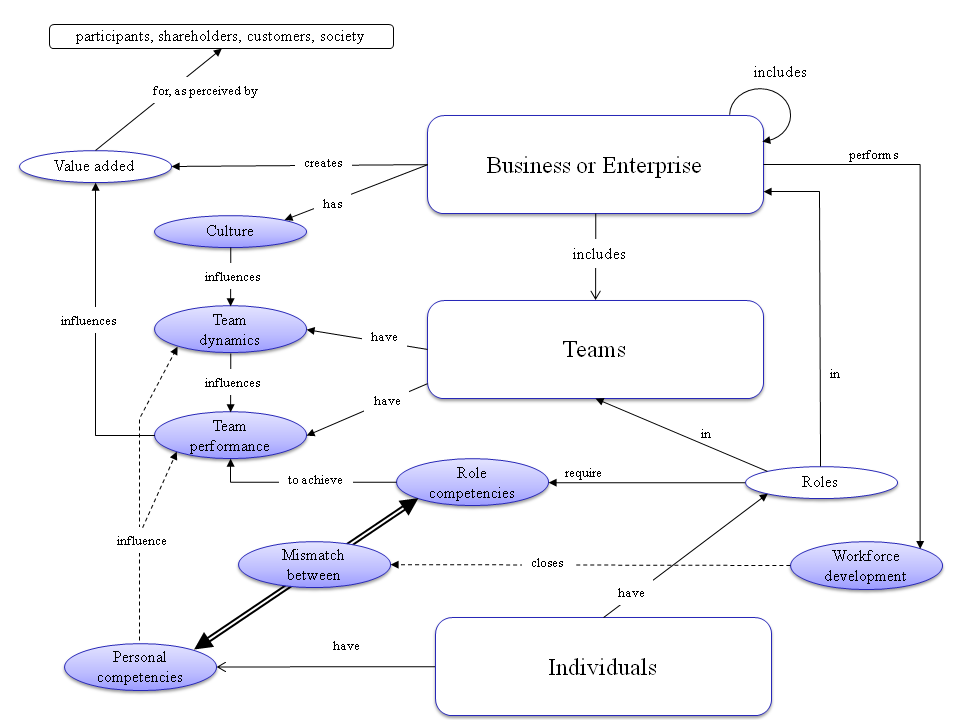
図1. 文化、力量、チームパフォーマンス、個人の力量。(SEBoK Original)
Determining Needed Systems Engineering Capabilities in Businesses and Enterprises
Enabling a business or enterprise to perform systems engineering (SE) well requires deciding which specific SE capabilities the business or enterprise needs in order to be successful. (In the rest of this article business or enterprise is usually abbreviated to just "business", because a business is a specific type of enterprise that has sufficiently strong central authority and motivation to take steps to enable SE). SE capabilities should support the Systems Engineering Organizational Strategy and reflect the nature of the business, its products and services, various stakeholders, business leadership focus, etc.
ビジネス(business)やエンタープライズ(enterprise)がシステムズエンジニアリング(systems engineering、SE)をうまく実施できるようにするには、そのビジネスやエンタープライズが成功するために具体的にどの SE 能力を必要とするかを決定しなければならない。(本記事の以下の部分では、「ビジネスまたはエンタープライズ」を通常は単に「ビジネス」と略記する。ビジネスとは、SE を可能にするための措置を講じるのに十分な強い中央の権限と動機を持つ、特定のタイプのエンタープライズだからである。)SE 能力は、Systems Engineering Organizational Strategy を支援するとともに、ビジネスの性質、その製品とサービス、さまざまなステークホルダー、ビジネスのリーダーシップの重点などを反映すべきである。
This topic, which is part of the Enabling Businesses and Enterprises knowledge area (KA) of Part 5, summarizes the factors used to decide which SE capabilities a business needs; e.g., the interactions between SE and other functional areas in the business, and consideration of social dynamics and leadership at the team and business levels. Needed capabilities may be decided and developed centrally by a business, or within teams and by individuals, or through some combination of the two. Determination of team SE capability is discussed in the article Team Capability, and individual SE competencies are discussed in the article Roles and Competencies.
本トピックは Part 5 の Enabling Businesses and Enterprises 知識領域(KA)の一部であり、ビジネスが必要とする SE 能力を決定する際に用いられる要因を要約する。例えば、ビジネスにおける SE と他の機能領域との相互作用や、チームレベルおよびビジネスレベルでの社会力学とリーダーシップの考慮などである。必要な能力は、ビジネスが中央で決定・開発する場合もあれば、チーム(teams)の中で、また個人が決定・開発する場合もあり、あるいはその両方を組み合わせる場合もある。チームの SE 能力の決定については Team Capability の記事で、個人の SE 力量については Roles and Competencies の記事で論じる。
Enterprise Systems Engineering and Capability Engineering techniques can be used to establish needed SE capabilities. At a high level of abstraction, the following are basic steps that could be used to decide the desired SE capabilities within the business:
#understand the context; #determine the required SE roles; #determine the competencies and capabilities needed for each of the SE roles; #assess the ability and availability of the needed SE organizations, teams, and individuals; #adjust the required SE roles based on the actual ability and availability; and #organize the SE function to facilitate communication, coordination, and performance.
See the article Organizing Business and Enterprises to Perform Systems Engineering for additional information. More information on context and required SE roles is provided below.
必要な SE 能力を確立するには、Enterprise Systems Engineering と Capability Engineering の技法を用いることができる。抽象度の高いレベルで見ると、ビジネス内で望ましい SE 能力を決定するために用いることのできる基本的なステップは次のとおりである:
追加情報については Organizing Business and Enterprises to Perform Systems Engineering の記事を参照。文脈と必要な SE の役割の詳細は以下で述べる。
The following discussion illustrates some of the contextual factors that influence the definition of the SE capability needed by a business.
以下では、ビジネスが必要とする SE 能力の定義に影響する文脈上の要因のいくつかを示す。
The SE approach adopted by the business should depend on what role the organization plays. Ring (2002) defines a value cycle, and where the business sits in that cycle is a key influence of SE capability need.
*Problem owner: focus on identifying and scoping the system problem (defining system-of-interest (SoI))and understanding the nature of the appropriate respondent system using Enterprise Systems Engineering and Capability Engineering approaches. *System operator: focus on establishing all the necessary components of capability to deliver the required services, as well as on integrating new system assets into the system operation as they become available (see Service Systems Engineering). The definition of the components of capability varies by organization - e.g., **The US Department of Defense defines the components of capability as DOTMLPF: doctrine, organization, training, materiel, logistics, people, and facilities. **The UK Ministry of Defense defines the components of capability as TEPIDOIL; i.e., training, equipment, people, information, doctrine, organization, infrastructure, and logistics. **Other domains and organizations define the components of capability with similar, equivalent breakdowns which are either explicit or implicit. *Prime contractor or primary commercial developer: focus on understanding customer needs and trading alternative solution approaches, then establishing a system team and supply chain to develop, deliver, support, and in some cases, operate the system solution. This may require enterprise SE (see Enterprise Systems Engineering) as well as "traditional" product SE (see Product Systems Engineering). *Subsystem/component developer: focus on understanding the critical customer and system integrator issues for the subsystem or component of interest, defining the component or subsystem boundary, and integrating critical technologies. This may exploit re-usable elements and can be sold in identical or modified forms to several customers. (In Part 4 of the SEBoK, see Systems of Systems, Enterprise Systems Engineering, and Product Systems Engineering for more information and references to the literature.) *Specialist service provider: focus on specific process capabilities and competences which are typically sold on a time and materials or work package basis to other businesses.
ビジネスが採用する SE アプローチは、その組織が果たす役割に依存すべきである。Ring(2002)は価値サイクルを定義しており、ビジネスがそのサイクルのどこに位置するかは、SE 能力の必要性を左右する主要な要因である。
- 米国国防総省は、能力の構成要素を DOTMLPF、すなわちドクトリン、組織、訓練、資材、兵站、人、施設と定義する。 - 英国国防省は、能力の構成要素を TEPIDOIL、すなわち訓練、装備、人、情報、ドクトリン、組織、インフラストラクチャ、兵站と定義する。 - 他の領域や組織は、明示的か暗黙的かを問わず、類似した等価な内訳によって能力の構成要素を定義している。
The SE capabilities required by the business will depend on the system life cycle phase(s) in which it operates (see Life Cycle Models in Part 3).
*Concept definition phase: requires the SE capability to identify a “problem situation,” define the context and potential concept of operations for a solution system, assess the feasibility of a range of possible solutions in broad terms, and refine the definition to allow the development of system requirements for the solution (see System Concept Definition in Part 3). *System Definition phase: requires the SE capability to influence concept studies (ensure feasible and understood by the development team), establish the trade space that remains at the end of the concept study, perform the system definition activities, including architecture design, and create a detailed definition of the system elements. *System realization phase: requires the SE capability to configure the manufacturing and logistics systems for the system assets, and manufacture system assets (see System Realization in Part 3). *System deployment and use: requires the SE capability to maintain business continuity during the transition to operation, bring the system into service, support system, monitor system performance, and respond to emerging needs (see System Deployment and Use). Elliott et al. (2008) describe the different emphases that should be placed in SE during the "in-service" phase. This phase particularly requires the business to be able to perform SE at an appropriate operational tempo. *Retirement phase: requires the SE capability for ensuring the safe retirement of systems and keeping them in a state ready for re-activation (“mothballed”), safe disposal of the system assets.
ビジネスが必要とする SE 能力は、そのビジネスが活動するシステムライフサイクル(life cycle)のフェーズに依存する(Part 3 の Life Cycle Models を参照)。
Depending on the business model and the contracting environment, the business may find that its responsibility to end users is:
ビジネスモデルや契約環境によっては、ビジネスは、エンドユーザーに対する自らの責任が次のいずれかであると気付くことがある:
*explicit, or spelled out by clear requirements and prescriptive legislation; or
• 明示的:明確な要求事項と規範的な法令によって明記される、または
*implicit; i.e., a legal or ethical obligation to ensure “fitness for purpose” which may be enforced by commercial frameworks, national or international standards, and specific product liability legislation.
• 暗黙的:「目的への適合性」を確実にする法的または倫理的な義務であり、商業的な枠組み、国内または国際的な標準、具体的な製造物責任の法令によって強制されることがある。
Typically, businesses whose business model is contract driven focus on satisfying explicit requirements, whereas market-driven businesses must be more aware of implicit responsibilities.
典型的には、契約駆動型のビジネスモデルを持つビジネスは明示的な要求事項を満たすことに焦点を当てるのに対し、市場駆動型のビジネスは暗黙的な責任をより強く意識しなければならない。
The business may contract with its customers to deliver any of the following:
*an outcome: The intended benefits the system is expected to provide, requires enterprise systems engineering; *an output: Deliver or operate the system or part of it against agreed acceptance criteria; requires product systems engineering; *an activity: Perform a specified set of tasks, requires service systems engineering; and *a resource: Provide a specified resource; requires focus on individual competencies - see Enabling Individuals.
ビジネスは、その顧客と以下のいずれかを提供する契約を結ぶことがある:
The business or enterprise may need very different SE approaches depending on the scale of the system at which the business operates. The following categories are based on Hitchins’ five layered system model (Hitchins 2005): *Level 1: Subsystem and technical artifacts – focus on product systems engineering and on technology integration. *Level 2: Project systems – focus on product systems engineering with cross-discipline and human integration. *Level 3: Business systems – focus on enterprise systems engineering , service systems engineering to implement them, and on service management (Chang 2010) and continuous improvement (SEI 2010b); see also Quality Management) for the day to day running of the business. *Level 4: Industry systems – If there is a conscious effort to treat an entire industry as a system, the focus will be on Enterprise Systems Engineering, and on the long-term economic and environmental sustainability of the overall industry. *Level 5: Societal systems – Enterprise systems engineering is used to analyze and attempt to optimize societal systems (see Singapore Water Management in Part 7).
Sillitto (2011) has proposed extending this model to cover sustainability issues by adding two additional layers, the “ecosystem” and the “geosystem”.
ビジネスやエンタープライズは、それが活動するシステムの規模によって、大きく異なる SE アプローチを必要とすることがある。以下のカテゴリは、Hitchins の5層システムモデルに基づく(Hitchins 2005):
Sillitto(2011)は、「生態系」と「地球系」という2つの層を追加して、持続可能性の問題をカバーできるようこのモデルを拡張することを提案した。
Creating Systems That Work – Principles of Engineering Systems for The 21st century identifies three “kinds” of SE, originally proposed by Stupples (2006), that have to do with the level of cross-disciplinary integration involved (Elliot et al. 2007). #Within a discipline (e.g., software, hardware, optics, or mechanics), the SE focus is on taking a systems view of the architecture and implementation to manage complexity and scale within a single engineering discipline. #In multiple disciplines (e.g., software, hardware, optics, and mechanics), the SE focus is on holistic integration of multiple technologies and skills to achieve a balanced system solution. #In socio-technical systems integration, the SE focus is on getting people and the non-human parts of the system working synergistically.
Sillitto (2011) proposed extending this model properly to cover sustainability issues by adding one additional level, “Environmental Integration”. He describes this level and show how the Stupples’ levels relate to other dimensions used to categorize systems and professional engineering skills.
Creating Systems That Work – Principles of Engineering Systems for The 21st century は、関与する分野横断的統合の水準に関わる3つの「種類」の SE を特定している。これらはもともと Stupples(2006)が提案したものである(Elliot et al. 2007)。
Sillitto(2011)は、「環境統合」という水準を1つ追加し、持続可能性の問題を適切にカバーできるようこのモデルを拡張することを提案した。彼はこの水準について述べ、Stupples のレベルが、システムや専門的エンジニアリングスキルの分類に用いられる他の次元とどう関係するかを示している。
The level of rigor in the SE approach adopted by the business will depend on the criticality of various classes of requirement. (See Systems Engineering and Quality Attributes.) *Safety and security requirements often demand specific auditable processes and proof of staff competence. *Ethical and environmental requirements may require an audit of the whole supply and value chain. *Extremely demanding combinations of performance requirements will require more design iteration and more critical control of component characteristics; e.g., see Quality Management and Management for Quality in High-Technology Enterprises (Fasser and Brettner 2010).
ビジネスが採用する SE アプローチの厳密さの水準は、さまざまなクラスの要求事項の重要度に依存する。(Systems Engineering and Quality Attributes を参照。)
The nature of the contractual relationship between a business and its customers and end users will influence the style of SE. *Fixed price, cost plus, or other contracting models influence the mix of focus on performance and cost control and how the business is incentivized to handle risk and opportunity. *In mandated work share arrangements, the architecture of the product system may be compromised or constrained by the architecture of a viable business system; this is often the case in multi-national projects and high-profile government procurements (Maier and Rechtin 2009, 361-373). *In self-funded approaches, the priorities will be requirements elicitation approaches designed to discover the latent needs of consumers and business customers, as well as development approaches designed to achieve rapid time to market with a competitive offering, or to have a competitive offering of sufficient maturity available at the most critical time during a customer’s selection process. *In single phase or whole-life approaches, the business may be able to optimize trade-offs across the development, implementation, and in-service budgets, and between the different components of capability.
ビジネスと、その顧客およびエンドユーザーとの間の契約関係の性質は、SE のスタイルに影響する。
Well-defined and slowly changing technologies, products, and services permit the use of traditional SE life cycle models based on the waterfall model because the requirements risk and change is expected to be low (see Life Cycle Models).
明確に定義され、変化の緩やかな技術、製品、サービスでは、要求事項のリスクと変更が小さいと予想されるため、ウォーターフォールモデルに基づく伝統的な SE ライフサイクルモデルを使用できる(Life Cycle Models を参照)。
Poorly defined and rapidly changing problem domains, with operators subject to unpredictable and evolving threats, demand more flexible solutions and agile processes. SE should focus on modular architectures that allow rapid reconfiguration of systems and systems-of-systems, as well as rapid deployment of new technologies at a subsystem level to meet new demands and threats.
定義が不明確で急速に変化する問題領域で、運用者が予測不能かつ進化する脅威にさらされる場合には、より柔軟なソリューションとアジャイルなプロセスが求められる。SE は、新しい要求や脅威に対応するため、システムやシステム・オブ・システムズの迅速な再構成と、サブシステムレベルでの新技術の迅速な配備の双方を可能にするモジュラーアーキテクチャに焦点を当てるべきである。
When the solution domain is stable, with a low rate of technology evolution, and systems use mature technology, the focus is on optimum packaging and configuration of known and usually well-proven building blocks within known reference architectures, and on low-risk incremental improvement over time.
ソリューション領域が安定していて技術の進化速度が低く、システムが成熟した技術を用いる場合、焦点は、既知の参照アーキテクチャ内で、既知の、通常は十分に実証済みのビルディングブロックを最適にパッケージングし構成することと、時間をかけた低リスクの漸進的な改善に置かれる。
When there is rapid technology evolution, with pressure to bring new technologies rapidly to market and/or into operational use, the SE approach has to focus on technology maturation, proof of technology and integration readiness, and handling the technology risk in the transition from the lab to the proof of concept to the operational system.
技術の進化が急速で、新しい技術を迅速に市場に投入する、および/または運用に投入する圧力がある場合、SE アプローチは、技術の成熟、技術と統合の準備状況の実証、そして実験室から概念実証を経て運用システムへと移行する際の技術リスクへの対処に焦点を当てなければならない。
There is usually a trade-off between lead time expectations and the level of integrity/certification. In the development of new systems, short lead times are seldom compatible with high levels of system integrity and rigorous certification.
リードタイムに対する期待と、完全性/認証の水準との間には、通常トレードオフがある。新しいシステムの開発では、短いリードタイムが、高い水準のシステム完全性および厳密な認証と両立することはめったにない。
The business drivers for SE deployment may be one or more of the following:
SE 配備のビジネス上の駆動要因は、以下のうちの1つ以上であり得る:
• To perform existing business better;
• 既存のビジネスをより良く遂行すること
• To recover from a competitive shock or a shift in clients' expectations;
• 競争上の衝撃や顧客の期待の変化から回復すること
• To develop a new generation product or service;
• 新世代の製品やサービスを開発すること
• To enter a new market; and/or
• 新しい市場に参入すること、そして/または
• To reposition the business or enterprise in the value chain.
• バリューチェーンにおけるビジネスやエンタープライズの位置付けを変更すること
In the first case, SE can be deployed incrementally in parts of the business process where early tangible benefits can be realized. This could be the early steps of a business-wide strategic plan for SE. (See Systems Engineering Organizational Strategy for more on setting SE strategy and Developing Systems Engineering Capabilities within Businesses and Enterprises for improving SE capabilities.)
最初のケースでは、SE は、早期に具体的な便益を実現できるビジネスプロセスの部分に漸進的に配備できる。これは、ビジネス全体にわたる SE の戦略計画の初期ステップとなり得る。(SE 戦略の設定については Systems Engineering Organizational Strategy を、SE 能力の改善については Developing Systems Engineering Capabilities within Businesses and Enterprises を参照。)
In the other cases, the business is going through disruptive change and the early priority may be to use systems thinking (see Systems Thinking) and enterprise SE approaches to scope the transformation in the context of a major change initiative.
それ以外のケースでは、ビジネスは破壊的な変化を経験しており、大規模な変革イニシアチブの文脈の中で変革の範囲を定めるために、システム思考(systems thinking)(Systems Thinking を参照)とエンタープライズ SE のアプローチを用いることが、早期の優先事項となり得る。
There are three distinct flavors of products or service types (see Systems Engineering Organizational Strategy): #In a product or productized service, the focus will be on predicting how the market might change during the development period, eliciting, anticipating, and balancing requirements from a variety of potential customers, and optimizing features and product attractiveness against cost and reliability. #In a custom solution (product or service) the focus will be on feasible and low-risk (usually) approaches to meet the stated requirement within budget, using system elements and technologies that are known or expected to be available within the desired development timescale. #Tailored solutions based on standard product and/or service elements require a much more sophisticated SE process that is able to use a “product line approach” to blend standard modules with planned adaptation to meet clients’ specific needs more quickly and cheaply than would be possible with a single contract solution. The business needs to manage the life cycle and configuration of the standard modules separately from, but coherently with, the life cycle and configuration of each tailored solution.
製品やサービスのタイプには、はっきりと異なる3つの種類がある(Systems Engineering Organizational Strategy を参照):
After understanding the context for the business, the next step is to determine the SE capabilities required in the role in the business. The SEI Capability Maturity Models for acquisition, development, and services (SEI 2007; SEI 2010a; SEI 2010b) provide a framework for selecting SE capabilities relevant to different types of business. Existing SE competency models can be used to assist in determining the needed capabilities. An example is the INCOSE SE Competencies Framework (INCOSE 2010). (See Roles and Competencies for more information on competency models.)
ビジネスの文脈を理解したら、次のステップは、ビジネスにおける役割の中で要求される SE 能力を決定することである。取得、開発、サービスを対象とする SEI の能力成熟度モデル(SEI 2007; SEI 2010a; SEI 2010b)は、さまざまなタイプのビジネスに関連する SE 能力を選択するための枠組みを提供する。必要な能力の決定を支援するために、既存の SE 力量モデルを用いることができる。その一例が INCOSE SE Competencies Framework(INCOSE 2010)である。(力量モデルの詳細は Roles and Competencies を参照。)
The spread of SE focus can be a wide spectrum, from SE being focused in a specialist, interface or glue role (Sheard 1996), to the idea that “SE is good engineering with special areas of emphasis… including interfaces between disciplines” (Blanchard and Fabrycky 2005) and so it is shared by all. In any organization where activities and skills are shared, there is always a danger of silos or duplication.
SE の焦点の広がりは、幅広いスペクトルをとり得る。SE を専門家の役割、インタフェースの役割、あるいは糊の役割に焦点を当てたものとする考え方(Sheard 1996)から、「SE は特別な重点領域を持つ良いエンジニアリングであり…分野間のインタフェースを含む」(Blanchard and Fabrycky 2005)という考え方までがあり、後者では SE は全員に共有される。アクティビティとスキルが共有される組織では、どこであれ、サイロや重複の危険が常にある。
As part of the role definition, the business must define where an individual doing SE fits into career progression (what roles before SE, what after?). Developing Individuals describes how individuals improve SE; the organization must define the means by which that development can be enacted. Businesses need to customize from a range of development strategies; see, for example, Davidz and Martin (2011).
役割定義の一環として、ビジネスは、SE を行う個人がキャリアの進展のどこに位置付けられるか(SE の前にどのような役割があり、後にどのような役割があるか)を定義しなければならない。Developing Individuals では、個人が SE の力量をどのように高めるかを述べている。組織は、その育成を実施する手段を定めなければならない。ビジネスは、さまざまな開発戦略をもとにカスタマイズする必要がある。例えば Davidz and Martin(2011)を参照。
As shown in Figure 1 below, management action on workforce development will be required if there are systemic mismatches between the competencies required to perform SE roles and the actual competencies of individuals. The organizational culture may have a positive or negative effect on team performance and the overall value added by the business (see Culture).
下の図1に示すように、SE の役割の遂行に必要な力量と、個人の実際の力量との間に組織の仕組みに根差した不整合がある場合には、ワークフォース開発に関する経営層の措置が必要になる。組織文化は、チームパフォーマンスや、ビジネスが付加する全体的な価値に、肯定的または否定的な影響を与え得る(Culture を参照)。
図中の英語
The decisions on how to implement SE capability must be embedded in the businesses processes and its availability methodologies and toolsets. Embedding SE principles, processes, and methods in the organization’s quality management system means that senior management and the quality system will help embed SE in the organizational business process and make sure it is applied (INCOSE 2012; ISO/IEC 2008; see Quality Management).
SE 能力をどのように実装するかについての決定は、ビジネスのプロセスと、その利用可能な方法論およびツールセットに組み込まれなければならない。SE の原則、プロセス、方法を組織の品質マネジメントシステムに組み込むということは、上級経営層と品質システムが、SE を組織のビジネスプロセスに組み込み、それが適用されることを確実にするのを助けることを意味する(INCOSE 2012; ISO/IEC 2008; Quality Management を参照)。
When defining the processes and tools, a balance between the need for a systematic and standardized approach to SE processes, such as that seen in INCOSE (2012), with the flexibility inherent in systemic thinking is critical. Systems thinking helps the organization understand problem situations, remove organizational barriers, and make the most of the organization’s technical capabilities (see Beasley (2011)).
プロセスとツールを定義する際には、INCOSE(2012)に見られるような、SE プロセスに対する体系的で標準化されたアプローチの必要性と、システム的思考に本来備わる柔軟性とのバランスを取ることが重要である。システム思考(systems thinking)は、組織が問題状況を理解し、組織的な障壁を取り除き、組織の技術的能力を最大限に活かすのに役立つ(Beasley (2011) を参照)。
Clarity on how the organization performs SE is important. Typically, implementing SE may be part of an organization’s improvement, so Kotter’s principles on creating a vision, communicating the vision, and empowering others to act on the vision are extremely relevant (Kotter 1995). The way an organization chooses to perform SE should be part of the vision of the organization and must be understood and accepted by all.
組織が SE をどのように実施するかを明確にしておくことは重要である。典型的には、SE の実装は組織改善の一部となり得るため、ビジョンを作り、ビジョンを伝え、他の人々がビジョンに基づいて行動できるよう権限を与えることについての Kotter の原則は、極めて関連性が高い(Kotter 1995)。組織が SE を実施するために選ぶ方法は、組織のビジョンの一部であるべきであり、全員に理解され、受け入れられなければならない。
Many of the major obstacles in SE deployment are cultural (see Culture).
SE 配備における主要な障害の多くは、文化的なものである(Culture を参照)。
One of the lean enablers for SE is to "pursue perfection" (Oppenheim et al. 2010). The means of improvement at a business or enterprise level are discussed in detail elsewhere, but the starting point must be deciding what SE capabilities the organization wants. It needs to be recognized that the needed capabilities change over time (learning, improving, or losing capability). Thus, balancing SE with everything else that it involves is an ever-changing process.
SE のためのリーンイネーブラの一つは「完璧を追求する」ことである(Oppenheim et al. 2010)。ビジネスやエンタープライズのレベルでの改善の手段については他の箇所で詳しく論じられているが、出発点は、組織がどのような SE 能力を望むかを決定することでなければならない。必要な能力は時間とともに変化する(学習し、改善し、あるいは能力を失う)ことを認識する必要がある。したがって、SE と、それに伴う他のすべての事柄とのバランスを取ることは、絶えず変化するプロセスである。
Beasley, R. 2011. "The Three T's of Systems Engineering." Paper presented at the 21st Annual International Council on Systems Engineering (INCOSE) International Symposium. June 2011. Denver, CO, USA.
Blanchard, B. and W. Fabrycky. 2005. Systems Engineering and Analysis, 4th edition. Upper Saddle River, NJ, USA: Prentice Hall.
Chang, C.M. 2010. Service Systems Management and Engineering: Creating Strategic Differentiation and Operational Excellence. Hoboken, NJ, USA: John Wiley and Sons.
Davidz, H. L. and J. Martin. 2011. "Defining a Strategy for Development of Systems Capability in the Workforce." Systems Engineering. 14(2) (Summer, 2011): 141-143
Elliott, B. et al. 2008. INCOSE UK Chapter Working Group on Applying Systems Engineering to In-Service Systems, Final Report. Somerset, UK: INCOSE UK Chapter Working Group. Accessed September 6, 2011. Available at https://www.incoseonline.org.uk/Documents/Groups/InServiceSystems/is_tr_001_final_report_final_1_0.pdf.
Fasser, Y. and D. Brettner. 2001. Management for Quality in High-Technology Enterprises. New York, NY, USA: Wiley.
Hitchins, D. 2005. Systems Engineering 5 Layer Model. Accessed on April 24, 2013. Available at https://www.hitchins.net/systems/world-class-systems-enginee.html.
INCOSE. 2010. SE Competencies Framework, Issue 3. Somerset, UK: International Council on Systems Engineering (INCOSE), INCOSE Technical Product 2010-0205.
INCOSE. 2012. Systems Engineering Handbook: A Guide for System Life Cycle Processes and Activities, version 3.2.2. San Diego, CA, USA: International Council on Systems Engineering (INCOSE), INCOSE-TP-2003-002-03.2.2.
ISO/IEC/IEEE. 2015. Systems and Software Engineering -- System Life Cycle Processes. Geneva, Switzerland: International Organisation for Standardisation / International Electrotechnical Commissions. ISO/IEC/IEEE 15288:2008.
Kotter, J. 1995. Leading Change: Why Transformation Efforts Fail. Boston, MA, USA: Harvard Business Review (March–April 1995).
Maier, M. and E. Rechtin. 2009. The Art of System Architecting, Third Edition. Boca Raton, FL, USA: CRC Press.
Oppenheim et al. 2010. Lean Enablers for Systems Engineering. New York, NY, USA: Wiley and Sons, Inc.
Ring J. 2002. Toward an Ontology of Systems Engineering. INSIGHT, 5(1): 19-22.
SEI. 2007. CMMI for Acquisition. Version 1.2. Technical Report CMU/SEI-2007-TR-017. Pittsburgh, PA, USA: Software Engineering Institute, Carnegie Mellon University.
SEI. 2010a. Capability Maturity Model Integrated (CMMI) for Development. Version 1.3. Pittsburgh, PA, USA: Software Engineering Institute, Carnegie Mellon University.
SEI. 2010b. CMMI for Services. Version 1.3. Technical Report CMU/SEI-2010-TR-034. Pittsburgh, PA, USA: Software Engineering Institute, Carnegie Mellon University.
Sheard, S. 1996. "12 Systems Engineering Roles." Paper presented at the 6th Annual International Council on Systems Engineering (INCOSE) International Symposium. Boston, MA, USA. Accessed September 14, 2011.
Sillitto, H. 2011. "Unravelling Systems Engineers from Systems Engineering - Frameworks for Understanding the Extent, Variety and Ambiguity of Systems Engineering and Systems Engineers." Paper presented at the 21st Annual International Council on Systems Engineering (INCOSE) International Symposium. 20-23 June 2011. Denver, CO, USA.
Stupples, D. 2006. "Systems Engineering – a road from perdition." Published on Royal Academy of Engineering website. Available at https://www.raeng.org.uk/education/vps/systemdesign/pdf/David_Stupples.pdf
Hitchins, D. 2007. Systems Engineering: A 21st Century Systems Methodology. Chichester, UK: Wiley and Sons, Inc.
Oppenheim, B. 2011. Lean for Systems Engineering - with Lean Enablers for Systems Engineering. Hoboken, NJ, USA: Wiley and Sons, Inc.
Sheard, S. 1996. Twelve Systems Engineering Roles. Paper presented at the 6th Annual International Council on Systems Engineering (INCOSE) International Symposium. Boston, MA, USA. Accessed September 14, 2011.
Rhodes, D., and G. Roedler (eds.). 2007. Systems Engineering Leading Indicators Guide, version 1.0. San Diego, CA, USA: International Council on Systems Engineering (INCOSE). INCOSE-TP-2005-001-02.