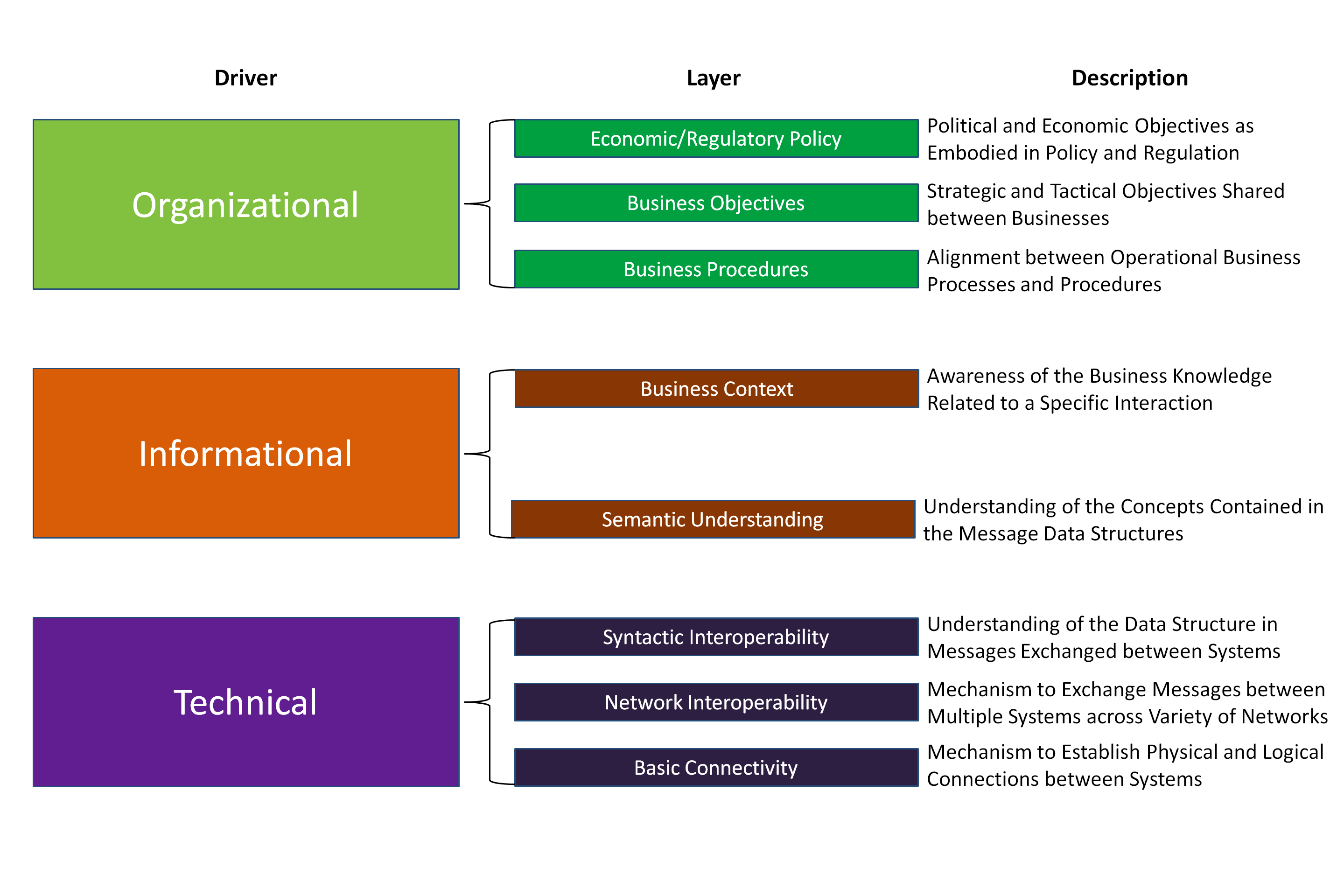
図1. Grid-Wide Architecture Council の8層スタック(NIST and US Dept. of Commerce 2010)。Released.
Value of Service Systems Engineering
Service systems engineering (SSE) is a multidisciplinary approach to manage and design Service System (glossary)|service system. It extends the holistic view of a customer (glossary)|customer-centric, end-to-end view of service system design. Service systems engineers must play the role of an integrator by considering the interface requirements for the interoperability of service system entities, not only for technical integration, but also for the processes and organization required for optimal customer experience during service operations.
サービスシステムズエンジニアリング(service systems engineering, SSE)は、サービスシステム(service system)における価値(value)共創を管理・設計するための複数の専門分野にまたがるアプローチである。SSE は、システム(system)を全体的に捉える見方を、顧客(customer)中心かつエンドツーエンドでサービスシステム設計を捉える見方へと拡張する。サービスシステムエンジニアは、サービスシステム実体間の相互運用性を確保するためのインタフェース要求事項を、技術的統合の観点からだけでなく、サービス(service)運用時に最適な顧客(customer)体験を実現するために必要なプロセス(processes)と組織(organization)の観点からも考慮することで、統合者の役割を果たさなければならない。
Service systems engineering uses disciplined approaches to minimize risk by coordinating/orchestrating social aspects, security (glossary)|security), environmental, human behavior, business, customer care, service management, operations, and technology development processes. Therefore, systems engineers must have a good understanding of cross disciplinary issues to manage, communicate, plan, and organize service systems development and delivery of service. Service systems engineering also brings a customer focus to promote service excellence and to facilitate service innovation through the use of emerging technologies to propose creation of new service systems and value co-creation.
サービスシステムズエンジニアリングは、社会的側面、ガバナンス(governance)(セキュリティ(security)を含む)、環境、人間の振る舞い、事業(business)、顧客ケア、サービスマネジメント、運用、技術開発のプロセスを調整/統率することにより、リスク(risk)を最小化するために規律あるアプローチを用いる。したがって、システムズエンジニアは、サービスシステムの開発とサービスの提供を管理し、伝達し、計画(plan)し、組織化するために、分野横断的な問題を十分に理解していなければならない。サービスシステムズエンジニアリングはまた、新しいサービスシステムと価値共創の創造を提案するために、新興技術を用いることにより、サービスの卓越性を促進し、サービスイノベーションを促進するための顧客への焦点をもたらす。
The service design process includes the definition of methods, processes, and procedures necessary to monitor and track service requirements validation (glossary)|validation, in particular as they relate to the operations, administration, maintenance, and provisioning procedures of the whole service system and its entities. These procedures ensure that failures by any entity are detected and do not propagate and disturb the operations of the service (Luzeaux and Ruault 2010).
サービス設計プロセスには、特にサービスシステム全体とその実体の運用、管理、保守(maintenance)、プロビジョニング(サービスの利用に必要な設定・資源の準備)の手順に関わる部分について、サービス要求事項の検証(verification)と妥当性確認(validation)を監視・追跡するために必要な方法、プロセス、手順の定義が含まれる。これらの手順は、いかなる実体による故障も検出され、伝播してサービスの運用を妨げることがないことを確実にする(Luzeaux and Ruault 2010)。
Research on service systems needs to fuse business process management, service innovation, and social networks for the modeling of service system value chain (Carroll et al. 2010). The systems engineering approach helps to better understand and manage conflict, thereby helping both private and public organizations optimize their strategic decision making. The use of a systemic approach reduces rework, overall time to market, and total cost of development.
サービスシステムの研究では、サービスシステムのバリューチェーンをモデル化するために、ビジネスプロセス(business process)マネジメント、サービスイノベーション、ソーシャルネットワークを融合する必要がある(Carroll et al. 2010)。システムズエンジニアリング(systems engineering)のアプローチは、対立をよりよく理解し管理するのに役立ち、それによって民間組織と公的組織の双方が戦略的意思決定を最適化するのを助ける。システム全体を捉えるアプローチを用いることで、手戻り、市場投入までの全体の時間、開発の総コスト(cost)が削減される。
The world’s economies continue to move toward the creation and delivery of more innovative services. To best prepare tomorrow’s leaders, new disciplines are needed that include and ingrain different skills and create the knowledge to support such global services. “In this evolving world, a new kind of engineer is needed, one who can think broadly across disciplines and consider the human dimensions that are at the heart of every design challenge” (Grasso and Martinelli 2007).
Service systems engineers fit the T-shaped Capability (glossary)|capabilities (See the Enabling Individuals article). Chang (2010) lists the following twelve service system management and engineering (SSME) skills:
#Management of Service Systems. These skills include scheduling, budgeting and management of information systems/technologies, and leadership; #Operations of Service Systems. Engineers should be proficient in process evaluation and improvement, Uncertainty (glossary) management; #Service Processes. These skills include performance measurements, flow charting, work task breakdown; #Business Management. Business skills include project costing, business planning, and change management; #Analytical Skills. These skills include problem solving, economic decision analysis, risk analysis, cost estimating, probability and statistics; #Interpersonal Skills. Increasingly, service systems engineers are expected to excel in professional responsibility, verbal skills, technical writing, facilitating, and team building; #Knowledge Management. Service systems engineers should be familiar with definition, strategies, success factors, hurdles, and best practices in industry; #Creativity and Innovation in Services. These skills include creative thinking methods, success factors, value chain, best practices, and future of innovation; #Financial and Cost Analysis and Management. Additional business skills include activity-based costing, cost estimation under uncertainty, T-account, financial statements, ratio analysis, balanced scoreboards, and capital formation; #Marketing Management. Market forecast, market segmentation, marketing mix- service, price, communications and distribution- are important marketing tools; #Ethics and Integrity. Service Systems Engineers must be held to high ethical standards. These include practicing ethics in workplace and clear guidelines for making tough ethical decisions, corporate ethics programs, affirmation action, and workforce diversity, as well as global issues related to ethics. (See Ethical Behavior); and #Global Orientation. Increasingly, engineers must be aware of emerging business trends and challenges with regards to globalization drivers, global opportunities, and global leadership qualities.
世界の経済は、より革新的なサービスの創造と提供へと向かい続けている。明日のリーダー(leaders)を最もよく育成するには、さまざまな技能を取り込んで根付かせ、こうしたグローバルなサービスを支える知識を生み出す新しい学問分野が必要である。「この進化する世界では、新しい種類のエンジニアが必要である。分野を越えて幅広く考え、あらゆる設計課題の核心にある人間的側面を考慮できるエンジニアである」(Grasso and Martinelli 2007)。
サービスシステムエンジニアは、深く掘り下げた専門領域に加えて、幅広い技能と能力(capabilities)を備えていなければならないとする、専門家の T 字型モデル(model)に当てはまる(Maglio and Spohrer 2008)(Enabling Individuals の記事を参照)。Chang(2010)は、以下の12のサービスシステムマネジメント・エンジニアリング(SSME)技能を挙げている。
Successful deployment of service value chains is highly dependent on the alignment of the service with the overall enterprise service strategy, customer expectations, and customer’s service experience. The importance of service-oriented customer-centric design has been recognized for several years by traditional service providers (telecommunications, information technology (IT), business reengineering, web services, etc.) through the creation of process-driven architecture frameworks.
サービスバリューチェーンの展開が成功するかどうかは、サービスがエンタープライズ全体のサービス戦略、顧客の期待、顧客のサービス体験と整合しているかどうかに大きく左右される。サービス指向かつ顧客中心の設計の重要性は、従来型のサービス提供者(電気通信、情報技術(information technology, IT)、ビジネスリエンジニアリング、ウェブサービスなど)によって、プロセス駆動型のアーキテクチャの枠組みの創出を通じて、数年前から認識されてきた。
Architecture frameworks are important for creating a holistic system view. They promote a common understanding of the major building blocks and their interrelation in systems of systems or complex systems of systems (see also Emergence and Complexity). An Model (glossary)|model of the system created to describe the entities, the interactions and interoperability among entities, as well as the expected behavior, utilization, and properties of the end-to-end system. The architectures become the main tool to guide stakeholders, developers, third-party providers, operations managers, service managers, and users in the understanding of the end-to-end service system, as well as to enable governance at the service management and the service development levels.
アーキテクチャの枠組みは、システムを全体的に捉える見方を形成するうえで重要である。それらは、システムオブシステムズや複雑(complex)なシステムオブシステムズにおける主要な構成要素とその相互関係について、共通の理解を促す(Emergence and Complexity も参照)。アーキテクチャ(architecture)とは、実体、実体間の相互作用と相互運用性、さらにエンドツーエンドシステムに期待される振る舞い(behavior)、利用、特性を記述するために作成される、システムのモデル(model)である。アーキテクチャは、ステークホルダー(stakeholders)、開発者、第三者の提供者、運用マネージャー、サービスマネージャー、ユーザー(users)がエンドツーエンドのサービスシステムを理解できるよう導く主要なツールとなり、またサービスマネジメントとサービス開発の各レベルでのガバナンスを可能にする。
These architecture frameworks have been defined through standards bodies and/or by private enterprises that recognize their advantage—standard processes that integrate the business-strategic processes and operations with the information technology and technology infrastructure (See Systems Engineering Standards). Most architecture frameworks model different scopes and levels of detail of business strategies, product and service offerings, business operations, and organizational aspects. Unfortunately, there are currently no frameworks that cover all the aspects (views) required to model the service systems. Some frameworks focus on business strategies, others in business process management, others in business operations, still others in aligning IT strategy or technology strategy to business strategy. Thus, a combination of architecture frameworks is required to create the enterprise service system model. For instance, an enterprise may use an enterprise business architecture (EBA) model covering strategic goals and objectives, business organization, and business services and processes where driven by market evolution, technology evolution, and customer demands. However, a reference framework would be needed to model the IT strategy (e.g., Information Technology Infrastructure Library (ITIL) v. 3 (OGC 2009)) and the organizations and processes needed to deliver, maintain, and manage the IT services according to the business strategy.
これらのアーキテクチャの枠組みは、標準化団体を通じて、またはその利点(事業戦略プロセスと運用を、情報技術と技術インフラストラクチャと統合する標準プロセス)を認識した民間企業によって、あるいはその両方によって定義されてきた(Systems Engineering Standards を参照)。ほとんどのアーキテクチャの枠組みは、事業戦略、製品とサービスの提供物、事業運用、組織的側面の、異なる範囲と詳細レベルをモデル化する。残念ながら、サービスシステムのモデル化に必要なすべての側面(ビュー)を網羅する枠組みは、現在のところ存在しない。事業戦略に焦点を当てる枠組みもあれば、ビジネスプロセスマネジメントに焦点を当てるもの、事業運用に焦点を当てるもの、さらには IT 戦略や技術戦略を事業戦略と整合させることに焦点を当てるものもある。したがって、エンタープライズのサービスシステムモデルを作成するには、複数のアーキテクチャの枠組みを組み合わせる必要がある。例えばエンタープライズは、市場の進化、技術の進化、顧客の要求によって駆動される、戦略的目標と目的、事業組織(organization)、事業サービスとプロセスを網羅するエンタープライズビジネスアーキテクチャ(EBA)モデルを用いることができる。しかし、IT 戦略(例えば Information Technology Infrastructure Library(ITIL)v. 3(OGC 2009))と、事業戦略に従って IT サービスを提供、保守、管理するために必要な組織とプロセスをモデル化するには、参照枠組みが必要になるだろう。
Prime examples of Service Architecture Frameworks are listed below.
Standards: *Zachmann Framework (Zachman 2003) *Business Process Modeling (BPM) (Hantry et al. 2010) *The Open Group Architecture Framework (TOGAF) (TOGAF 2009) *Enhanced-Telecomm Operations Map (eTOM) by the TeleManagemnt Forum (eTOM 2009) *Service Oriented Architecture (SOA) (Erl 2008) *National Institute of Standards and Technology (NIST) Smart Grid Reference Model (NIST 2010) *Web services business process execution language (WS-BPEL) (OASIS 2007) *Department of Defense Architecture Framework (DoDAF) (DoD 2010) *Others.
Proprietary Enterprise Architecture Frameworks: *Hewlett - Packard IT Service Management Reference Model (HP ITSMRM 2000) *International Business Machines Systems Management Solutions Life Cycle, IBM Rational Software. *Microsoft Operations Framework
This list represents only a sample of the existing service architecture frameworks.
One great example of architecture frameworks applications for service systems, the “High Level Reference Model for the Smart Grid,” developed by NIST in 2010 under the “Energy Independence and Security Act of 2007” (EISA), is presented below:
<blockquote>EISA designated the development of a Smart Grid as a national policy goal, specifying that an interoperability framework should be “flexible, uniform and technology neutral. The law also instructed that the framework should accommodate “traditional, centralized generation and distribution resources” while also facilitating incorporation of new, innovative Smart Grid technologies, such as distributed renewable energy resources and energy storage. (NIST 2010)</blockquote>
The NIST reference model was developed as “a tool for identifying the standards and protocols needed to ensure interoperability and cyber security, and defining and developing architectures for systems and subsystems within the smart grid." Figure 1 illustrates this model and the strategic (organizational), informational (business operations, data structures, and information exchanges required among system entities), and technical needs of the smart grid (data structures, entities specifications, interoperability requirements, etc.).
サービスアーキテクチャの枠組みの代表例を以下に挙げる。
標準:
独自のエンタープライズアーキテクチャの枠組み:
このリストは、既存のサービスアーキテクチャの枠組みのサンプルを表すに過ぎない。
サービスシステムへのアーキテクチャの枠組みの適用を示す1つの優れた例として、NIST が「2007年エネルギー自立・安全保障法」(EISA)に基づいて2010年に開発した「スマートグリッドのための高レベル参照モデル」を以下に示す。
「EISA は、スマートグリッドの開発を国家政策の目標として定め、相互運用性の枠組みは『柔軟で、均一で、技術的に中立であるべきであると規定した。この法律はまた、この枠組みが『伝統的な、集中型の発電と配電の資源』に対応しつつ、分散型再生可能エネルギー資源やエネルギー貯蔵といった、新しく革新的なスマートグリッド技術の取り込みを促進すべきであると指示した。」(NIST 2010)
NIST 参照モデルは、「相互運用性とサイバーセキュリティを確保するために必要な標準とプロトコルを特定し、スマートグリッド内のシステムとサブシステムのアーキテクチャを定義・開発するためのツール」として開発された。図1は、このモデルと、スマートグリッドの戦略的(組織的)ニーズ、情報的(事業運用、データ構造、システム実体間で必要な情報交換)ニーズ、技術的ニーズ(データ構造、実体の仕様、相互運用性要求事項など)を示している。
図中の英語
The NIST reference model uses this architecture framework to identify existing standards, identify new standards required for interoperability among interconnected networks, and to enable innovations where smart grid components (energy sources, bulk generation, storage, distribution, transmission, metering, cyber infrastructure, markets, service providers, customers, etc.) are supported by a broad range of interoperable options by well-defined interfaces useful across industries, including security. Emerging/innovative service development with massively scaled, well-managed, and secured networks will enable a dynamic market driven ecosystem representing new economic growth (NIST 2010).
This architecture framework is being used today by different standards organizations, such as the Smart Grid Interoperability Panel (SGIP), and several smart grid working groups. For details on priorities, working programs, and working group charters, see “High Level Reference Model for the Smart Grid” (NIST 2010).
For service systems, the application of any of these frameworks requires modifications/adaptations to create dynamic frameworks aware of environmental changes due to competitor’s offerings, market demands, and customer co-creation. Most frameworks are static in nature; this requires business operations to manage changes through pre-defined (pre-programmed) processes for service and change control. Dynamic frameworks would allow real-time, or near real-time, analysis of impacts of newly discovered service on business processes, organizations, and revenue for run-time environment deployment.
Automatic service configuration and change control are being incorporated into the management process via service oriented architecture (SOA) for service automation (Gu et al. 2010) and service oriented computing (Maglio et al. 2010). In particular, progress has been made over the last ten years on the standards for adaptation, orchestration and creation of web services (WS) for service based applications (SBA). A good summary of existing life cycle approaches for adaptable and evolvable SBA is presented in (Papazoglou et al. 2010). Some examples of this are
*web services development life cycle (SDLC); *rational unified process (RUP) for SOA; *service oriented modeling and architecture (SOMA); and *service oriented analysis and design/decision Modeling (SOAD).
Further research is required to understand the architectural implications of dynamic service configuration, including research on human behavior, social aspects, governance processes, business processes, and implications of dynamic service level agreements (SLA) for an enterprise service system. New ways are needed to include adaptation requirements for new technologies that will exchange information with the service system entities and may have their own specifications. These technologies include robots, sensors, renewable energy, nanotechnologies, three dimensional printers, and implantable medical devices.
NIST 参照モデルは、このアーキテクチャの枠組みを用いて、既存の標準を特定し、相互接続されたネットワーク間の相互運用性に必要な新しい標準を特定するとともに、スマートグリッドのコンポーネント(エネルギー源、バルク発電、貯蔵、配電、送電、計量、サイバーインフラストラクチャ、市場、サービス提供者、顧客など)が、セキュリティを含め産業を越えて有用な、明確に定義されたインタフェースによる広い範囲の相互運用可能な選択肢によって支えられるイノベーションを可能にする。新興/革新的なサービス開発は、大規模に拡張され、適切に管理され、保護されたネットワークとあいまって、新たな経済成長を体現する、市場主導の動的なエコシステムを可能にする(NIST 2010)。
このアーキテクチャの枠組みは現在、Smart Grid Interoperability Panel(SGIP)などのさまざまな標準化組織や、いくつかのスマートグリッドワーキンググループによって用いられている。優先事項、作業プログラム、ワーキンググループの憲章の詳細については、「High Level Reference Model for the Smart Grid」(NIST 2010)を参照されたい。
サービスシステムにおいては、これらの枠組みのいずれを適用する場合でも、競合者の提供物、市場の需要、顧客との共創による環境の変化を認識できる動的な枠組みを作り出すための修正/適応が必要となる。ほとんどの枠組みは本質的に静的であるため、事業運用では、サービスの構成(configuration)と構成変更管理のためにあらかじめ定義された(事前にプログラムされた)プロセスを通じて変更を管理する必要がある。動的な枠組みであれば、新たに発見されたサービスがビジネスプロセス、組織、収益に与える影響を、実行時環境への展開に向けて、リアルタイムまたはほぼリアルタイムで分析できるようになるだろう。
サービスの構成と構成変更管理の自動化は、サービス自動化のためのサービス指向アーキテクチャ(SOA)(Gu et al. 2010)やサービス指向コンピューティング(Maglio et al. 2010)を通じて、マネジメントプロセスに組み込まれつつある。特に、サービスに基づくアプリケーション(SBA)のためのウェブサービス(WS)の適応、オーケストレーション、作成に関する標準について、過去10年間に進展が見られた。適応可能で進化可能な SBA のための既存のライフサイクルアプローチについては、(Papazoglou et al. 2010)に良い要約が示されている。その例としては、
が挙げられる。
動的なサービス構成がアーキテクチャにもたらす含意を理解するには、人間の振る舞い、社会的側面、ガバナンスプロセス、ビジネスプロセス、そしてエンタープライズのサービスシステムのための動的なサービスレベル合意(SLA)の含意に関する研究を含め、さらなる研究が必要である。サービスシステム実体と情報を交換し、独自の仕様を持つ可能性のある新しい技術について、その適応要求事項を取り込むための新たな方法が必要である。これらの技術には、ロボット、センサー、再生可能エネルギー、ナノテクノロジー、3次元プリンター、埋め込み型医療機器が含まれる。
Carroll, N., E. Whelan, and I. Richardson. 2010. "Applying Social Network Analysis to Discover Service Innovation within Agile Service Networks." Service Science. 2 (4): 225-244.
Chang, C.M. 2010. Service Systems Management and Engineering: Creating Strategic Differentiation and Operational Excellence. New York, NY, USA: John Wiley & Sons, Inc.
DoD. 2010. DoD Architecture Framework (DoDAF), version 2.0. Arlington, VA, USA: US Department of Defense (DoD).
Erl, T. 2008. SOA Principles of Service Design. Boston, MA, USA: Prentice Hall, Pearson Education.
eTOM. 2009. "Business Process Framework." Morristown, NJ: TeleManagement Forum. Accessed May 30, 2011 at https://www.tmforum.org/BusinessProcessFramework/1647/home.html.
Grasso, D., and D. Martinelli. 2007. "Section B: Holistic Engineering." The Chronicle Review, The Chronicles of Higher Education. Vol. 53, Issue 28. Page 8B. March 2007.
Gu. Q., Cuadrado, F., Lago, P. and Duenãs, J.C. 2010. "Architecture views illustrating the service automation aspect of SOA". Service research challenges and solutions for the future internet. 339-372.
Hantry, F., M.P. Papazoglou, W. van den Heuvel, R. Haque, E. Whelan, N. Carroll, D. Karastoyanova, F. Leymann, C. Nikolaou, W. Lamersdorf, and M. Hacid. 2010. "Business Process Management," in Service Research Challenges and Solutions for the Future Internet S-Cube – Towards Engineering, Managing and Adapting Service-Based Systems, edited by M. Papazoglou, K. Pohl, M. Parkin, and A. Metzger. Berlin and Heidelberg, Germany: Springer-Verlag. 27-54.
HP ITSMRM. 2000. "HP IT Service Management Reference Model. Technical White Paper." Palo Alto, California, USA: Hewlett – Packard Company. Accessed September 2, 2011. Available: ftp://ftp.hp.com/pub/services/itsm/info/itsm_rmwp.pdf.
Luzeaux, D., and J.R. Ruault (eds.). 2010. Systems of Systems. New York, NY, USA: John Wiley & Sons.
Maglio, P., and J. Spohrer. 2008. "Fundamentals of Service Science." Journal of the Academy of Marketing Science. 36 (1): 18-20.
National Institute of Standard and Technology (NIST). 2010. NIST Framework and Roadmap for Smart Grid Interoperability Standards Release 1.0. Gaithersburg, MD, USA: Office of the National Coordinator for Smart Grid Interoperability, US Department of Commerce. Accessed September 2, 2011. Available: https://www.nist.gov/smartgrid/upload/FinalSGDoc2010019-corr010411-2.pdf.
OASIS. 2007. "Web Services Business Process Execution Language Version 2.0." Organization for Advancement of Structured Information Standards (OASIS) Standard. Accessed September 2, 2011. Available: https://docs.oasis-open.org/webcgm/v2.0/OS/webcgm-v2.0.pdf.
OGC (Office of Government Commerce). 2009. ITIL Lifecycle Publication Suite Books. London, UK: The Stationery Office.
Papazoglou, M., K. Pohl, M. Parkin, and A. Metzger. 1998. "Service Research Challenges and Solutions for the Future Internet," in Service Research Challenges and Solutions for the Future Internet S-Cube – Towards Engineering, Managing and Adapting Service-Based Systems. Berlin and Heidelberg, Germany: Springer-Verlag.
TOGAF. 2009. "The Open Group Architecture Framework," version 9. The Open Architecture Group. Accessed September 2, 2011. Available: https://www.opengroup.org/togaf.
Zachman, J. 2003. "The Zachman Framework for Enterprise Architecture: Primer for Enterprise Engineering and Manufacturing." Accessed September 2, 2011. Available: https://www.zachmanframeworkassociates.com/index.php/ebook.
Chang, C.M. 2010. Service Systems Management and Engineering: Creating Strategic Differentiation and Operational Excellence. New York, NY, USA: John Wiley & Sons, Inc.
Erl, T. 2008. SOA Principles of Service Design. Boston, MA, USA: Prentice Hall, Pearson Education.
Hantry, F., M.P. Papazoglou, W. van den Heuvel, R. Haque, E. Whelan, N. Carroll, D. Karastoyanova, F. Leymann, C. Nikolaou, W. Lamersdorf, and M. Hacid. 2010. "Business Process Management," in Service Research Challenges and Solutions for the Future Internet S-Cube – Towards Engineering, Managing and Adapting Service-Based Systems, edited by M. Papazoglou, K. Pohl, M. Parkin, and A. Metzger. Berlin and Heidelberg, Germany: Springer-Verlag. p. 27-54.
National Institute of Standard and Technology (NIST). 2010. NIST Framework and Roadmap for Smart Grid Interoperability Standards Release 1.0. Gaithersburg, MD, USA: Office of the National Coordinator for Smart Grid Interoperability, US Department of Commerce. Accessed September 2, 2011. Available: https://www.nist.gov/smartgrid/upload/FinalSGDoc2010019-corr010411-2.pdf.
None.