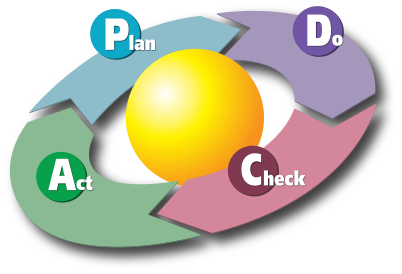
図2. PDCAサイクル。(出典:https://en.wikipedia.org/wiki/PDCA。2010年7月にアクセス。Karn G. Bulsuk(https://blog.bulsuk.com)による図。CC BY 3.0 ライセンス(https://creativecommons.org/licenses/by/3.0/)を通じて使用。)
Related Business Activities
The following Enterprise Systems Engineering (ESE) (glossary)|enterprise systems engineering (ESE) activities: *mission and strategic planning, *business processes and information Management, *performance management, *portfolio management, *resource allocation and budgeting, and *program and project management.
以下のビジネスマネジメントアクティビティは、エンタープライズシステムズエンジニアリング(ESE)のアクティビティによって支援することができる。
The figure below shows how these business activities relate to each other as well as the relative scope of ESE and product systems engineering (PSE) (Martin 2010 and 2011). PSE is mainly involved at the project level and collaborates with project management activities, and gets somewhat involved in program management and the resource allocation and budgeting activities. On the other hand, ESE is heavily involved in the higher level activities from the program management level and up. Both ESE and PSE have key roles to play in the enterprise.
下図は、これらのビジネス活動の相互関係と、ESEおよび製品システムズエンジニアリング(PSE)の相対的な範囲を示している(Martin 2010 and 2011)。PSEは主にプロジェクトレベルで関与してプロジェクトマネジメントアクティビティと連携し、プログラムマネジメントや資源配分・予算編成の活動にもある程度関与する。一方、ESEは、プログラムマネジメントレベル以上の上位のアクティビティに深く関与する。ESEとPSEはいずれも、エンタープライズにおいて重要な役割を担う。
Figure 1. Related Business Activities (Martin 2010). Reprinted with permission of The Aerospace Corporation. All other rights are reserved by the copyright owner.
図1. 関連するビジネス活動(Martin 2010)。The Aerospace Corporation の許可を得て転載。その他のすべての権利は著作権者が留保する。
この図は原典のページに掲載されています。権利の都合により本サイトでは省略しています。原典で見る
Shown in this manner, these business activities can be considered to be separate processes with a clear precedence in terms of which process drives other processes. TSE uses “requirements” to specify the essential features and functions of a system. An enterprise, on the other hand, typically uses goals and objectives to specify the fundamental characteristics of desired enterprise operational capabilities. The enterprise objectives and strategies are used in portfolio management to discriminate between options and to select the appropriate balanced portfolio of systems and other enterprise resources.
このように表すと、これらのビジネスアクティビティは、どのプロセスが他のプロセスを駆動するかという点で明確な先後関係を持つ、個別のプロセスとみなすことができる。TSEは、システムの本質的な特徴と機能を規定するために「要求事項(requirement)」を用いる。一方、エンタープライズは通常、目標と目的を用いて、望ましいエンタープライズ運用能力の基本的な特性を規定する。エンタープライズの目標と戦略は、ポートフォリオマネジメント(portfolio management)において、選択肢を識別し、システムやその他のエンタープライズ資源からなる、適切にバランスの取れたポートフォリオ(portfolio)を選択するために用いられる。
The first three activities listed above are covered in Enabling Businesses and Enterprises. The other business management activities are described in more detail below in regards to how they relate to ESE.
上に挙げた最初の3つのアクティビティは、Enabling Businesses and Enterprisesで扱われている。その他のビジネスマネジメントアクティビティについては、ESEとの関わりという観点から、以下でより詳しく述べる。
PDCA stands for "plan-do-check-act" and is a commonly used iterative management process as seen in the figure below. It is also known as the Deming circle or the Shewhart cycle after its two key proponents (Deming 1986; Shewhart 1939). ESE should use the PDCA cycle as one of its fundamental tenets. For example, after ESE develops the enterprise transformation plan, execution of the planned improvements are monitored (i.e., “checked” in the PDCA cycle) to ensure they achieve the targeted performance levels. If not, then action needs to be taken (i.e., “act” in the PDCA cycle) to correct the situation and re-planning may be required. ESE can also use the PDCA cycle in its support of the 'business as usual' efforts, such as the annual budgeting and business development planning activities.
PDCAは「plan-do-check-act」の略であり、下図に示すように、広く用いられている反復的なマネジメントプロセスである。その2人の主要な提唱者にちなんで、デミングサークル、あるいはシューハートサイクルとも呼ばれる(Deming 1986; Shewhart 1939)。ESEは、PDCAサイクルを基本的な信条の一つとして用いるべきである。例えば、ESEがエンタープライズ変革計画を策定した後は、計画された改善の実施状況が、目標とする性能水準の達成を確実にするために監視される(すなわち、PDCAサイクルにおける「check」)。達成していない場合は、状況を是正するための行動を取る必要があり(すなわち、PDCAサイクルにおける「act」)、再計画が必要になることもある。ESEはまた、年次予算編成や事業開発計画アクティビティのような「通常業務(business as usual)」の取り組みを支援する際にも、PDCAサイクルを用いることができる。
図中の英語
It is also worth mentioning the utility of using Boyd's OODA loop (observe, orient, decide, and act) to augment PDCA. This could be accomplished by first using the OODA loop (https://en.wikipedia.org/wiki/OODA_loop), which is continuous in situation awareness, and then followed by using the PDCA approach, which is discrete, having goals, resources, usually time limits, etc. (Lawson 2010).
PDCAを補強するために、BoydのOODAループ(observe, orient, decide, and act)を用いることの有用性にも触れておく価値がある。これは、まず状況認識において継続的なOODAループ(https://en.wikipedia.org/wiki/OODA_loop)を用い、続いて、目標、資源、通常は時間制限などを伴う離散的なPDCAアプローチを用いることで実現できる(Lawson 2010)。
Program and project managers direct their activities as they relate to the systems under their control. Enterprise management, on the other hand, is involved in directing the portfolio of items that are necessary to achieving the enterprise goals and objectives. This can be accomplished by using portfolio management:
プログラム(program)マネージャーとプロジェクト(project)マネージャーは、自らの管理下にあるシステムに関わるアクティビティを指揮する。一方、エンタープライズマネジメントは、エンタープライズの目標と目的の達成に必要な品目のポートフォリオを指揮することに関与する。これは、ポートフォリオマネジメントを用いることで実現できる。
<BLOCKQUOTE> Project Portfolio Management (PPM) is the centralized management of processes, methods, and technologies used by project managers and project management offices (PMOs) to analyze and collectively manage a group of current or proposed projects based on numerous key characteristics. The objectives of PPM are to determine the optimal resource mix for delivery and to schedule activities to best achieve an organization’s operational and financial goals―while honoring constraints imposed by customers, strategic objectives, or external real-world factors. (https://en.wikipedia.org/wiki/Project_portfolio_management)</BLOCKQUOTE>
「プロジェクト・ポートフォリオ・マネジメント(PPM)とは、プロジェクトマネージャーやプロジェクトマネジメントオフィス(PMO)が、多数の主要な特性に基づいて、現在または提案されているプロジェクトのグループを分析し、集合的に管理するために用いるプロセス、手法、技術を一元的に管理することである。PPMの目的は、顧客、戦略目標、または外部の現実世界の要因によって課される制約を尊重しつつ、組織の運用上および財務上の目標を最もよく達成できるように、提供のための最適な資源の組み合わせを決定し、アクティビティをスケジュールすることである。」(https://en.wikipedia.org/wiki/Project_portfolio_management)
The enterprise may not actually own these portfolio items. They could rent or lease these items, or they could have permission to use them through licensing or assignment. The enterprise may only need part of a system (e.g., one bank of switching circuits in a system) or may need an entire system of systems (SoS) (e.g., switching systems, distribution systems, billing systems, provisioning systems, etc.). Notice that the portfolio items are not just those items related to the systems that systems engineering (SE) deals with. These could also include platforms (like ships and oil drilling derricks), facilities (like warehouses and airports), land and rights of way (like railroad property easements and municipal covenants), and intellectual property (like patents and trademarks).
エンタープライズは、これらのポートフォリオ品目を実際には所有していないこともある。それらの品目を賃借またはリースすることも、ライセンス供与や譲渡を通じて使用許可を得ることもできる。エンタープライズが必要とするのは、システムの一部(例えば、システム内の一群の交換回路)だけの場合もあれば、システム・オブ・システムズ(SoS)全体(例えば、交換システム、配信システム、課金システム、プロビジョニングシステムなど)の場合もある。ポートフォリオ品目は、システムズエンジニアリング(SE)が扱うシステムに関連する品目に限られない点にも留意されたい。これらには、プラットフォーム(船舶や石油掘削デリックなど)、施設(倉庫や空港など)、土地と通行権(鉄道用地の地役権や自治体の協定など)、知的財産(特許や商標など)も含まれ得る。
The investment community has been using portfolio management for a long time to manage a set of investments to maximize return for a given level of acceptable risk. These techniques have also been applied to a portfolio of “projects” within the enterprise (Kaplan 2009). However, it should be noted that an enterprise is not merely a portfolio of projects. The enterprise portfolio consists of whatever systems, organizations, facilities, intellectual property, and other resources that are needed to help the enterprise achieve its goals and objectives.
投資コミュニティは、許容可能なリスク(risk)の水準に対してリターンを最大化するために、一連の投資を管理するべく、長い間ポートフォリオマネジメントを用いてきた。これらの技法は、エンタープライズ内の「プロジェクト」のポートフォリオにも適用されてきた(Kaplan 2009)。ただし、エンタープライズは単なるプロジェクトのポートフォリオではない点に留意すべきである。エンタープライズのポートフォリオは、エンタープライズによる目標と目的の達成を助けるのに必要な、あらゆるシステム、組織、施設、知的財産、その他の資源から構成される。
Portfolio management in the context of ESE is well addressed in the following article: https://www.mitre.org/work/systems_engineering/guide/enterprise_engineering/enterprise_planning_management/portfolio_management.html (MITRE 2010).
ESEのコンテキストにおけるポートフォリオマネジメントについては、次の記事で十分に論じられている:https://www.mitre.org/work/systems_engineering/guide/enterprise_engineering/enterprise_planning_management/portfolio_management.html(MITRE 2010)。
The resource allocation and budgeting (RA&B) activity is driven by the portfolio management definition of the optimal set of portfolio elements. Capability gaps are mapped to the elements of the portfolio, and resources are assigned to programs (or other organizational elements) based on the criticality of these gaps. Resources come in the form of people and facilities, policies and practices, money and energy, and platforms and infrastructure. Allocation of resources could also involve the distribution or assignment of corporate assets, like communication bandwidth, manufacturing floor space, computing power, intellectual property licenses, and so on. Resource allocation and budgeting is typically done on an annual basis, but more agile enterprises will make this a more continuous process. Some of the resource allocation decisions deal with base operational organizations that are not project related.
資源配分と予算編成(RA&B)のアクティビティは、ポートフォリオマネジメントが定義する、ポートフォリオ要素の最適な集合によって駆動される。能力(capability)のギャップはポートフォリオの要素に対応付けられ、これらのギャップの重要度に基づいて、資源がプログラム(またはその他の組織要素)に割り当てられる。資源は、人と施設、方針と慣行、資金とエネルギー、プラットフォームとインフラストラクチャという形で提供される。資源の配分には、通信帯域幅、製造フロアスペース、計算能力、知的財産ライセンスなどの企業資産の分配や割り当ても含まれ得る。資源配分と予算編成は通常、年単位で行われるが、よりアジャイルなエンタープライズでは、これをより継続的なプロセスとする。資源配分の決定の中には、プロジェクトに関係しない常設の業務運用組織を対象とするものもある。
It is sometimes the case that RA&B is part of portfolio management (PfM). But as can be seen in Figure 1, it is sometimes useful and practical to separate these two activities. PfM usually recommends changes to the enterprise portfolio, but RA&B takes these PfM considerations into mind along with inputs from the business process and information management and the performance management activities. Furthermore, PfM is usually an annual or biannual activity whereas RA&B is often done more frequently. RA&B may need to execute ad hoc when perturbations happen, such as funding cuts, schedule slips, performance targets missed, strategic goals changed, and so on.
RA&Bがポートフォリオマネジメント(PfM)の一部となっている場合もある。しかし、図1から分かるように、これら2つの活動を分けることが有用かつ実践的な場合もある。PfMは通常、エンタープライズのポートフォリオに対する変更を勧告するが、RA&Bは、こうしたPfMの考慮事項を、ビジネスプロセスと情報マネジメントの活動および性能マネジメントの活動からの入力とあわせて考慮に入れる。さらに、PfMは通常、年1回または年2回のアクティビティであるのに対し、RA&Bはより頻繁に行われることが多い。RA&Bは、資金削減、スケジュールの遅延、性能目標の未達、戦略目標の変更などの撹乱が生じた際に、「臨時(ad hoc)」に実施する必要が生じることがある。
Within the enterprise, TSE is typically applied inside a project to engineer a single system (or perhaps a small number of related systems). If there is a SoS or a large, complex individual system to be engineered, then this might be handled at the program level, but is sometimes handled at the project level, depending on the size and complexity of the system-of-interest (See also Emergence and Complexity).
There are commonly three basic types of projects in an enterprise. A development project takes a conceptual notion of a system and turns this into a realizable design. A production project takes the realizable design for a system and turns this into physical copies (or instantiations). An operations “project” directly operates each system or supports the operation by others. (Base operations are sometimes called "line organizations" and are not typically called projects per se, but should nonetheless be considered as key elements to be considered when adjusting the enterprise portfolio.) The operations project can also be involved in maintaining the system or supporting maintenance by others. A program can have all three types of projects active simultaneously for the same system, as in this example: *Project A is developing System X version 3. *Project B is operating and maintaining System X version 2. *Project C is maintaining System X version 1 in a warehouse as a backup in case of emergencies.
Project management uses TSE as a tool to ensure a well-structured project and to help identify and mitigate cost, schedule, and technical risks involved with system development and implementation. The project level is where the TSE process is most often employed (Martin 1997; ISO/IEC/IEEE 2015; Wasson 2006; INCOSE 2010; Blanchard and Fabrycky 2010).
The Office of Government Commerce provides a useful distinction between programs and projects: <BLOCKQUOTE> The ultimate goal of a Programme is to realise outcomes and benefits of strategic relevance. To achieve this, a programme is designed as a temporary flexible organisation structure created to coordinate, direct and oversee the implementation of a set of related projects and activities in order to deliver outcomes and benefits related to the organisation’s strategic objectives... </BLOCKQUOTE>
<BLOCKQUOTE> A programme is likely to have a life that spans several years. A Project is usually of shorter duration (a few months perhaps) and will be focussed on the creation of a set of deliverables within agreed cost, time and quality parameters. (OGC 2010) </BLOCKQUOTE>
エンタープライズ内では、TSEは通常、単一のシステム(あるいは少数の関連システム)をエンジニアリングするために、プロジェクトの内部で適用される。エンジニアリングの対象がSoSや大規模で複雑(complex)な個々のシステムである場合、プログラムレベルで扱われることもあるが、対象システム(system-of-interest)の規模と複雑さ(complexity)によっては、プロジェクトレベルで扱われることもある(Emergence and Complexityも参照)。
エンタープライズには一般に、3つの基本的なタイプのプロジェクトがある。開発プロジェクトは、システムの概念的な構想をもとに、それを実現可能な設計へと変える。生産プロジェクトは、システムの実現可能な設計から物理的な個体(インスタンス)を作る。運用「プロジェクト」は、各システムを直接運用するか、他者による運用を支援する。(常設の業務運用は「ライン組織」と呼ばれることもあり、通常それ自体はプロジェクトとは呼ばれないが、それでもなお、エンタープライズのポートフォリオを調整する際に考慮すべき主要な要素とみなすべきである。)運用プロジェクトは、システムの保守や、他者による保守の支援に関与することもできる。プログラムでは、同じシステムについて3つのタイプのプロジェクトすべてが同時に活動していることもあり得る。例えば次のとおりである。
プロジェクトマネジメントは、プロジェクトが適切に構造化されることを確実にし、システムの開発と実装に伴うコスト、スケジュール、技術的リスクを特定し軽減するのに役立つツールとして、TSEを用いる。プロジェクトレベルは、TSEプロセスが最も頻繁に用いられる場である(Martin 1997; ISO/IEC/IEEE 2015; Wasson 2006; INCOSE 2010; Blanchard and Fabrycky 2010)。
Office of Government Commerceは、プログラムとプロジェクトについて有用な区別を示している。
「プログラムの究極の目標は、戦略的な関連性を持つ成果と便益を実現することである。これを達成するために、プログラムは、組織の戦略目標に関連する成果と便益を提供すべく、一連の関連するプロジェクトとアクティビティの実施を調整、指揮、監督するために作られる、一時的で柔軟な組織構造として設計される…」
「プログラムの存続期間は数年に及ぶ可能性が高い。プロジェクトは通常それより短期間(おそらく数か月)であり、合意されたコスト、時間、品質のパラメータの範囲内で一連の成果物を作成することに焦点を当てる。」(OGC 2010)
ESE is also concerned with the way in which organizations and embedded management and technical functions work together to achieve success at the enterprise level. Governance frameworks provide the essential additional structure and controls needed to both ‘steer a steady ship’ (during business as usual) and to ‘plot a course to a new place’ (during business transformation).
ESEはまた、組織と、そこに組み込まれたマネジメント機能および技術機能が、エンタープライズレベルで成功を収めるためにどのように協働するかにも関心を持つ。ガバナンスの枠組みは、「船を安定して操縦する」(通常業務の間)ことと、「新しい場所への進路を描く」(ビジネス変革の間)ことの双方に必要な、不可欠な追加の構造と統制を提供する。
Such frameworks can be designed by recognizing that there are enduring management concerns that need to be addressed and by applying the principle of economy. For example, a particular concern for most organizations is linking the control of projects to business drivers and objectives. This leads to a requirement for a governance body to both approve the initiation of projects, and to regularly review their progress, continuing relevance, and if necessary, mutual coherence in the light of developments inside and outside the enterprise.
そのような枠組みは、対処すべき永続的なマネジメント上の懸念があることを認識し、経済性の原則を適用することによって設計できる。例えば、ほとんどの組織にとっての特定の懸念は、プロジェクトの管理をビジネスの駆動要因と目標に結び付けることである。このことから、プロジェクトの開始を承認するとともに、エンタープライズ内外の動向を踏まえ、その進捗と事業上の妥当性が保たれているかを、必要に応じて相互の整合性と併せて定期的に確認するガバナンス機関が求められる。
This might be achieved by delegating some or all of the roles; depending on circumstances, the enterprise might be driven towards top-down or a more collective, peer-to-peer approach—or even a combination of the two for different functions. Governance bodies and management roles can be engineered in this way against a common set of management concerns. Governance may also include the maintenance of common technical standards and their promulgation and use throughout relevant projects. See Bryant (2012) for more information on governance.
これは、役割の一部または全部を委任することによって実現される場合がある。状況に応じて、エンタープライズは、トップダウンのアプローチ、あるいはより集合的なピア・ツー・ピアのアプローチ、さらには異なる機能に対するその2つの組み合わせへと向かうこともある。ガバナンス機関とマネジメントの役割は、このようにして、共通のマネジメント上の懸念の集合に照らしてエンジニアリングすることができる。ガバナンスには、共通の技術標準の維持と、関連するプロジェクト全体にわたるその普及と使用も含まれ得る。ガバナンスの詳細については、Bryant(2012)を参照されたい。
An enterprise does not always have full control over the ESE processes. In some cases, an enterprise may have no direct control over the resources necessary to make programs and projects successful. For example, the Internet Engineering Task Force (IETF) is responsible for the “smooth operation of the Internet,” yet it controls none of the requisite resources.
エンタープライズが、常にESEプロセスを全面的に管理できるとは限らない。場合によっては、プログラムやプロジェクトを成功させるのに必要な資源を、エンタープライズが直接管理できないこともある。例えば、Internet Engineering Task Force(IETF)は「インターネットの円滑な運用」に責任を負っているが、必要な資源を一切管理していない。
<BLOCKQUOTE> The Internet Engineering Task Force (IETF) is a large open international community of network designers, operators, vendors, and researchers concerned with the evolution of the Internet architecture and the smooth operation of the Internet. … The actual technical work of the IETF is done in its working groups, which are organized by topic into several areas (e.g., routing, transport, security, etc.). Much of the work is handled via mailing lists. The IETF holds meetings three times per year. (IETF 2010a)</BLOCKQUOTE>
「Internet Engineering Task Force(IETF)は、インターネットアーキテクチャの進化とインターネットの円滑な運用に関心を持つ、ネットワークの設計者、運用者、ベンダー、研究者からなる、大規模で開かれた国際的なコミュニティである。…IETFの実際の技術的作業はワーキンググループで行われ、ワーキンググループはトピックごとにいくつかのエリア(例えば、ルーティング、トランスポート、セキュリティなど)に編成されている。作業の多くはメーリングリストを通じて行われる。IETFは年に3回会合を開催する。」(IETF 2010a)
The IETF has “influence” over these resources even though it does not have direct control: "The IETF is unusual in that it exists as a collection of happenings, but is not a corporation and has no board of directors, no members, and no dues" (IETF 2010b).
IETFは、直接の管理権限を持たないにもかかわらず、これらの資源に対して「影響力」を持つ。「IETFは、出来事の集まりとして存在する一方で、法人ではなく、取締役会も会員も会費もないという点で、異例の存在である」(IETF 2010b)。
The ESE processes might be allocated between a “parent” enterprise and “children” enterprises, as shown in the figure below (Martin 2010). The parent enterprise, in this case, has no resources. These resources are owned by the subordinate child enterprises. Therefore, the parent enterprise does not implement the processes of resource allocation and budgeting, program management, and project management.
ESEプロセスは、下図に示すように、「親」エンタープライズと「子」エンタープライズの間で配分されることがある(Martin 2010)。この場合、親エンタープライズは資源を持たない。これらの資源は、従属する子エンタープライズが所有している。したがって、親エンタープライズは、資源配分と予算編成、プログラムマネジメント、プロジェクトマネジメントのプロセスを実施しない。
The parent enterprise may have an explicit contract with the subordinate enterprises, or, as in some cases, there is merely a “working relationship” without the benefit of legal obligations. The parent enterprise will expect performance feedback from the lower level to ensure that it can meet its own objectives. Where the feedback indicates a deviation from the plan, the objectives can be adjusted or the portfolio is modified to compensate.
親エンタープライズは、従属するエンタープライズと明示的な契約を結んでいることもあれば、場合によっては、法的義務の裏付けのない単なる「作業上の関係」にとどまることもある。親エンタープライズは、自らの目標を満たすことができることを確実にするために、下位レベルからの性能フィードバックを期待する。フィードバックが計画からの逸脱を示している場合には、目標を調整したり、それを補うようにポートフォリオを変更したりできる。
Figure 3. Parent and Child Enterprise Relationships (Martin 2010). Reprinted with permission of The Aerospace Corporation. All other rights are reserved by the copyright owner.
図3. 親エンタープライズと子エンタープライズの関係(Martin 2010)。The Aerospace Corporation の許可を得て転載。その他のすべての権利は著作権者が留保する。
この図は原典のページに掲載されています。権利の都合により本サイトでは省略しています。原典で見る
Enterprises X, Y, and Z in the situation shown above will cooperate with each other to the extent that they honor the direction and guidance from the parent enterprise. These enterprises may not even be aware of each other, and, in this case, would be unwittingly cooperating with each other. The situation becomes more complex if each enterprise has its own set of strategic goals and objectives as shown in the figure below.
上に示した状況において、エンタープライズX、Y、Zは、親エンタープライズからの指示と指導を尊重する範囲で、互いに協力する。これらのエンタープライズは互いの存在に気付いてさえいないこともあり、その場合は、知らず知らずのうちに互いに協力していることになる。下図に示すように、各エンタープライズが独自の戦略目標と目的の集合を持つ場合、状況はより複雑になる。
Figure 4. Mission and Strategic Planning at All Levels of Cooperating Enterprises (Martin 2010). Reprinted with permission of The Aerospace Corporation. All other rights are reserved by the copyright owner.
図4. 協力するエンタープライズのすべてのレベルにおけるミッション計画と戦略計画(Martin 2010)。The Aerospace Corporation の許可を得て転載。その他のすべての権利は著作権者が留保する。
この図は原典のページに掲載されています。権利の都合により本サイトでは省略しています。原典で見る
These separate, sub-enterprise objectives will sometimes conflict with the objectives of the parent enterprise. Furthermore, each subordinate enterprise has its own strategic objectives that might conflict with those of its siblings. The situation shown here is not uncommon, and illustrates an enterprise of enterprises, so to speak. This highlights the need for the application of SE at the enterprise level to handle the complex interactions and understand the overall behavior of the enterprise as a whole. TSE practices can be used, to a certain extent, but these need to be expanded to incorporate additional tools and techniques.
これらの個々のサブエンタープライズの目標は、時として親エンタープライズの目標と対立する。さらに、各従属エンタープライズは、兄弟関係にあるエンタープライズの目標と対立し得る、独自の戦略目標を持つ。ここに示した状況は珍しいものではなく、いわばエンタープライズのエンタープライズを例示している。このことは、複雑な相互作用に対処し、エンタープライズ全体としての総合的な振る舞いを理解するために、エンタープライズレベルでSEを適用する必要性を浮き彫りにしている。TSEの実践はある程度までは利用できるが、追加のツールや技法を取り込めるよう拡張する必要がある。
Bryant, P. 2012. "Modelling Governance within Business Architecture using Topic Mapping." Presented at 22nd Annual International Council on Systems Engineering (INCOSE) International Symposium, July 9-12, 2012, Rome, Italy.
Blanchard, B.S., and W.J. Fabrycky. 2011. Systems Engineering and Analysis, 5th ed. Englewood Cliffs, NJ, USA: Prentice-Hall.
Deming, W.E. 1986. Out of the Crisis. Cambridge, MA, USA: MIT Press, MIT Center for Advance Engineering Study.
IETF. 2010a. "Overview of the IETF," in Internet Engineering Task Force, Internet Society (ISOC) [database online]. Accessed September 6, 2011. Available: https://www.ietf.org/overview.html.
IETF. 2010b. "The Tao of IETF: A Novice’s Guide to the Internet Engineering Task Force (draft-hoffman-tao4677bix-10)," in Internet Engineering Task Force, Internet Society (ISOC) [database online]. Accessed September 6, 2011. Available: https://www.ietf.org/tao.html#intro.
INCOSE. 2012. Systems Engineering Handbook, version 3.2.2. San Diego, CA, USA: International Council on Systems Engineering (INCOSE). INCOSE-TP-2003-002-03.2.2.
ISO/IEC/IEEE 2015. Systems and Software Engineering -- System Life Cycle Processes. Geneva, Switzerland: International Organisation for Standardisation / International Electrotechnical Commissions. ISO/IEC/IEEE 15288:2015.
Kaplan, J. 2009. Strategic IT portfolio management: Governing enterprise transformation. Waltham, Massachusetts, USA: Pittiglio, Rabin, Todd & McGrath, Inc. (PRTM).
Lawson, H. 2010. A Journey Through the Systems Landscape. Kings College, UK: College Publications.
Martin, J.N. 2011. "Transforming the Enterprise Using a Systems Approach." Presented at 21st Anniversary International Council on Systems Engineering (INCOSE) International Symposium, June 20-23, 2011, Denver, CO, USA.
Martin, J.N. 2010. "An Enterprise Systems Engineering Framework." Presented at 20th Anniversary International Council on Systems Engineering (INCOSE) International Symposium, July 12-15, 2010, Chicago, IL, USA.
Martin, J.N. 1997. Systems Engineering Guidebook: A Process for Developing Systems and Products, 1st ed. Boca Raton, FL, USA: CRC Press.
MITRE. 2012. "Enterprise Engineering," in Systems Engineering Guide. Bedford, MA, USA: MITRE Corporation. Accessed July 8, 2012. Available: https://www.mitre.org/work/systems_engineering/guide/enterprise_engineering/.
OGC (Office of Government Commerce). 2010. Guidelines for Managing Programmes: Understanding programmes and programme management. London, UK: The Stationery Office.
Shewhart, W.A. 1939. Statistical Method from the Viewpoint of Quality Control. New York, NY, USA: Dover Publications.
Wasson, C.S. 2006. System Analysis, Design and Development. Hoboken, NJ, USA: John Wiley and Sons Ltd.
Martin, J.N. 2011. "Transforming the Enterprise Using a Systems Approach." Presented at 21st Anniversary International Council on Systems Engineering (INCOSE) International Symposium, June 20-23, 2011, Denver, CO, USA.
Martin, J.N. 2010. "An Enterprise Systems Engineering Framework." Presented at 20th Anniversary International Council on Systems Engineering (INCOSE) International Symposium, July 12-15, 2010, Chicago, IL, USA.
Arnold, S., and H. Lawson. 2004. "Viewing Systems from a Business Management Perspective." Systems Engineering. 7 (3): 229.
Beimans, F.P.M., M.M. Lankhorst, W.B. Teeuw, and R.G. van de Wetering. 2001. "Dealing with the Complexity of Business Systems Architecting." Systems Engineering. 4 (2): 118-133.
Drucker, P.F. 1994. "The Theory of Business." Harvard Business Review. 72 (5): 95-104.
Haeckel, S.H. 2003. "Leading on demand businesses–Executives as architects." IBM Systems Journal. 42 (3): 405-13.
Kaplan, R., and D. Norton. 1996. The balanced scorecard: Translating strategy into action. Cambridge, MA, USA: Harvard Business School Press.
Lissack, M.R. 2000. "Complexity Metaphors and the Management of a Knowledge Based Enterprise: An Exploration of Discovery." PhD Dissertation in Business Administration. Henley-on-Thames, UK: Henley Management College, University of Reading.
Rechtin, E. 1999. ''Systems Architecting of Organizations: Why Eagles Can't Swim''. Boca Raton, FL, USA: CRC Press, Taylor and Francis Group.
Rechtin, E. 1999. Systems Architecting of Organizations: Why Eagles Can't Swim. Boca Raton, FL, USA: CRC Press, Taylor and Francis Group.