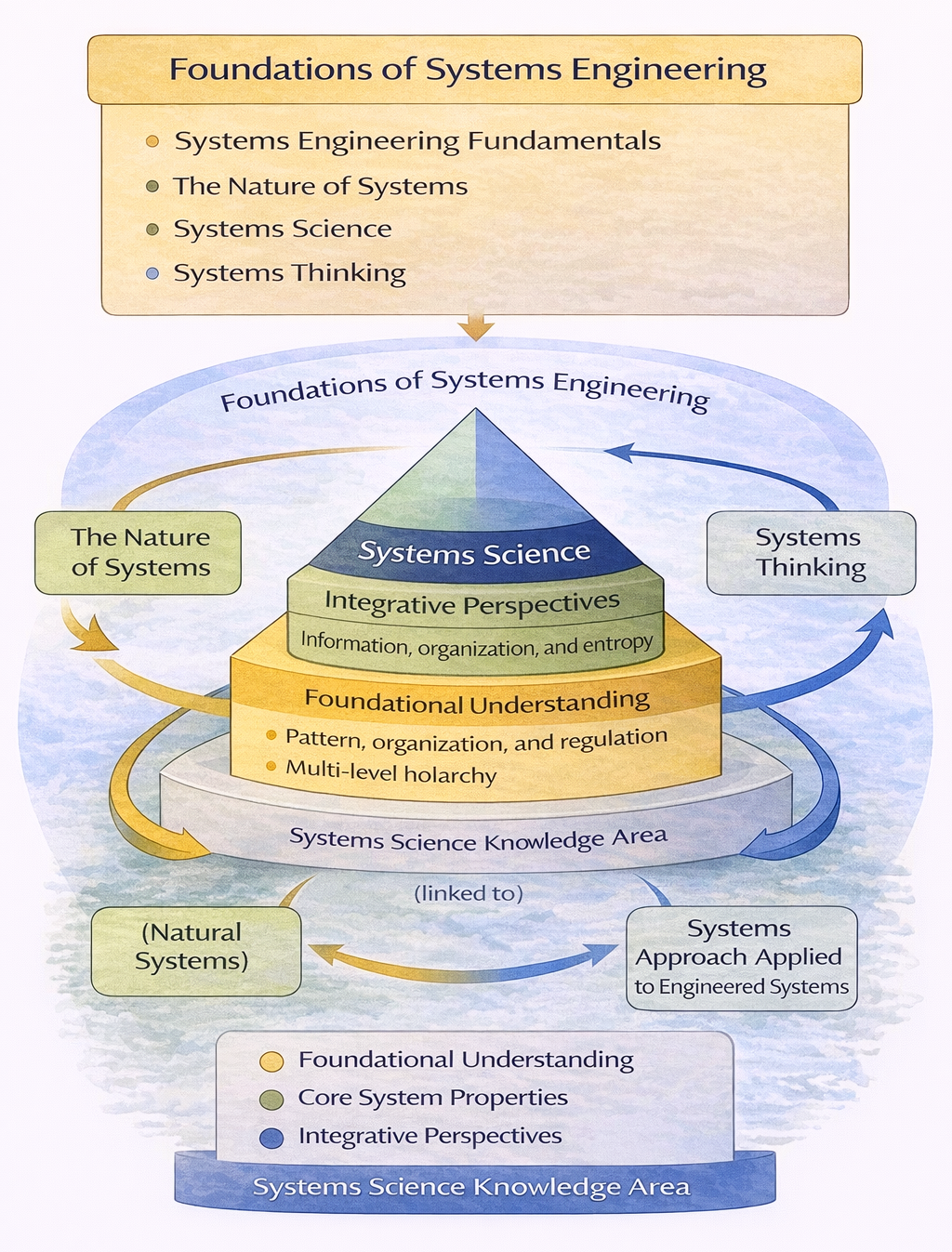
図1:SEBoK におけるシステム科学知識領域。(SEBoK original)
Systems Science
Acknowledgement
謝辞
This article reflects established knowledge from systems science and systems engineering, organized and collated for the SEBoK. Drafting support was provided by OpenAI’s ChatGPT, with all content reviewed and finalized by the author, who retains full responsibility.
本記事は、システム科学とシステムズエンジニアリングにおける確立した知識を、SEBoK のために整理し集約したものである。起草の支援は OpenAI の ChatGPT によって提供され、すべての内容は著者がレビューし最終化したものであり、著者が全責任を負う。
Systems science is the study of the general principles, patterns, and processes that govern systems of all kinds, natural, social, engineered, and abstract (Bertalanffy 1968; Boulding 1956). It seeks to understand systemness: how systems form, persist, interact, adapt, and evolve. In doing so, it examines phenomena such as emergence, feedback, organization, hierarchy, adaptation, and information flow that recur across diverse domains.
システム科学(systems science)は、あらゆる種類のシステム、すなわち自然的、社会的、エンジニアード・システム、抽象的なシステムを支配する一般原理、パターン、プロセスを研究する学問である(Bertalanffy 1968; Boulding 1956)。システム科学が理解しようとするのはシステム性(systemness)、すなわちシステムがどのように形成され、存続し、相互作用し、適応し、進化するのかである。その過程で、創発、フィードバック、組織化、階層、適応、情報の流れなど、多様な領域に繰り返し現れる現象を検討する。
Unlike traditional disciplines, which focus on specific classes of phenomena, systems science aims to identify structures and behaviors common across domains. These recurring characteristics, often referred to as isomorphies, enable recognition of similarities between otherwise disparate systems (Troncale 1978). This cross-domain perspective provides a unified framework for understanding complexity.
特定の種類の現象に焦点を当てる伝統的な学問分野とは異なり、システム科学は領域を越えて共通する構造と振る舞いを特定することを目指す。こうした繰り返し現れる特性はしばしば同型性(isomorphies)と呼ばれ、これによって、一見かけ離れたシステムの間にある類似性を認識できるようになる(Troncale 1978)。この領域横断的な視点は、複雑性を理解するための統一的な枠組みをもたらす。
The intellectual foundations of systems science span multiple disciplines. General systems theory sought to identify universal principles of organization (Bertalanffy 1968). Boulding’s hierarchy of systems highlighted increasing levels of complexity across natural and social domains (Boulding 1956). Cybernetics introduced the concepts of feedback, control, and communication as mechanisms of regulation (Wiener 1948; Ashby 1956).
システム科学の知的基盤は複数の学問分野にまたがっている。一般システム理論は、組織化の普遍的原理を見いだそうとした(Bertalanffy 1968)。Boulding のシステム階層は、自然領域と社会領域にわたる複雑性のレベルの増大を浮き彫りにした(Boulding 1956)。サイバネティクスは、調節のメカニズムとして、フィードバック、制御、コミュニケーションという概念を導入した(Wiener 1948; Ashby 1956)。
Subsequent developments extended these ideas. System dynamics examined how feedback structures shape behavior over time (Forrester 1961). Thermodynamics and complexity science explored the emergence of order in far-from-equilibrium systems (Nicolis and Prigogine 1977). Research on autopoiesis examined how living systems maintain organization through self-production (Maturana and Varela 1980).
その後の発展は、これらの考えを拡張していった。システムダイナミクスは、フィードバック構造が時間の経過に伴う振る舞いをどのように形作るかを検討した(Forrester 1961)。熱力学と複雑性科学は、平衡から遠く離れたシステムにおける秩序の創発を探究した(Nicolis and Prigogine 1977)。オートポイエーシス(autopoiesis)の研究は、生命システムが自己産出を通じていかに組織を維持するかを検討した(Maturana and Varela 1980)。
Together, these traditions form the foundation of modern systems science: an integrative field that explains how complex systems behave across domains.
これらの伝統が一体となって、現代のシステム科学の基盤を形作っている。現代のシステム科学とは、複雑なシステムが領域を越えてどのように振る舞うかを説明する統合的な分野である。
Within the SEBoK, systems science provides theoretical foundations that support systems thinking and systems engineering practice. It helps explain how systems organize, interact, and evolve within broader technological, organizational, and environmental contexts (Checkland 1999).
SEBoK において、システム科学は、システム思考とシステムズエンジニアリングの実践を支える理論的基盤を提供する。システム科学は、より広い技術的、組織的、環境的コンテキストの中で、システムがどのように組織化し、相互作用し、進化するかを説明する助けとなる(Checkland 1999)。
This Knowledge Area is part of the Foundations of Systems Engineering and sits alongside several closely related knowledge areas:
この知識領域は「Foundations of Systems Engineering(システムズエンジニアリングの基礎)」の一部であり、密接に関連するいくつかの知識領域と並んで位置づけられている。
• The Nature of Systems defines what systems are and how they can be described.
• The Nature of Systems は、システムとは何か、またシステムをどのように記述できるかを定義する。
• Systems Thinking applies systemic concepts in practice.
• Systems Thinking は、システム的な概念を実践に応用する。
• Representing Systems with Models provides formal tools for analysis and communication.
• Representing Systems with Models は、分析とコミュニケーションのための形式的なツールを提供する。
• Systems Approach Applied to Engineered Systems applies these concepts in engineering contexts.
• Systems Approach Applied to Engineered Systems は、これらの概念を工学的コンテキストに応用する。
Systems science therefore serves as a bridge between foundational understanding and practical application.
したがって、システム科学は基礎的理解と実践的応用の間の橋渡しの役割を果たす。
The purpose of this Knowledge Area is to introduce the scientific foundations of systemic understanding. It aims to:
この知識領域の目的は、システム的理解の科学的基盤を紹介することである。具体的には、以下を目指す。
• present the development of systems science as a multidisciplinary field
• システム科学が学際的な分野として発展してきた過程を提示すること
• describe recurring patterns and principles across systems
• システムにわたって繰り返し現れるパターンと原理を記述すること
• explain phenomena such as emergence, feedback, complexity, and adaptation
• 創発、フィードバック、複雑性、適応といった現象を説明すること
• examine how systems maintain organization through structure and information
• システムが構造と情報を通じて組織を維持する仕組みを検討すること
• explore multi-level organization and holarchies
• 多レベルの組織化とホラーキー(holarchy)を探究すること
• clarify relationships between systems science and other disciplines
• システム科学と他の学問分野との関係を明確にすること
• provide conceptual grounding for systems thinking and systems engineering
• システム思考とシステムズエンジニアリングに概念的な基礎を与えること
These topics support the development of systems literacy, enabling effective reasoning about complex systems.
これらのトピックは、システムリテラシー(systems literacy)の育成を支え、複雑なシステムについて効果的に推論できるようにする。
The articles in this Knowledge Area are organized to progressively develop understanding:
この知識領域の記事は、段階的に理解を深められるよう構成されている。
• From Nature's Patterns to Systems Science Observations of recurring patterns motivate systemic inquiry.
• From Nature's Patterns to Systems Science:繰り返し現れるパターンの観察が、システム的探究を動機づける。
• History and Foundations of Systems Science Development of key intellectual traditions.
• History and Foundations of Systems Science:主要な知的伝統の発展。
• Worldviews and Philosophies of Systemness Philosophical and epistemological perspectives.
• Worldviews and Philosophies of Systemness:哲学的・認識論的視点。
• Patterns and Principles in Systems Science Recurring structures and organizing principles.
• Patterns and Principles in Systems Science:繰り返し現れる構造と組織化の原理。
• Structure, Identity, and Function in Systems How systems maintain coherence and perform functions.
• Structure, Identity, and Function in Systems:システムが一貫性を維持し、機能を果たす仕組み。
• Emergence and Complexity How system behavior arises from interactions.
• Emergence and Complexity:相互作用からシステムの振る舞いがどのように生じるか。
• System Dynamics and Control Feedback, regulation, and temporal behavior.
• System Dynamics and Control:フィードバック、調節、時間的振る舞い。
• Information, Organization, and Entropy in Systems Information processes underlying organization and change.
• Information, Organization, and Entropy in Systems:組織化と変化の基礎にある情報プロセス。
• Systems, Levels, and Holarchy Multi-level organization and cross-scale interactions.
• Systems, Levels, and Holarchy:多レベルの組織化とスケールを越えた相互作用。
• Systems Science and the Scientific Enterprise The role of systems science within the broader scientific landscape.
• Systems Science and the Scientific Enterprise:より広い科学的景観におけるシステム科学の役割。
The structure of this Knowledge Area is both sequential and systemic. Each article contributes to a coherent body of knowledge while remaining interdependent with others.
この知識領域の構造は、逐次的であると同時にシステム的でもある。各記事は、他の記事と相互に依存しながら、首尾一貫した知識体系に寄与している。
• Early articles establish empirical and conceptual foundations
• 初期の記事は実証的・概念的基盤を確立する
• Intermediate articles develop core systemic mechanisms
• 中間の記事では、中核となるシステム的メカニズムを詳しく説明する
• Later articles integrate these into multi-level and scientific perspectives
• 後期の記事はこれらを多レベル的・科学的視点へと統合する
図中の英語
The accompanying figure illustrates:
付随する図は、次の点を示している。
• the Systems Science Knowledge Area as a subsystem within the Foundations of Systems Engineering
• Foundations of Systems Engineering 内のサブシステムとしてのシステム科学知識領域
• its relationships with adjacent knowledge areas
• 隣接する知識領域との関係
• the internal progression of topics within the Knowledge Area
• 知識領域内におけるトピックの進行
• the flow of understanding from observation to integration
• 観察から統合へと向かう理解の流れ
The figure can be interpreted in three ways:
この図は3つの方法で解釈できる。
1. Progression of understanding Concepts develop from empirical observation to abstraction and integration.
1. 理解の進行:概念は、実証的観察から抽象化と統合へと発展する。
2. Interconnected knowledge system Topics such as structure, dynamics, information, and levels are interrelated and mutually reinforcing.
2. 相互に結びついた知識システム:構造、ダイナミクス、情報、レベルといったトピックは相互に関連し、互いに補強し合う。
3. Embedded context Systems science is situated within a broader ecosystem of knowledge areas that both inform and apply its insights.
3. 埋め込まれたコンテキスト:システム科学は、その知見の形成に寄与し、またその知見を応用する、より広い知識領域のエコシステムの中に位置している。
The figure therefore represents the Knowledge Area as a coherent and interacting system of ideas, rather than a strictly linear sequence.
したがって、この図は知識領域を、厳密に線形な並びとしてではなく、首尾一貫し、相互作用するアイデアのシステムとして表している。
Systems engineering addresses the design, integration, and lifecycle management of complex systems. Systems science supports this practice by providing:
システムズエンジニアリングは、複雑なシステムの設計、統合、ライフサイクルマネジメントを扱う。システム科学は、以下を提供することによってこの実践を支える。
• insight into feedback and dynamic behavior
• フィードバックと動的振る舞いに対する洞察
• understanding of emergence and unintended consequences
• 創発と意図せざる結果に関する理解
• awareness of multi-level interactions
• 多レベルの相互作用に対する認識
• principles for managing complexity and adaptation
• 複雑性と適応を管理するための原理
These insights are particularly important because engineered systems operate within interconnected social, ecological, and technical environments.
エンジニアード・システム(engineered systems)は相互に結びついた社会的、生態的、技術的環境の中で運用されるため、これらの洞察は特に重要である。
By applying systems science, systems engineers can:
システム科学を応用することで、システムズエンジニアは次のことが可能になる。
• anticipate emergent behavior
• 創発的振る舞いを予見する
• design more resilient systems
• よりレジリエントなシステムを設計する
• manage interactions across system boundaries
• システム境界を越えた相互作用を管理する
• operate effectively under conditions of complexity and uncertainty
• 複雑性と不確実性を伴う状況の下で効果的に活動する
Systems science provides a unifying framework for understanding how systems behave across domains. It demonstrates that diverse phenomena are governed by common principles of organization, interaction, and change.
システム科学は、システムが領域を越えてどのように振る舞うかを理解するための統一的な枠組みを提供する。システム科学は、多様な現象が組織化、相互作用、変化に関する共通の原理に支配されていることを示す。
Within the SEBoK, this Knowledge Area is itself structured as a coherent system of knowledge. It progressively develops understanding while maintaining conceptual integration across its topics. In doing so, it forms a critical link between foundational knowledge and applied systems thinking and engineering.
SEBoK において、この知識領域はそれ自体が首尾一貫した知識のシステムとして構造化されている。この知識領域は、トピック間の概念的な統合を保ちながら、段階的に理解を深めていく。それによって、基礎的知識と、応用されるシステム思考およびエンジニアリングとを結ぶ重要な結節点となっている。
Ashby, W. R. 1956. An Introduction to Cybernetics. London: Chapman & Hall.
Bertalanffy, L. von. 1968. General System Theory. New York: Braziller.
Boulding, K. E. 1956. “General Systems Theory—The Skeleton of Science.” Management Science, 2(3).
Checkland, P. 1999. Systems Thinking, Systems Practice. Wiley.
Forrester, J. W. 1961. Industrial Dynamics. MIT Press.
Troncale, L. R. 1978. “Linkage Propositions Between Systems Concepts.”
Wiener, N. 1948. Cybernetics. MIT Press.
Checkland, P. 1999. Systems Thinking, Systems Practice. New York, NY, USA: John Wiley & Sons.
Bertalanffy, L. von. 1968. General System Theory: Foundations, Development, Applications, Revised ed. New York, NY, USA: Braziller.
Maturana, H. R., and F. J. Varela. 1980. Autopoiesis and Cognition.
Mobus, G. E., and M. C. Kalton. 2015. Principles of Systems Science.
Nicolis, G., and I. Prigogine. 1977. Self-Organization in Nonequilibrium Systems.
Volk, T. 1996. Metapatterns.