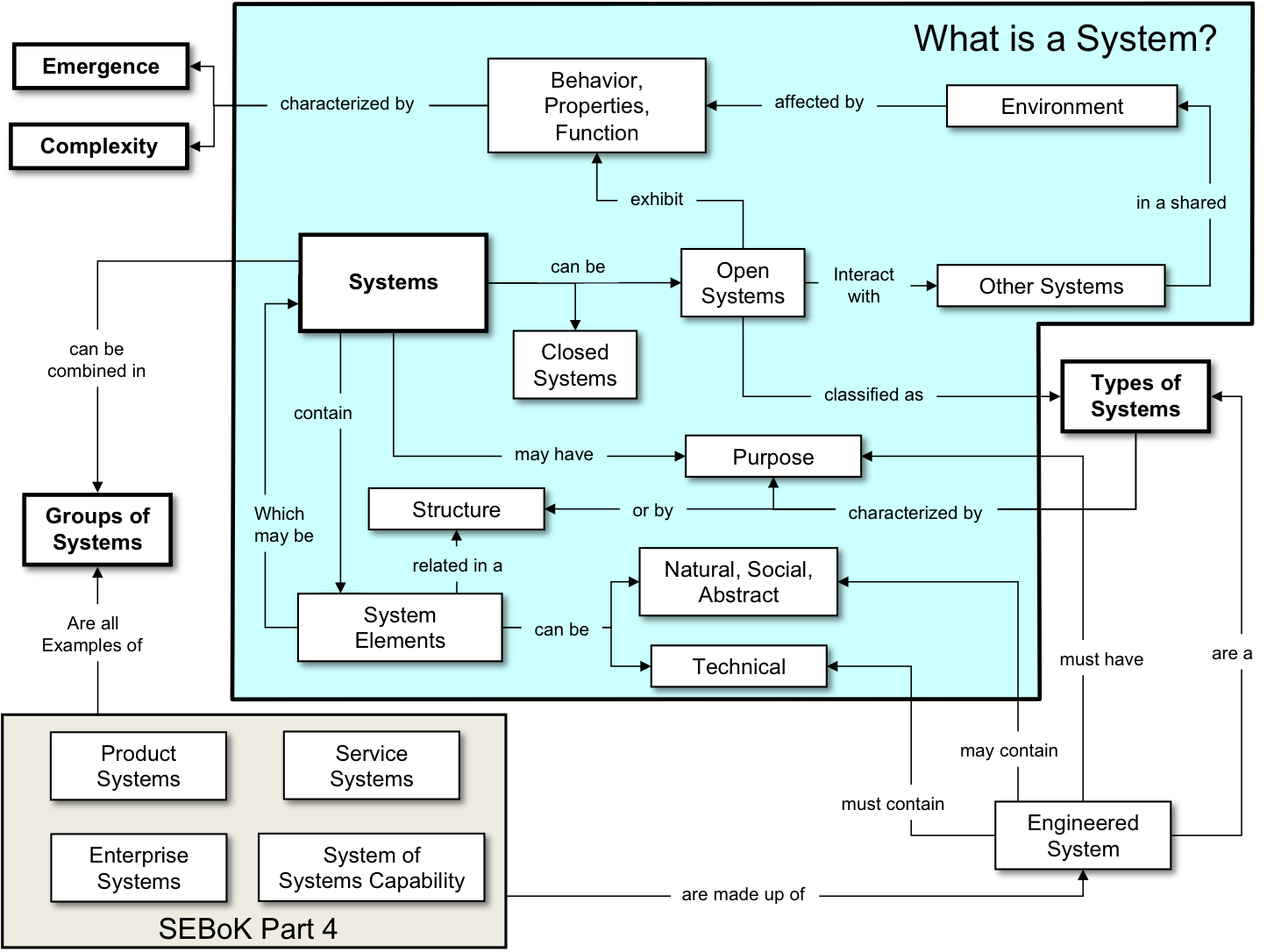
図1. システムの基礎とエンジニアード・システム。(SEBoK Original)
Systems Engineering Fundamentals
This knowledge area (KA) provides a guide to some of the most important knowledge about system engineering fundamentals. System Engineering benefits from systems thinking in combination with an essential understanding of The Nature of Systems. It applies systems approaches to practice grounded in systems science.
この知識領域(Knowledge Area、KA)は、システムズエンジニアリングの基礎に関する最も重要な知識の一部への手引きとなる。システムズエンジニアリングは、システム思考(systems thinking)を、システム(system)の本質についての本質的な理解と組み合わせることで恩恵を受ける。それは、システム科学(systems science)に根ざした、実践へのシステムズアプローチ(systems approaches to practice)を適用する。
This is part of the wider systems knowledge, which can help to provide a common language and intellectual foundation and make practical systems concepts, principles, patterns and tools accessible to systems engineering (SE) as discussed in Part 2: Foundations of Systems Engineering.
これは、より広範なシステムに関する知識の一部であり、Part 2: Foundations of Systems Engineering(Part 2:システムズエンジニアリングの基礎)で論じられているように、共通の言語と知的基盤を提供し、実践的なシステムの概念(concepts)、原則(principles)、パターン、ツールをシステムズエンジニアリング(SE)が利用できるようにするのに役立ち得る。
A concept is a mental representation that can be shared with a word or other media such as visualizations, pictures or displays of emotion (Daniel-Allegro B, Smith G.R. 2016). Systems Engineering Core Concepts provide the mental building blocks that when brought together can support an expression of principles. “A principle is a fundamental truth or proposition that serves as the foundation for a system of belief or behavior or for a chain of reasoning”. As an example, if you have three colors, red, blue, yellow (all words that serve as mental concepts). A principle is if you mix some yellow with some blue then you get green. A principle can provide guidance for acting with some certainty of the result. Principles learnt from practical experience that yet lack a scientific understanding as to the explanation of “why” are referred to as heuristics. Often in the progression of science these observations of ‘what is happening’ form the starting point for asking the question ‘why does this happen’ and prompts research into the underpinning scientific theory.
The evolution of Systems Engineering Heuristics and associated Systems Engineering Principles is described. The objective of system science is to provide the theoretical basis for these principles (the 'why' behind the phenomena).
The word system is a concept used in many areas of human activity and at many levels. But what do System Engineers mean when they use the word system? The answer is surprisingly not as simple as you might think.
(Sillitto, Griego et al. 2018) established in their research that there are at least seven distinct, and to a considerable extent mutually incompatible, worldviews on systems within a relatively small population of systems engineering experts in the INCOSE Fellows’ and System Science Working Group (SSWG) communities. The worldviews identified ranged from constructivist (“systems are purely a mental construct”) to “extreme realist” (“systems only exist in the real world”). Some considered the threshold of systemness” to be as simple as “two or more inter-related elements”; while others demanded a wide range of attributes, including those of living systems, before considering something to be a system.
That such a wide range of worldviews was discovered within the Systems Engineering community was a surprising result. We might expect to find an even wider range of worldviews across a more diverse community; but a non-rigorous examination of the results of the survey and of the wider literature suggests that the range of “system” worldviews held by the surveyed group of Systems Engineers is broadly representative of the systems field. In the 2019 IFSR conversation “What is System Science?” (Metcalf, G.S, Edson M.C, and Chroust G. 2018), it was concluded that there would be great benefit to achieve a synthesis across the apparently conflicting worldviews of constructivism and realism, expressed in terms of these two key aspects: a) the nature of systems in the physical universe; and b) the way humans perceive and interact with systems.
The philosophical foundations of systemness and system research are described (M.C Edson, Henning P, Sankaran. 2017), this work provides a meta-theoretical orientation of systems and an orientation for systems research processes and practices.
In practical terms, in the Introduction to Systems Engineering Fundamentals, the concepts of open system and closed system are explored. Open systems, described by a set of elements and relationships, are used to describe many real-world phenomena. Conceptually closed systems have no interactions with their environment.
Some systems classifications, characterized by type of element or by purpose, are presented.
An engineered system is defined within the SEBoK as encompassing combinations of technology and people in the context of natural, social, business, public or political environments, created, used and sustained for an identified purpose. The application of the Systems Approach Applied to Engineered Systems requires the ability to position problems or opportunities in the wider system containing them, to create or change a specific engineered system-of-interest, and to understand and deal with the consequences of these changes in appropriate wider systems. The concept of a system context allows all of the system elements and relationships needed to support this to be identified.
Two particular aspects of the system phenomena complexity and emergence, are described in the System Science KA. Between them, these two concepts represent many of the challenges which drive the need for systems thinking and an appreciation of systems science in SE. In The Nature of Systems KA, a rich portrayal of the landscape of systems and the system phenomena is provided.
概念(concept)とは、言葉や、可視化、絵、感情の表出といったその他の媒体によって共有できる心的表象である(Daniel-Allegro B, Smith G.R. 2016)。Systems Engineering Core Concepts(システムズエンジニアリングの中核概念)は、組み合わせることで原則の表現を支え得る、心的な構成要素を提供する。「原則とは、信念や行動の体系、あるいは推論の連鎖の基盤となる、根本的な真理または命題である」。
例として、赤、青、黄の3つの色があるとする(いずれも心的概念として機能する言葉である)。原則とは、黄色をいくらか青と混ぜると緑が得られる、というものである。原則は、結果についてある程度の確実性をもって行動するための指針を与えることができる。
実践的な経験から学ばれたものの、「なぜ」を説明する科学的理解をまだ欠いている原則は、ヒューリスティクス(heuristics)と呼ばれる。科学の進展においては、「何が起きているか」についてのこうした観察が、「なぜこれが起きるのか」という問いを立てる出発点となり、その根底にある科学理論の研究を促すことが多い。
Systems Engineering Heuristics(システムズエンジニアリングのヒューリスティクス)と、それに関連する Systems Engineering Principles(システムズエンジニアリングの原則)の発展が記述される。システム科学の目的は、これらの原則に理論的基盤(現象の背後にある「なぜ」)を与えることである。
システムという言葉は、人間の活動の多くの領域で、多くの水準で用いられる概念である。しかし、システムズエンジニアがシステムという言葉を使うとき、それは何を意味しているのだろうか。その答えは、意外にも、思われているほど単純ではない。
(Sillitto, Griego et al. 2018) は、その研究において、INCOSE フェローおよび System Science Working Group(SSWG)のコミュニティに属する比較的小規模なシステムズエンジニアリング専門家の集団の中に、システムについて少なくとも7つの、互いに異なり、かなりの程度まで相容れない世界観が存在することを明らかにした。
特定された世界観は、構成主義(「システムは純粋に心的な構成物である」)から「極端な実在論」(「システムは現実世界にのみ存在する」)にまでわたった。ある人々は、システムであることの閾値を「2つ以上の相互に関連する要素」という単純なものと考えた。一方、他の人々は、何かをシステムと見なす前提として、生命システムが持つ属性を含む幅広い属性を求めた。
システムズエンジニアリングのコミュニティの中でこれほど幅広い世界観が見出されたことは、意外な結果であった。より多様なコミュニティであれば、さらに幅広い世界観が見られると予想されるかもしれない。しかし、調査結果とより広範な文献を厳密でない形で検討すると、調査対象となったシステムズエンジニアの集団が持つ「システム」の世界観の幅は、システム分野をおおむね代表していることが示唆される。
2019年の IFSR カンバセーション「What is System Science?」(Metcalf, G.S, Edson M.C, and Chroust G. 2018)では、一見対立する構成主義と実在論の世界観を横断する統合を達成することには大きな利益があると結論づけられた。それは、次の2つの重要な側面によって表される。a) 物理的宇宙におけるシステムの本質、および b) 人間がシステムを知覚し、システムと相互作用するあり方である。
システムであること(systemness)とシステム研究の哲学的基礎が記述されており(M.C Edson, Henning P, Sankaran. 2017)、この研究は、システムに関するメタ理論的な方向づけと、システム研究のプロセスと実践に向けた方向づけを提供する。
実践的な観点からは、Introduction to Systems Engineering Fundamentals(システムズエンジニアリング基礎知識への入門)において、開放系(open system)とクローズドシステム(closed system)の概念が探究される。要素(elements)と関係の集合によって記述される開放系は、現実世界の多くの現象を記述するために用いられる。概念上、クローズドシステムはその環境(environment)との相互作用を持たない。
要素の種類や目的(purpose)によって特徴づけられる、いくつかのシステム分類が示される。
SEBoK では、エンジニアード・システム(engineered system)を、自然、社会、ビジネス、公共、または政治の環境のコンテキストの中で、特定された目的のために作られ、使われ、維持される、技術と人の組み合わせを包含するものと定義している。Systems Approach Applied to Engineered Systems(エンジニアード・システムへのシステムズアプローチの適用)を実践するには、問題(problems)や機会(opportunities)をそれらを含むより広いシステムの中に位置づけ、エンジニアード・システムである特定の対象システム(system-of-interest)を作り出したり変更したりし、さらに適切なより広いシステムにおいてこれらの変更がもたらす帰結を理解して対処する能力が必要となる。システムコンテキスト(system context)という概念により、これを支えるのに必要なすべてのシステム要素と関係を特定することができる。
システム現象の2つの特定の側面である複雑性(complexity)と創発(emergence)は、System Science(システム科学)知識領域で記述される。この2つの概念は、合わせて、SE においてシステム思考とシステム科学への理解が必要とされる要因となる課題の多くを表している。The Nature of Systems(システムの本質)知識領域では、システムの景観とシステム現象が豊かに描き出される。
図中の英語
The discussions of engineered system contexts includes the general idea of groups of systems to help deal with situations in which the elements of an engineered system are themselves independent engineered systems. To help provide a focus for the discussions of how SE is applied to real-world problems, four engineered system contexts are introduced in the KA: #Service System (glossary) context #System of Systems (SoS) (glossary) context
The details of how SE is applied to each of these contexts are described in Part 4: Applications of Systems Engineering.
エンジニアード・システムのコンテキストに関する議論には、エンジニアード・システムの要素自体が独立したエンジニアード・システムであるような状況に対処するのに役立つ、システムのグループという一般的な考え方が含まれる。SE が現実世界の問題にどのように適用されるかについての議論に焦点を定める助けとして、この知識領域では4つのエンジニアード・システムのコンテキストが導入される。
これらの各コンテキストに SE がどのように適用されるかの詳細は、Part 4: Applications of Systems Engineering(Part 4:SE の応用)で記述される。
Daniel-Allegro B, Smith G.R. 2016. Exploring the branches of the system landscape, Les editions Allegro Brigitte D. ISBN 978-2-9538007-1-5.
Edson, M.C., Henning P, and Sankaran. 2017. A Guide to Systems Research - Philosophy, Processes and Practice. Springer.
Metcalf, G.S., M.C. Edson, and G. Chroust, Systems: from science to practice: Proceedings of the Nineteenth IFSR Conversation 2018, St. Magdalena, Linz, Austria. 2019: Books on Demand.
Sillitto, H., R. Griego, et al. 2018. What do we mean by “system”?–System Beliefs and Worldviews in the INCOSE Community. INCOSE International Symposium, Wiley Online Library.
Bertalanffy, L., von. 1968. General System Theory: Foundations, Development, Applications, rev. ed. New York, NY, USA: Braziller.
Magee, C. L., O.L. de Weck. 2004. "Complex system classification." Proceedings of the 14th Annual International Council on Systems Engineering International Symposium, Toulouse, France, 20-24 June 2004.
Rebovich, G., and B.E. White (eds.). 2011. Enterprise Systems Engineering: Advances in the Theory and Practice. Boca Raton, FL, USA: CRC Press.
Sheard, S.A. and A. Mostashari. 2009. "Principles of complex systems for systems engineering." Systems Engineering, vol. 12, no. 4. pp. 295-311.
Tien, J.M. and D. Berg. 2003. "A case for service systems engineering." Journal of Systems Science and Systems Engineering, vol. 12, no. 1, pp. 13-38.
None.