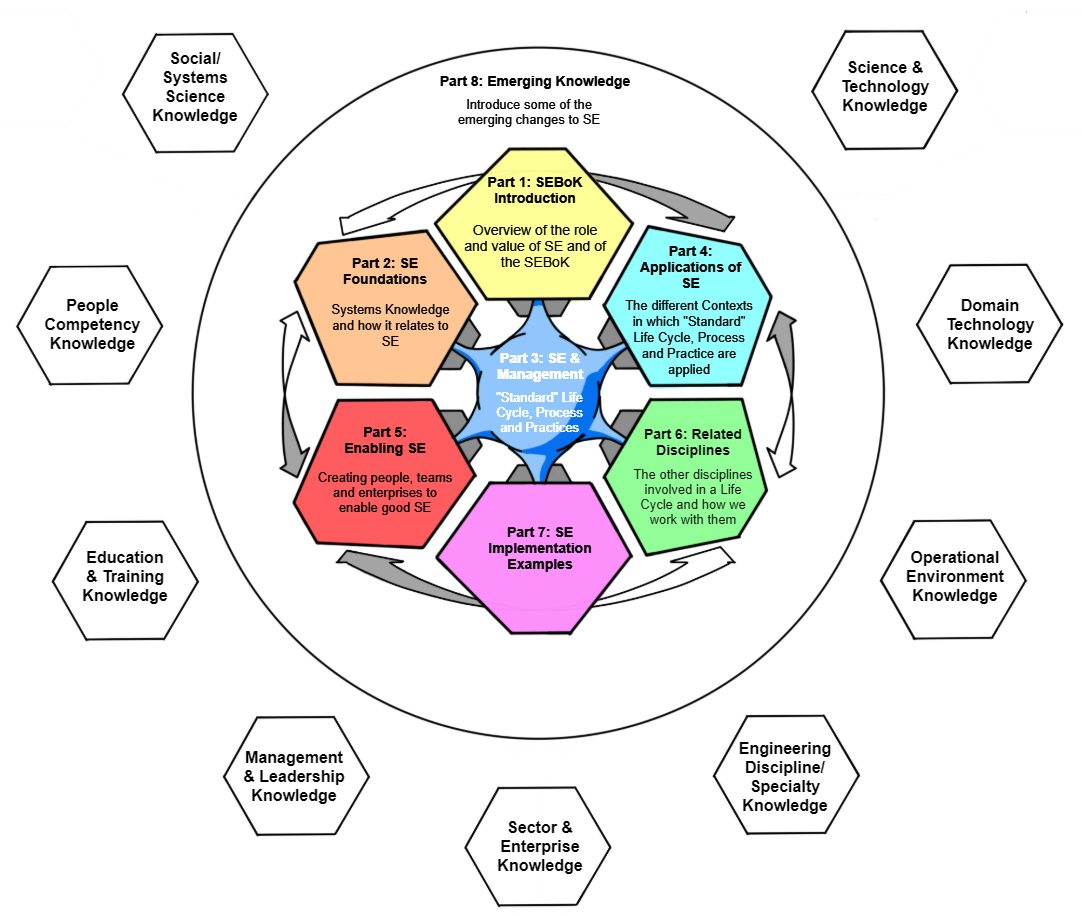
図1. SEBoK の各 Part の範囲と関連知識。(SEBoK Original)
Structure of the SEBoK
The Guide to the Systems Engineering Body of Knowledge (SEBoK) is a living authoritative guide that discusses knowledge relevant to Systems Engineering. SEBoK does not contain all of this knowledge itself but provides a starting point and key resources to allow the reader to navigate the wider body of knowledge that exists in published sources. To do this, SEBoK: *Defines relevant knowledge and structures it to facilitate understanding. *Provides short discussions of key ideas, principles and concepts within that structure. *Points to reference sources important to the discipline, which explore these ideas in more detail.
In doing this, it is inevitable that differences in terminology, alternative approaches, and even fundamentally different ways of thinking within the knowledge will appear. SEBoK attempts were possible to provide clarity of similar or overlapping ideas, or to highlight real differences and the reasons behind them. In particular, the SEBoK Glossary of Terms contains the most used or generally agreed upon definitions of terms when it can, but may highlight more than one definition if needed to show breadth of current thinking.
『システムズエンジニアリング知識体系ガイド(Guide to the Systems Engineering Body of Knowledge、SEBoK)』は、システムズエンジニアリングに関連する知識を論じる、生きた権威あるガイドである。SEBoK はこの知識のすべてを自ら収めているわけではなく、出版された情報源に存在するより広い知識体系を読者がたどれるよう、その出発点と主要な資源を提供する。そのために SEBoK は次のことを行う。
こうした取り組みの中で、用語の相違や代替的なアプローチ、さらには知識の内部における根本的に異なる考え方が現れることは避けられない。SEBoK は、可能な場合には、類似する考え方や重なり合う考え方を明確にし、あるいは真の相違とその背後にある理由を浮き彫りにしようとしている。特に SEBoK の用語集(Glossary of Terms)は、可能な場合には、最もよく用いられている定義や一般に合意された定義を収めているが、現在の考え方の広がりを示す必要があれば、複数の定義を示すこともある。
Figure 1, below, illustrates the eight parts of the SEBoK and how they are related.
下の図1に、SEBoK の8つの Part とそれらの関係を示す。
図中の英語
The scope of each part and the key relationships amongst them are briefly discussed below. For a more detailed discussion of how this structure was evolved, see (Adcock et al, 2016).
各 Part の範囲と Part 間の主要な関係について、以下で簡潔に論じる。この構造がどのように発展してきたかについてのより詳しい議論は、(Adcock et al, 2016)を参照。
This part explains the scope, context, and structure of the SEBoK, and of systems engineering (SE).
この Part は、SEBoK とシステムズエンジニアリング(systems engineering、SE)の範囲、コンテキスト、構造を説明する。
An overview of who should use the SEBoK, and for what purpose, is followed by detailed use cases. Systems engineering’s economic value, history, and relationship to other disciplines are discussed. Part 1 also contains a section which discusses the future evolution of the SEBoK and allows for new areas of content to be introduced before being transitioned into other SEBoK parts.
SEBoK を誰がどのような目的で使うべきかを概観した後、詳細なユースケースを示す。システムズエンジニアリングの経済的価値、歴史、他の分野との関係についても論じる。Part 1 にはまた、SEBoK の今後の発展を論じる節があり、新しい内容領域を SEBoK の他の Part へ移行する前に、ここで導入できるようにしている。
This part provides an introduction and overview of areas of knowledge which provide the foundations of SE.
この Part は、SE の基礎となる知識領域を紹介し、その概要を示す。
A discussion of the definitions and basic concepts of systems is followed by an overview of the principles, concepts, methods, models and patterns of some of the key foundational areas of . This includes a detailed consideration of the foundational knowledge related to systems models and modelling.
システム(systems)の定義と基本概念を論じた後、システム科学(Systems Science)の主要な基礎領域のいくつかについて、その原則、概念、方法、モデル、パターンを概観する。そこには、システムモデルとモデリングに関連する基礎知識の詳細な検討も含まれる。
Part 2 looks in more detail at two aspects of this foundational knowledge of particular value to SE. The first is to discuss aspects of systems knowledge related to a Engineered System (glossary)|engineered system (ES) as the primary focus for the application of SE (see Part 4 below).
Part 2 では、この基礎知識のうち SE にとって特に価値のある2つの側面を、さらに詳しく取り上げる。第一は、複雑な問題や機会に対するシステムズアプローチ(Systems Approach)に関連するシステム知識の側面を論じることである。このアプローチは、SE をどのように定義し実践するかの基礎となる(下記の Part 3 と Part 5 を参照)。第二は、システムの概念が現実世界の関心事に適用されるさまざまな方法を記述することである。SEBoK は、エンジニアード・システム(engineered system、ES)を SE 適用の主要な焦点と定義している(下記の Part 4 を参照)。
This part describes generic knowledge on the practice of SE and related management activities.
この Part は、SE の実践とそれに関連するマネジメントアクティビティについての汎用的な知識を記述する。
Part 3 begins with the life cycle models common in SE and the general principles behind their application. It then moves on to SE management activities. It covers both technical activities such as requirements, architecture, test and evaluation; and management activities such as planning, measurement, and risk. Next is product and service life management, a distinct area of SE management that emphasizes the entire life cycle including retirement and disposal. An account of SE standards concludes this part.
Part 3 はまず、SE で一般的なライフサイクルモデル(life cycle models)と、その適用の背後にある一般原則を扱う。続いて SE マネジメントアクティビティへと進む。そこでは、要求事項の扱い、アーキテクチャ、テストと評価といった技術的なアクティビティと、計画、測定、リスクといったマネジメントアクティビティの両方を取り上げる。次に扱うのは製品・サービスライフマネジメントであり、これは廃止と廃棄を含むライフサイクル全体を重視する、SE マネジメントの中の独立した領域である。最後に SE 規格について説明し、この Part を締めくくる。
Focused on what many think of as the main body of SE, including best practices and common pitfalls, this part constitutes a substantial proportion of the SEBoK. As already discussed, the knowledge in Part 3 is based on the systems approach from Part 2. The links between Part 3 and the other parts of the SEBoK are discussed below.
ベストプラクティスやよくある落とし穴を含め、多くの人が SE の本体と考える内容に焦点を当てたこの Part は、SEBoK のかなりの部分を占める。すでに述べたように、Part 3 の知識は Part 2 のシステムズアプローチに基づいている。Part 3 と SEBoK の他の Part とのつながりについては、以下で論じる。
This part describes how to apply SE principles to different types of .
この Part は、さまざまな種類のシステムコンテキスト(System Context)に SE の原則をどのように適用するかを記述する。
Part 4 focuses on four major contexts in turn: products, services, enterprises, and systems of systems (SoS). For each one, the system abstraction, commercial relationships and application of generic SE is described.
Part 4 は、4つの主要なエンジニアード・システム(Engineered System)のコンテキスト、すなわち製品(products)、サービス(services)、エンタープライズ(enterprises)、システム・オブ・システムズ(systems of systems、SoS)に順に焦点を当てる。それぞれについて、システムの抽象化、商業的関係、汎用的な SE の適用を記述する。
The generalized contexts above should be viewed as overlapping models of how SE can be applied in different kinds of situations. Combinations of one or more of them are fully realized when applied in an application domain. Part 4 currently describes this application in a small number of such domains. This will be expanded in later updates. The applications of SE in this part describe the real-world practice of SE. The generalized knowledge in both Parts 2 and 3 evolves through what we learn from these applications. Part 2 includes a discussion of this relationship between theory and practice.
上記の一般化されたコンテキストは、さまざまな種類の状況に SE をどのように適用できるかを示す、互いに重なり合うモデルとして捉えるべきである。これらのうち1つ以上を組み合わせたものは、応用領域に適用されたときに完全な形で実現される。Part 4 では現在、そうした領域のうち少数について、この適用を記述している。これは今後の更新で拡充される。この Part で扱う SE の適用は、SE の現実世界における実践を記述するものである。Part 2 と Part 3 の一般化された知識はいずれも、こうした適用から得られる学びを通じて発展していく。Part 2 には、こうした理論と実践の関係についての議論が含まれる。
This part describes approaches to organization that may enable the successful performance of SE activities.
この Part は、SE のアクティビティの成功を支え得る、組織の編成・運営のアプローチを記述する。
Part 4 covers knowledge at the enterprise, team, or individual level. The range of considerations extends from value proposition, business purpose, and governance, down to competency, personal development as a systems engineer, and ethics.
Part 4 は、エンタープライズ、チーム、個人の各レベルの知識を扱う。考慮事項は、価値提案、事業目的、ガバナンスから、コンピテンシー、システムズエンジニアとしての個人の能力開発、倫理にまで及ぶ。
All of these relate to the baseline definitions of SE in Part 3, further generalized in the levels of application in Part 4. The systems approach in Part 2 should also form a foundation for this part. Since the practice of SE is transdisciplinary, Part 5 also has a link to Part 6 as discussed below.
これらはすべて Part 3 における SE の基準となる定義に関連しており、その定義は Part 4 の適用レベルにおいてさらに一般化される。Part 2 のシステムズアプローチもまた、この Part の基礎となるべきものである。SE の実践は分野横断的であるため、以下で述べるように、Part 5 は Part 6 ともつながっている。
This part describes the relationships between SE and other disciplines.
この Part は、SE と他の分野との関係を記述する。
Part 6 covers the links between SE and software engineering (SwE), project management (PM), industrial engineering (IE) and procurement. It also describes how SE is related to specialty engineering, which describes the various system “–ilities” (like reliability, availability, and maintainability) that SE must balance and integrate.
Part 6 は、SE と、ソフトウェアエンジニアリング(SwE)、プロジェクトマネジメント(PM)、インダストリアルエンジニアリング(IE)、調達とのつながりを扱う。また、SE と専門エンジニアリング(specialty engineering)との関係についても記述する。専門エンジニアリングは、SE がバランスを取りつつ統合しなければならない、システムのさまざまな「〜性(-ilities)」(信頼性、可用性、保全性など)を記述するものである。
The knowledge in this part provides an interface to other bodies of knowledge, focused on how it is linked to Parts 3, 4 and 5 above.
この Part の知識は他の知識体系へのインタフェースとなるものであり、上記の Part 3、4、5 とどのように結びつくかに焦点を当てている。
A set of real-world examples of SE activities demonstrates implementations of the systems engineering knowledge in previous parts of the SEBoK. These examples come in two forms: case studies, which refer the reader to and summarize published examinations of the successes and challenges of SE programs, and vignettes, which are brief, self-contained wiki articles. This part is a key place to look within the SEBoK for lessons learned, best practices, and patterns. Many links connect material in the examples to the conceptual, methodological, and other content elsewhere in the SEBoK.
SE アクティビティに関する現実世界の事例群が、SEBoK のこれまでの Part で扱ったシステムズエンジニアリングの知識の実装を示している。これらの事例には2つの形式がある。ケーススタディは、SE プログラムの成功と課題について出版された検討を読者に紹介し、要約するものであり、ビネットは、短く自己完結した wiki 記事である。この Part は、SEBoK の中で教訓、ベストプラクティス、パターンを探す際の重要な参照先である。多くのリンクが、事例の資料を、SEBoK の他の箇所にある概念的、方法論的、その他の内容と結びつけている。
One of the challenges associated with a body of knowledge is that cutting edge and/or emerging ideas are difficult to include. Bodies of knowledge are based on existing literature and resources, and these often do not exist for new topics. To address this, Part 8 of the SEBoK contains those emerging ideas and items that are not easily covered in the other sections of the SEBoK. As these areas mature and as a body of literature is created around them, they will be moved into the other Parts of the SEBoK.
知識体系に伴う課題の一つは、最先端の考え方や新興の考え方を取り込むのが難しいことである。知識体系は既存の文献や資源に基づいているが、新しいトピックについてはそれらが存在しないことが多い。この問題に対処するため、SEBoK の Part 8 には、SEBoK の他の節では扱いにくい新興の考え方や項目が収められている。これらの領域が成熟し、それらをめぐる文献の蓄積が形成されるにつれて、それらは SEBoK の他の Part へ移される。
The SEBoK contains a Glossary of Terms, which provides authoritatively-referenced definitions of key terms. This information is displayed when the reader hovers the mouse pointer over a glossary term within an article. It also contains a list of Primary References, with additional information about each reference. Quicklinks in the left margin provide additional background information, including a table of contents, a listing of articles by topic, and a list of Acronyms.
SEBoK には用語集(Glossary of Terms)があり、主要な用語について権威ある出典に基づく定義を示している。この情報は、記事中の用語集の用語にマウスポインタを重ねると表示される。また、主要参考文献(Primary References)の一覧もあり、各参考文献に関する追加情報が添えられている。左余白のクイックリンクからは、目次(table of contents)、トピック別の記事一覧、頭字語(Acronyms)の一覧など、追加の背景情報を参照できる。
Adcock, R., Hutchison, N., Nielsen, C., 2016, "Defining an architecture for the Systems Engineering Body of Knowledge," Annual IEEE Systems Conference (SysCon) 2016.
None.
None.